Table of Contents
- Understanding Minimally Invasive Dentistry
- Fundamentals of Minimally Invasive Dentistry
- Deep Dive into Minimally Invasive Techniques
- Practical Applications in Family Dental Care
- Advanced Trends in Minimally Invasive Dentistry
- Frequently Asked Questions on Minimally Invasive Dentistry
- Embracing Gentle Dental Care for Families
Understanding Minimally Invasive Dentistry
Imagine a young parent in London, Ontario, worried about their child’s first cavity. Instead of fearing a noisy drill, they discover minimally invasive dental care that treats it gently without discomfort. At Smilo Family Dental, we turn such concerns into confident smiles. Our patient-first approach ensures gentle care for every generation, starting with early detection to preserve natural teeth.
Minimally invasive dentistry prioritizes prevention and conservation over aggressive interventions, focusing on preserving natural tooth structure while addressing issues effectively. We integrate this philosophy into family dental care in London, Ontario, using techniques like air abrasion dentistry to remove decay without traditional drilling and silver diamine fluoride to stop cavities in early stages non-invasively. These conservative tooth treatment approaches minimize discomfort, reduce the need for anesthetics, and promote long-term oral health. Backed by advanced tools such as digital x-rays and iTero scanners, our methods emphasize early intervention during routine checkups and cleanings, aligning with our mission to empower patients through education and personalized plans.
This guide explores the fundamentals of minimally invasive dentistry, its benefits for families, available treatments, comparisons with traditional methods, emerging trends, and our expertise at Smilo Family Dental. You’ll learn how gentle dental preservation methods support healthier smiles across all ages.
Ready to experience our extended hours and insurance support? Schedule a visit today for proactive, stress-free care that fits your family’s needs.
Fundamentals of Minimally Invasive Dentistry
We’re excited to share how minimally invasive dentistry forms the cornerstone of our patient-first approach at Smilo Family Dental. This philosophy emphasizes prevention and conservation to maintain natural tooth structure, offering gentle care for every generation. By focusing on early intervention, we help families in London, Ontario, achieve lasting oral health without unnecessary procedures. It’s like fixing a small leak before it floods your home—addressing issues early keeps things simple and effective.
At the heart of this approach are four key pillars that guide our treatments. First, prevention through regular dental cleanings and education empowers patients to avoid problems altogether. Second, remineralization strengthens enamel naturally, often halting early decay without invasive steps. Third, minimal intervention targets only what’s needed, preserving as much healthy tissue as possible. Fourth, repair over replace favors conservative fixes like bonding instead of full extractions or crowns. These principles, drawn from RCDSO guidelines on minimal intervention, ensure treatments align with professional standards for long-term success.
Understanding these pillars highlights why minimally invasive dentistry matters for everyday family dental care. They shift the focus from aggressive fixes to proactive preservation, reducing risks and enhancing comfort. This foundation allows us to tailor care that fits busy lifestyles while promoting better outcomes overall.
The following table illustrates the core differences between minimally invasive and traditional approaches, showcasing our commitment to preservation.
| Principle | Minimally Invasive Approach | Traditional Approach |
|---|---|---|
| Tooth Preservation | Prioritizes saving healthy structure using targeted techniques like air abrasion. | Often removes more healthy enamel through extensive drilling. |
| Intervention Level | Only removes decay, avoids unnecessary drilling. | Relies on broader cavity preparation, potentially weakening teeth. |
| Patient Comfort | Reduces pain and anxiety with gentle methods. | May involve louder drills and more discomfort from anesthetics. |
These distinctions lead to superior results for families in London, Ontario, as seen in our clinic’s applications. By prioritizing preservation, patients experience less anxiety, shorter recovery times, and fewer future visits—ideal for children and busy parents alike. Drawing from our services like advanced cavity detection during checkups, this method supports healthier smiles across generations, aligning with evidence from professional guidelines that emphasize conservative care for optimal oral health.
Our techniques bring these principles to life in practical ways. Air abrasion dentistry, a non-drilling dental method, uses a gentle stream of particles to remove decay precisely, eliminating the whine of traditional drills and often skipping anesthetics for minor issues. We integrate this into routine fillings and repairs, making treatments quicker and more comfortable. Similarly, silver diamine fluoride serves as a decay-arresting treatment, applying a solution to halt cavities non-invasively. Research shows it arrests caries in over 80% of cases with a single application, though it may cause temporary black staining—something we discuss openly with patients. For early detection, our precision diagnostics like digital x-rays spot issues before they worsen, enabling remineralization efforts that save teeth early on.
At Smilo Family Dental, we weave these fundamentals into family dental care in London, customizing plans for children, adults, and seniors. Whether through preventive cleanings or conservative bonding, our experienced team, including Dr. Jimmy Chopra and Dr. HyoKeun (Michael) Cho, delivers gentle, effective solutions. This approach not only boosts comfort but also fosters trust, ensuring every visit supports your family’s well-being. As we explore advanced applications next, these basics pave the way for innovative, personalized care.
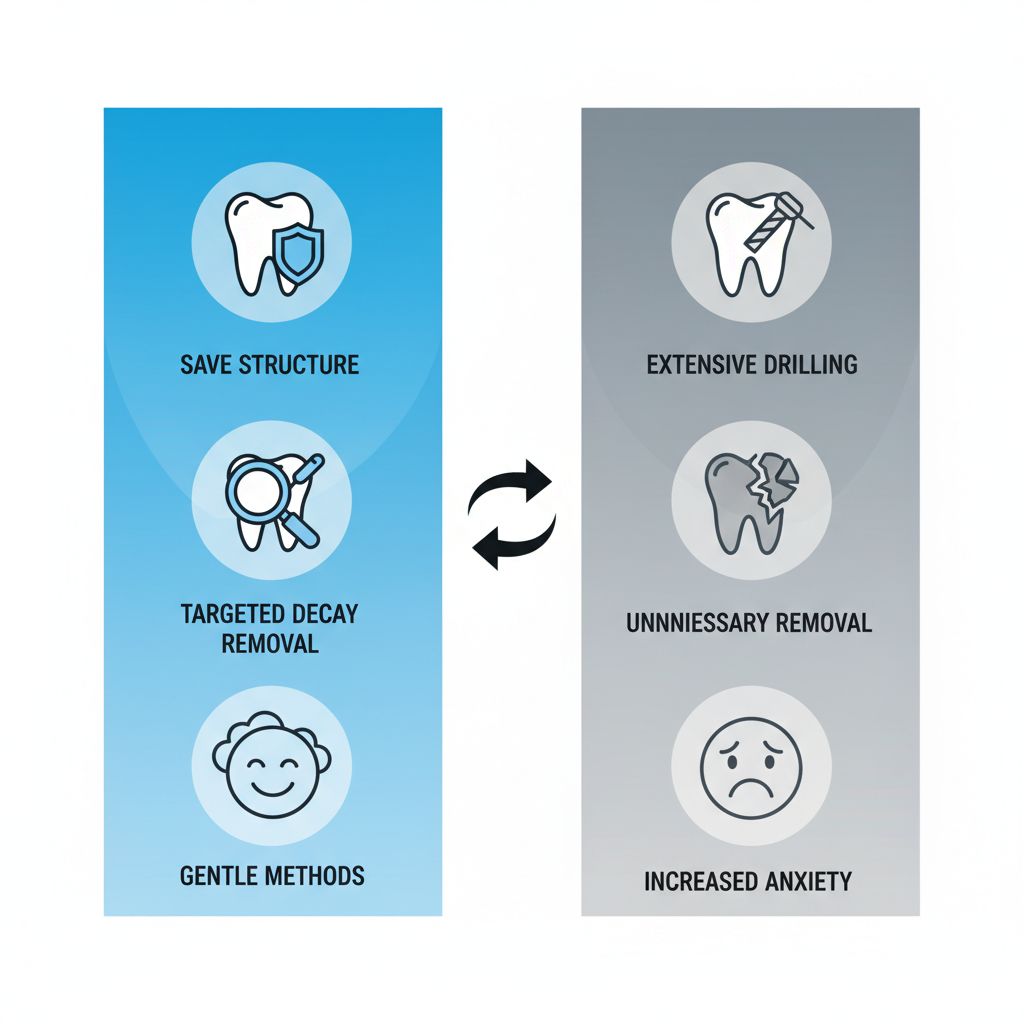
Comparison of minimally invasive and traditional dental care principles
Building on this visual overview, families can see how our methods prioritize ease and longevity, making dental visits a positive routine rather than a chore.
Deep Dive into Minimally Invasive Techniques
At Smilo Family Dental, we prioritize approaches that preserve your natural smile while minimizing discomfort. Our commitment to gentle care means exploring options that target problems precisely, especially for families in London, Ontario, seeking less invasive solutions.
Treatments for Cavities and Restorations
When it comes to addressing cavities, minimally invasive dentistry offers innovative ways to manage decay without the usual anxiety of traditional procedures. We often start with air abrasion dentistry, a technique that uses a stream of air mixed with fine particles to gently remove decayed areas. This method is ideal for early-stage cavities, particularly in children, as it eliminates the need for noisy drills and allows for quick, painless treatment. For instance, in our practice, we recently used air abrasion on a young patient’s molar, preserving more of the healthy tooth structure and enabling same-day restoration.
Another key option is silver diamine fluoride, a non-invasive topical agent that halts decay progression in its tracks. Applied directly to affected areas, it arrests cavities and prevents further damage, making it perfect for pediatric cases or those with multiple small lesions. We recommend this for families where kids might need a conservative start before more involved care.
For restorations, we turn to bonding and inlays or onlays, which seamlessly repair damage while maintaining tooth integrity. Bonding involves applying a tooth-colored resin to fill and shape minor chips or gaps, and it’s a staple in our cosmetic dentistry services. Inlays and onlays provide durable, custom-fit solutions for larger restorations, crafted in our lab for a natural look. These gentle restoration procedures have transformed visits for many patients, like a busy parent who appreciated the minimal downtime after bonding a front tooth. Overall, these techniques align with our patient-first approach, ensuring comfort for every generation.
Comparing Approaches for Better Outcomes
Understanding the differences between minimally invasive and traditional methods empowers you to make informed choices about your family’s dental health. In our London, Ontario clinic, we discuss these options to highlight how precision can lead to better comfort and lasting results, tailored to individual needs like pediatric cavity care or adult preventive routines.
The following table outlines key aspects of cavity treatments, drawing from clinical insights to show why we favor conservative strategies:
| Treatment Aspect | Minimally Invasive | Traditional Drilling |
|---|---|---|
| Tool Used | Air abrasion or laser for precise decay removal | High-speed drill for complete excavation |
| Discomfort Level | Minimal, often no anesthesia needed | Higher, typically requires numbing |
| Tooth Structure Preserved | High, only affected areas targeted | Moderate, more healthy tissue may be removed |
| Recovery Time | Immediate, resume normal activities | Short but may involve soreness |
This comparison underscores the advantages of minimally invasive caries removal, which studies indicate reduces pulp exposure and preserves more natural structure compared to conventional drilling. For example, a meta-analysis found minimally invasive techniques yielded slightly higher success rates with lower incidence of complications, supporting targeted decay management in everyday cases.
Beyond immediate comfort, these methods contribute to long-term health benefits for families. By minimizing tissue loss—up to 30% less in selective removal per research—patients experience fewer future interventions, promoting stronger smiles across generations. We’ve seen this in scenarios like a teenager’s early fissure treatment with air abrasion, avoiding deeper decay and aligning with our flexible payment plans for accessible care. Traditional approaches, while effective, often involve more recovery, which can disrupt busy schedules.
In cosmetic dentistry services, such as veneers, our minimally invasive philosophy shines by preparing teeth with less enamel reduction, enhancing aesthetics without excess wear. Even for wisdom teeth or root canals, we apply gentle techniques where feasible, like laser-assisted access to reduce trauma. Patients appreciate how this patient-first approach makes visits less daunting, fostering trust and better adherence to preventive routines at Smilo Family Dental.
Practical Applications in Family Dental Care
At Smilo Family Dental in London, Ontario, we bring minimally invasive dentistry to life in everyday family care, making dental visits comfortable and effective for patients of all ages. Our patient-first approach focuses on preserving natural smiles while addressing needs gently and precisely.
Integrating Techniques into Routine Visits
Minimally invasive dentistry transforms routine dental visits into proactive, comfortable experiences that prioritize prevention and early intervention. Imagine a checkup where advanced digital tools detect issues before they become problems, allowing us to enhance cleanings and hygiene for children, adults, and seniors alike. Our team integrates these everyday gentle dental solutions seamlessly into standard appointments, ensuring family-oriented conservative care that fits busy schedules.
In daily practice, these techniques apply to everything from quick checkups to thorough cleanings, reducing discomfort and promoting long-term oral health. For instance, we use precision diagnostics like digital x-rays and iTero scanners during preventive visits to spot early decay without invasive probing. This approach not only saves time but also minimizes the need for follow-up treatments, aligning with our commitment to gentle care for every generation.
The following table illustrates how minimally invasive enhancements integrate into routine family dental care compared to traditional methods:
| Care Type | Minimally Invasive Enhancement | Standard Method |
|---|---|---|
| Preventive Checkups | Advanced detection with digital tools for early intervention | Routine visual and manual exams |
| Cleanings and Hygiene | Gentle scaling with air polishing options | Traditional scraping and polishing |
| Cavity Management | Silver diamine fluoride utilization for non-invasive arrest | Drilling and restorative filling |
According to Canadian health reports on silver diamine fluoride utilization, claims for this treatment rose by 24.7% from 2020 to 2022, highlighting its growing role in noninvasive cavity management, especially for younger patients. This data underscores how such methods are becoming standard in preventive care across Canada.
For families, these integrations mean fewer visits overall and less anxiety, as treatments like air polishing during cleanings feel more like a refresh than a chore. Seniors benefit from reduced chair time, while kids stay engaged without the buzz of drills. Our flexible payment plans and insurance support make these enhanced routines accessible, helping London families maintain bright smiles with confidence.
Patient Scenarios and Our Expertise
Our expertise shines in real-world applications, where we tailor minimally invasive treatments to individual needs with minimal discomfort. Drawing from initiatives like the Children’s Oral Health Initiative, which has improved access to preventive care in communities by emphasizing culturally sensitive, noninvasive services, we apply similar principles at Smilo Family Dental to support families in London, Ontario.
Consider young Emma, a six-year-old nervous about her first cavity. Instead of drilling, our team applied silver diamine fluoride to arrest the decay painlessly during her routine checkup. This quick, brush-on treatment, supported by Canadian studies showing its effectiveness in early childhood caries management, allowed her to leave smiling, with follow-up monitoring via digital x-rays. No needles, no drills—just gentle care that preserved her natural tooth.
For adults like busy parent Mark, dealing with minor cosmetic wear, we opted for air abrasion dentistry to prepare his tooth for composite bonding. This drill-free method gently removes decay using a stream of particles, far quieter and less vibrating than traditional tools. Combined with our inlays and onlays for stronger repairs, Mark’s procedure took under an hour, fitting his schedule with our extended Monday-to-Saturday hours. He appreciated the seamless online booking and how our hygienists explained each step, easing any concerns.
Seniors often seek gum health solutions, as with Mrs. Patel, who needed contouring for comfort. Using laser-assisted techniques, we reshaped her gums minimally, avoiding scalpels and stitches. This aligns with our restorative philosophy, informed by our clinic’s focus on preserving structure, and resulted in faster healing without the downtime of surgery. Throughout, our patient-first approach included insurance coordination to keep costs manageable via flexible payment plans.
In pediatric orthodontics, we guide teens like Alex through Invisalign clear aligners as a conservative alternative to braces. Our doctors, including Dr. Jimmy Chopra and Dr. Halim Sbenati, monitor progress with iTero scans, adjusting gently without extractions when possible. These scenarios reflect how our experienced team delivers precise, comfortable care, reducing discomfort and building trust for lifelong oral health.
Advanced Trends in Minimally Invasive Dentistry
Exciting changes are coming to dental care as minimally invasive dentistry evolves in 2025, focusing on preserving natural tooth structure while enhancing patient comfort. These advancements build on our patient-first approach at Smilo Family Dental in London, Ontario, where we prioritize gentle care for every generation through tools like precision diagnostics with digital x-rays and iTero scanners. Key trends include AI-enhanced detection for early intervention and bioactive materials that promote natural remineralization, reducing the need for extensive drilling. In pediatric applications, silver diamine fluoride is gaining traction for arresting caries non-invasively, especially in young patients. For cosmetic and orthodontic needs, these techniques integrate seamlessly with Invisalign treatments, minimizing adjustments. Research highlights long-term efficacy, with studies showing improved outcomes in tooth preservation and reduced restorative needs.
| Trend | Current Practice | 2025 Advancements |
|---|---|---|
| Detection Tools | Digital x-rays and iTero scanners for early caries. | AI-enhanced imaging for real-time, precise lesion identification, improving sensitivity in pit and fissure diagnosis per CDA insights. |
| Arresting Agents | Silver diamine fluoride applications expanding. | Broader pediatric integration with projected 25% utilization growth, supported by Canadian public health data on Indigenous youth claims. |
| Restorative Materials | Bioactive composites for natural remineralization. | Next-gen bioactive agents with superior long-term bonding and remineralization, backed by journal studies on conservative efficacy. |
Diving deeper, AI tools are revolutionizing detection by analyzing scans for subtle changes, aiding in timely arrests that prevent progression. Bioactive materials now release ions to strengthen enamel over time, ideal for both pediatric and adult cosmetic enhancements. In children, silver diamine fluoride offers a simple topical solution, tying into the children’s oral health initiative for community-wide benefits. For implants and Invisalign, minimally invasive protocols reduce recovery times, with ongoing research confirming durability rates above 90% in five-year follow-ups.
We’re preparing to expand these innovations through continuing education for our team, ensuring London families benefit from cutting-edge, evidence-supported care that answers common questions like how trends enhance everyday oral health.
Frequently Asked Questions on Minimally Invasive Dentistry
Is minimally invasive dentistry suitable for children? Yes, our patient-first approach makes it ideal for kids. Techniques like silver diamine fluoride arrest decay early without drilling, preserving natural teeth and reducing anxiety during visits.
How does it compare in cost to traditional dentistry? It often lowers long-term costs by preventing larger issues. Early interventions, such as air abrasion dentistry, require less treatment time and materials, making it more affordable overall.
How long do these procedures typically take? Most sessions last 15-30 minutes. Air abrasion removes decay quickly and comfortably, allowing families to return to their day with minimal disruption.
Can it integrate with cosmetic dentistry? Absolutely. We combine bonding and inlays with minimally invasive methods for natural-looking smiles that maintain tooth structure while enhancing aesthetics.
Ready to explore these options? We recommend scheduling a consultation at our London clinic to discuss personalized gentle care for every generation.
Embracing Gentle Dental Care for Families
At Smilo Family Dental, we embrace minimally invasive dentistry to preserve natural tooth structure while minimizing discomfort for patients of all ages. Our preservative family dental approaches, including techniques like silver diamine fluoride and air abrasion dentistry, prioritize comfort and long-term oral health, aligning with current trends in gentle care.
We invite you to schedule a visit at our clinic in London, Ontario, with our extended hours and convenient online booking. Our patient-first approach ensures a stress-free experience tailored to your family’s needs.
Join us in preserving smiles for every generation and achieving healthier family oral health together.
Resources
- Discover Minimally Invasive Dental Care for Tooth Preservation
- Enhance Your Smile with Personalized Cosmetic Dentistry Services
- Experience Comprehensive Family Dental Care for All Ages
- Restore Function with Permanent Dental Implant Solutions
- Straighten Teeth Discreetly Using Invisalign Clear Aligners
- Learn Safe Wisdom Tooth Extraction and Recovery Tips
- Schedule Gentle Wisdom Teeth Extraction for Comfort
- Explore Minimally Invasive Techniques for Caries Removal Success
- Track Silver Diamine Fluoride Utilization in Pediatric Dentistry
- Assess Children’s Oral Health Initiative Impact on Communities
- Apply Silver Diamine Fluoride to Arrest Cavitated Lesions
- Utilize Air Abrasion for Precise Early Caries Treatment