• Call or text us now

    (519) 474-0220 Powered by Nexhealth

  • 1195 Hyde Park Rd.

    Unit 1, London, ON N6H 5K6

Stress-Free Dentist in London, ON | Smilo Family Dental

Category: Patient Education

  • Itero Scanner Invisalign Results: Complete Guide for 2026

    Itero Scanner Invisalign Results: Complete Guide for 2026

    Table of Contents

    iTero Scanner and Invisalign Results in London, Ontario

    During your Invisalign consultation at our London, Ontario clinic, we use the iTero scanner to capture a precise 3D digital impression of your teeth—no messy trays required. This detailed model allows us to show you your potential Invisalign results immediately through the Invisalign Outcome Simulator, a feature that generates a simulated preview of your projected new smile. This 3D smile simulation gives you a possible look at how your teeth could move, helping you visualize the treatment plan before you commit. Health Canada authorizes the iTero scanner as a Class II medical device under medical device regulation in Canada, assuring its safety and effectiveness. We follow Royal College of Dental Surgeons of Ontario guidelines for digital diagnostics, keeping your care both advanced and trustworthy. At Smilo Family Dental, our gentle care, for every generation means a comfortable scanning experience—but please remember, the preview is a simulation, and your actual outcome may vary.

    Curious about your smile’s future? Schedule your iTero scan consultation in London, Ontario today, and let us show you what’s possible.

    Digital Scanning in London, Ontario: iTero Technology and Invisalign Treatment

    At Smilo Family Dental in London, Ontario, we use the iTero digital scanner to achieve predictable iTero scanner Invisalign results for our patients. This advanced technology replaces traditional, messy impressions with a fast and comfortable experience. The iTero scanner is part of our commitment to making every visit stress-free, embodying our belief that gentle care, for every generation, should start from the very first step of your treatment journey.

    The iTero scanner captures a precise 3D model of your teeth, giving us sub-millimeter accuracy within 0.1mm. The scan itself is non-invasive and takes only 60 to 90 seconds, eliminating the discomfort and gagging often associated with traditional impression materials. Our internal FAQs confirm that most patients find the digital scan significantly more comfortable. As a paperless system, it supports our eco-friendly practice by reducing waste from impression materials and plastic trays.

    The iTero Digital Scanning vs. Traditional Impressions table below highlights key differences you’ll experience at our London clinic.

    iTero Digital Scanning vs. Traditional Impressions
    FeatureiTero Digital ScannerTraditional Impressions
    ComfortNon-invasive, open scanner; no gaggingMessy impression material; may cause gagging
    AccuracySub-millimeter precision (within 0.1mm)Subject to distortion and shrinkage
    TimeScan completed in 60–90 seconds5–10 minutes per impression
    VisualizationReal-time 3D model; Invisalign Outcome Simulator enabledNo immediate visualization; sent to lab
    Patient ExperienceHigh satisfaction; often preferredLess comfortable; more invasive
    Environmentally FriendlyPaperless, digital recordsWaste materials from impressions

    Based on clinical studies and patient surveys comparing digital and traditional orthodontic impressions, the benefits are clear. One of the most exciting advantages of the iTero scanner is the Invisalign Outcome Simulator, which uses your scan to create a 3D smile simulation. You can see a preview of your future smile instantly, before your aligners are even made.

    As a Smilo Family Dental practice, we follow all dental regulation in Ontario to ensure your care is safe, effective, and held to the highest professional standard. This technology is an integral part of our advanced diagnostics suite, helping us plan your perfect smile with precision and put you at ease from the very first appointment.

    Once your digital impressions are complete, we map out your aligner progression, turning that exciting preview into a clear path toward your new smile.

    Invisalign Consultations with iTero Scanning at Smilo Family Dental

    Your journey to a straighter smile starts with a consultation at our London clinic. We use advanced technology to map your teeth and show you a preview of your new smile, all without the goopy impressions of the past. This is made possible through our itero scanner invisalign results, which provide a clear picture of what your treatment can achieve.

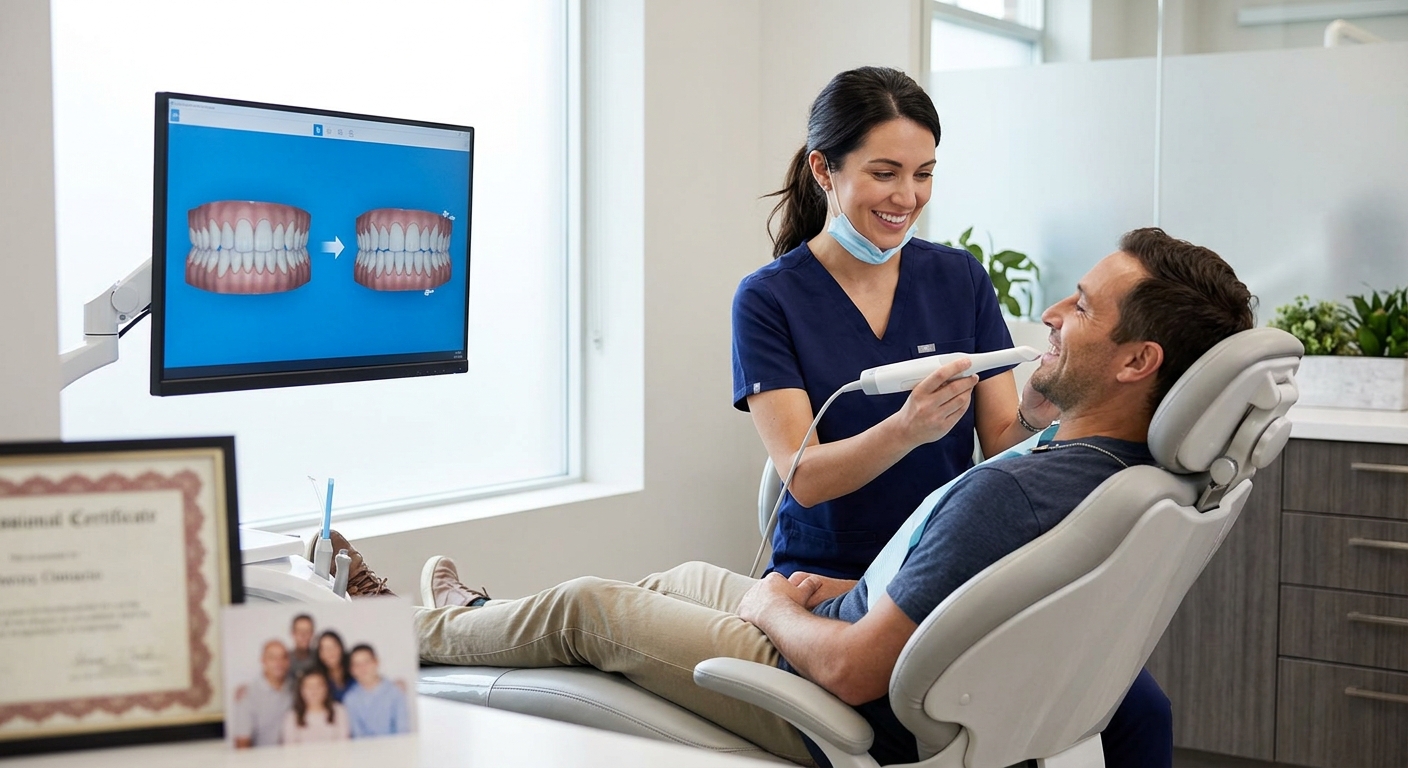
    The iTero scanner is a handheld intraoral device that captures precise 3D digital impressions of your teeth in just minutes. As we gently glide the wand across your smile, thousands of images are stitched together to form a detailed digital model, completely eliminating the need for messy traditional molds. This scan instantly feeds into the Invisalign Outcome Simulator, a powerful tool that uses your unique scan to generate a personal 3D smile simulation. You can see a digital smile preview of your expected alignment right on our screen, helping you visualize the outcome before you even begin.

    During your consultation at Smilo Family Dental, we combine this technology with a thorough oral assessment to create a custom treatment plan tailored to your goals. We review your simulated outcome together and answer any questions you have about treatment duration, comfort, and how aligners might fit your lifestyle. Our approach to care is designed to be entirely digital, comfortable, and efficient, reinforcing our commitment to minimally invasive dentistry. Every plan is unique, and we provide a custom-quote based on your specific needs. For more detailed guidance, our team can direct you to our detailed Invisalign FAQs on topics like costs and timelines.

    This advanced diagnostic journey is just one way we fulfill our promise of providing Gentle care, for every generation. Alongside Invisalign, we offer other gentle treatments like laser dentistry to support your family’s oral health. We invite you to book your consultation and Experience Stress-Free, Award-Winning Dental Care with us at Smilo Family Dental.

    Choosing a Dentist in London, Ontario with Advanced Digital Imaging

    When looking for a dentist in London, Ontario, choosing one who uses an iTero scanner and advanced digital imaging is key to precise, gentle care. These technologies allow us to diagnose issues early, plan treatments with accuracy, and keep procedures as minimally invasive as possible—supporting our gentle, family-focused approach for every patient we see.

    Digital X-rays offer a major safety advantage: according to our own clinical guidelines, they emit up to 90% less radiation than traditional film X-rays while delivering instant, detailed images. Equally transformative, iTero scanning creates a complete 3D model of your mouth in minutes, replacing uncomfortable putty impressions. This detailed model powers the Invisalign Outcome Simulator, which previews your potential new smile, and gives you a true 3D smile simulation so you can confidently visualize your results before treatment begins.

    These imaging tools also let our team plan procedures such as laser dentistry with pinpoint accuracy. We invite you to experience our state-of-the-art imaging firsthand and see how it elevates your comfort and care.

    Your Invisalign Journey: From iTero Scan to Smile Simulation

    Once you have decided to explore Invisalign, your first step is a comfortable digital consultation. We use an advanced iTero scanner to create a detailed 3D model of your teeth, which is the foundation for previewing your iTero scanner Invisalign results. This technology replaces the need for traditional, messy impressions entirely.

    Our gentle care, for every generation, extends to every aspect of this process, ensuring you feel at ease from the moment you sit back in the chair. The iTero scan itself is a quick, non-invasive procedure that lasts approximately five minutes. As we gently pass a small wand over your teeth, it instantly captures thousands of digital images without any gooey materials or gagging. According to our practice’s experience, the scan is incredibly comfortable, creating an immediate and highly accurate 3D digital model of your mouth.

    Once the scan is complete, we bring your potential new smile to life. Using the 3D model, we use the Invisalign Outcome Simulator to generate a personalized preview of your expected tooth movement. This 3D smile simulation lets you see a realistic vision of your straighter, more aligned teeth before you even begin treatment. With a clear vision of your new smile, you are ready to learn about your personalized aligner plan, and it is worth noting that our practice also offers laser dentistry for certain dental treatments.

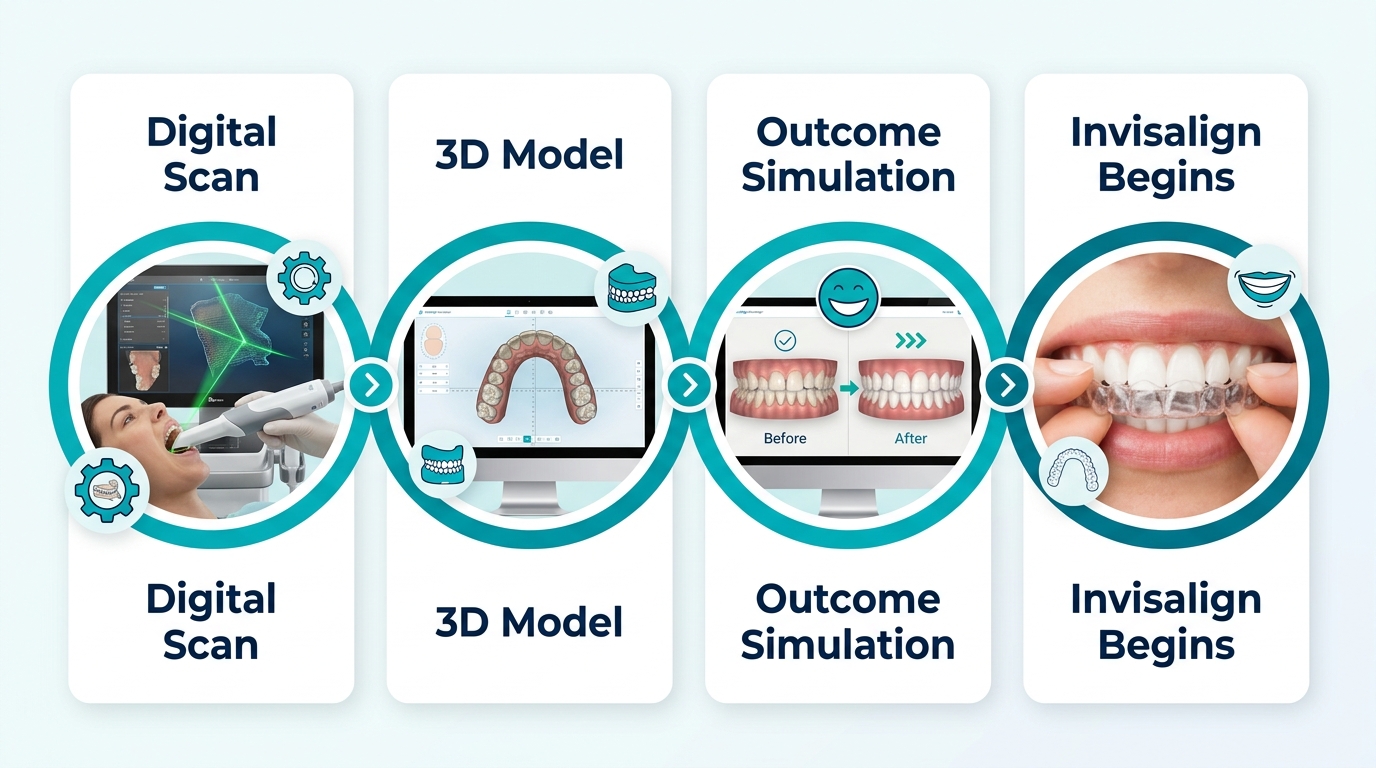
    A horizontal infographic showing four stages of an Invisalign treatment journey, starting with a digital scan using an iTero wand, progressing to a 3D model of a tooth arch with blue scanning beams, then a monitor displaying the smile simulation, and finally a clear aligner icon, all connected by clean arrows.

    Clean horizontal four-step Invisalign journey infographic with teal and navy palette.

    Experience the Future of Orthodontic Care in London, Ontario

    At Smilo Family Dental, the itero scanner invisalign results simulation gives you a truly remarkable preview of your straighter smile before treatment even begins. This advanced 3D smile simulation technology replaces traditional messy impressions with a quick, comfortable digital scan. Using the Invisalign Outcome Simulator, we can show you a realistic preview of your potential results right here in London, Ontario.

    Resources

  • Oral Conscious Sedation: Essential Guide for Anxiety-Free Dentistry

    Oral Conscious Sedation: Essential Guide for Anxiety-Free Dentistry

    Table of Contents

    What Is Oral Conscious Sedation?

    Oral conscious sedation is a gentle, non-invasive method we use to help patients overcome dental fear. It is a key part of our stress-free dentistry approach, designed to make your visit as comfortable as possible. Rather than facing treatment with anxiety, you simply take a prescribed sedative pill before your appointment.

    By the time you settle into the treatment chair, the medication is working to create a deeply calm state. You remain fully awake and can respond to our team’s instructions, but you feel completely relaxed and unconcerned about the dental work. This makes it an excellent entry point for those exploring sedation dentistry for anxiety, without the loss of consciousness associated with general anesthesia or the needles required for IV sedation dentistry.

    This type of oral sedation is often recommended for patients with mild to severe dental anxiety, those who need extensive restorative care, or individuals who struggle with a strong gag reflex. The medication typically begins working within 30 to 60 minutes and provides sustained comfort throughout the procedure. Knowing what it is and how it feels, let’s explore who can benefit most from this gentle approach.

    Understanding Oral Conscious Sedation — How It Works and What to Expect

    Let’s look more closely at one of the most popular methods we use at Smilo Family Dental for helping patients overcome dental fear: oral conscious sedation. This pill-based approach provides an effective way to manage anxiety without needles or intravenous lines. By taking a single sedative pill before your appointment, you can experience a calm and relaxed state throughout your visit. Many patients tell us that this anxiety-free dental care option transforms their entire experience, turning what was once a dreaded appointment into something manageable and even comfortable.

    What Exactly Is Oral Conscious Sedation?

    Oral conscious sedation involves taking a prescribed sedative pill before your scheduled dental treatment at Smilo Family Dental. It is important to understand that this is not general anesthesia — you will not be unconscious or asleep during your procedure. Instead, you remain awake and able to respond to our team’s instructions, but you enter a state of deep physical and mental relaxation. This type of pill-based sedation is an excellent option for patients who feel nervous about dental visits but do not require the deeper sedation achieved through IV methods. Our goal is to help you feel at ease while allowing us to complete your necessary dental work safely and efficiently.

    How Does Oral Conscious Sedation Feel?

    Most patients describe the sensation of oral conscious sedation as a gradual onset of drowsiness and calmness about 15 to 30 minutes after taking the medication. Smilo Family Dental patient feedback confirms that people often experience a comfortable heaviness in their limbs and a noticeable reduction in worry or fear. Many individuals find that their perception of time shifts during the appointment, so a longer procedure frequently feels as though it passes in just minutes. While you may drift between light sleep and wakefulness, you will remain responsive to our voices and gentle touch. For those seeking dental sedation regulations adherence and anxiety relief, this form of sedation dentistry for anxiety offers a reassuring pathway to getting the care you need without overwhelming stress.

    Safety and Monitoring During Your Appointment

    Safety is our top priority whenever we administer oral sedation medication. Before your appointment, your dentist completes a thorough pre-assessment to confirm your candidacy for the sedative pill and to rule out any potential concerns. During the procedure, our team continuously monitors your vital signs to track your heart rate, blood pressure, and oxygen levels, ensuring your well-being at every stage. We follow strict dental sedation regulations set by our governing college to ensure your safety. Throughout your visit, your dentist and at least one trained assistant or hygienist remain with you, providing attentive, gentle care for every generation. Our team members are fully focused on your comfort, responding quickly if you need anything while you are in a deeply relaxed state.

    Recovery Timeline: How Long Does Oral Sedation Last?

    The effects of oral conscious sedation are designed to last through your dental treatment and gradually fade over the hours that follow. After your procedure, you can expect residual drowsiness to persist for approximately four to six hours. Because the medication impairs coordination and judgment during this window, we require that you arrange for a responsible adult to drive you home afterward — this is a critical part of our safety protocol at Smilo Family Dental. We strongly recommend that you plan to take the remainder of the day to rest at home and avoid driving, operating machinery, or making important decisions.

    Once you know what to expect during and after oral sedation, you may be curious about who is a good candidate. Next, we’ll discuss that.

    Benefits of Oral Conscious Sedation for Anxious Patients

    For many people, visiting the dentist triggers significant anxiety, making it difficult to receive even routine care. Oral conscious sedation offers a powerful solution, allowing patients to undergo necessary dental treatments in a deeply relaxed, awake state. Unlike simply “toughing it out,” this approach transforms the dental experience from a source of fear into a manageable, often pleasant appointment. At Smilo Family Dental, we believe this gentle method plays a crucial role in our commitment to stress-free dentistry.

    Overcoming Severe Dental Anxiety and Phobia

    Severe dental phobia can prevent individuals from seeking care for years, leading to worsening oral health and more complex problems down the road. Oral sedation is specifically designed to address this barrier. By taking a prescribed pill before the appointment, patients with moderate to severe anxiety can achieve a profound state of calm. Our clinical team notes that patients remain conscious and able to respond to instructions, but the overwhelming fear is dramatically reduced. This means a person who once dreaded a simple cleaning can now comfortably receive the restorative treatments they truly need, breaking a painful cycle of avoidance without the associated stress.

    Suitable for All Ages: Children and Adults

    Dental anxiety does not discriminate by age, and neither should the available solutions. When administered by an experienced practitioner, oral conscious sedation is a safe and effective option for both children and adults. Our team carefully evaluates each patient’s medical history to determine their suitability for sedation. At Smilo Family Dental, we’ve seen how this technique can help a nervous child sit calmly for a filling or an adult with a lifelong fear finally address their dental health. This safety profile, grounded in professional oversight, makes oral sedation a versatile tool in our family-focused practice.

    No Needles, No Pain — A Gentle Alternative

    One of the most significant advantages of oral sedation is its needle-free administration, making it an ideal choice for patients who are phobic of injections. The medication is simply a pill taken by mouth, which aligns perfectly with our minimally invasive philosophy of care. The sedative effect eases not only anxiety but also heightens the threshold for discomfort, creating a more gentle overall experience. While we always use local anesthetic to numb the treatment area, the relaxing effect of the sedative ensures the initial numbing process is far less memorable or daunting.

    Tackling Multiple Procedures in One Visit

    Because the calming effects of oral sedatives last for several hours, they open the door to a more efficient approach to dental care. This longer duration of relaxation allows us to perform multiple treatments—such as fillings, crowns, and extractions—all in a single, comfortable appointment. This means fewer visits overall for our nervous patients. For a busy parent or a professional with a packed schedule, the ability to consolidate necessary dental work into one stress-free session is a profound benefit, reducing both the time commitment and the emotional toll of repeated visits.

    Choosing the right sedation method depends on your specific anxiety level, the procedure’s complexity, and your personal comfort. The following comparison breaks down the key differences between oral conscious sedation, nitrous oxide, and IV sedation.

    Oral Conscious Sedation vs. Other Sedation Dentistry Options
    FeatureOral Conscious SedationNitrous Oxide (Laughing Gas)IV Sedation
    Administration MethodPill taken by mouthInhalation maskIntravenous injection
    Level of ConsciousnessAwake but deeply relaxedFully awake, mild relaxationDrowsy to asleep (moderate sedation)
    Needle-FreeYesYesNo (requires IV line)
    Best ForModerate to severe anxietyMild anxiety, shorter proceduresSevere phobia, complex procedures
    Recovery TimeSeveral hours; driver requiredMinutes; no driver required1–2 hours; driver required
    Insurance Coverage in OntarioOften partially coveredOften coveredMay require pre-approval

    For patients seeking sedation dentistry for anxiety, the primary difference between oral and IV sedation often comes down to the needle-free aspect and the level of consciousness. Unlike IV sedation dentistry, which requires an injection to start an intravenous line, oral sedation is a simple pill, a factor that is particularly reassuring for needle-phobic individuals. Nitrous oxide provides a much lighter form of relaxation and wears off almost instantly, making it perfect for mild nervousness during quick visits but less suitable for severe phobia or lengthy appointments. We will help you understand which path is right for your unique needs.

    The Oral Conscious Sedation Process — From Consultation to Recovery

    If you have been exploring your options for a calmer treatment experience, we have designed the oral conscious sedation pathway to make every step predictable and reassuring. Our team in London, Ontario walks you through a clear, four-stage plan that keeps you comfortable, informed, and fully supported. Understanding the flow ahead of time is one of the best ways to quiet pre-appointment nerves, and sedation dentistry for anxiety is something we tailor personally to your needs.

    Step 1: The Initial Consultation and Health Assessment

    Your journey begins with a private conversation where we learn about your medical history, past dental experiences, and the specific worries that bring you in. We review any medications, allergies, or health conditions that could influence how your body responds to sedation, then perform a gentle examination of your mouth and airway. This thorough screening ensures that oral sedation is a safe fit for you. If you have concerns about other forms of relaxation — such as laughing gas or IV sedation — we can compare them briefly so you understand why the pill-based route suits your situation best. By the end of the visit, you will have a clear treatment plan and the confidence that every precaution has been taken.

    Step 2: Preparing for Your Sedation Appointment

    A smooth sedation day starts with a few simple steps at home. Because the medication needs an empty stomach to work safely and effectively, we follow a strict fasting rule — no food or drink for a set number of hours before your appointment, as outlined in our pre-treatment guidance. You will also need to arrange a responsible adult to drive you to and from our Hyde Park office, as the lingering effects of the sedative make operating a vehicle unsafe. Wear loose, comfortable clothing with sleeves that can be rolled up easily for the blood-pressure cuff, and leave contact lenses and jewellery at home if possible. When you arrive, we confirm that all preparation steps are in place so we can proceed with complete peace of mind.

    Step 3: Administration and What Happens During Treatment

    Once you are settled in the treatment chair, we give you a single pill to swallow with a small sip of water — this is the same oral medication you discussed during your consultation. Over the next hour, a deep wave of relaxation gradually washes over you while you remain awake and able to respond to our voices. Unlike laughing gas, which is inhaled through a mask, the oral sedative produces a more profound calm that helps even highly anxious patients feel at ease. A member of our clinical team stays with you continuously, monitoring your heart rate, blood pressure, and oxygen levels while the dentist performs the planned dentistry. You may feel pleasantly drowsy, and many patients later remember very little of the procedure itself — exactly the gentle, stress-free experience we aim to provide.

    Step 4: Recovery and Post-Treatment Instructions

    After the final restoration is placed, we help you move to a quiet recovery area where you can rest while the sedation gradually fades. It is normal to feel groggy, lightheaded, or slightly unsteady for a few hours, and mild short-term amnesia about the treatment is common. We keep you under observation until you are stable enough to go home with your driver. For the next 24 hours, avoid driving, operating machinery, or making important decisions. Stay hydrated, take it easy for the remainder of the day, and choose soft, lukewarm foods if your mouth feels tender. Should any unusual symptoms appear, our team is only a phone call away. With these simple aftercare steps, most patients bounce back quickly and are genuinely surprised by how manageable the whole day turned out to be.

    Oral Conscious Sedation vs. Other Sedation Options — Choosing the Right Approach

    Now that you’re familiar with what oral conscious sedation is and how it works, the next natural question is how it compares to other sedation methods. Choosing between sedation options can feel overwhelming, but at Smilo Family Dental, we believe that understanding the differences helps you make an informed, confident decision about your care. Whether you’re a nervous patient or simply curious about what’s available, we’re here to walk you through the pros and cons of each approach.

    Oral conscious sedation offers a moderate-to-deep state of relaxation, often with limited or no memory of the procedure. It’s an excellent choice for patients with moderate to high anxiety or those facing longer appointments. As Smilo Family Dental explains in their overview of sedation types, the goal is always to tailor the method to your specific comfort level and treatment needs.

    Oral Conscious Sedation vs. Nitrous Oxide (Laughing Gas)

    Nitrous oxide, commonly known as laughing gas, delivers a mild, calming effect while keeping you fully aware and cooperative throughout the appointment. It works almost instantly and wears off just as quickly, so most patients can resume normal activities right after leaving the office. There’s no need for fasting or a driver afterward, which makes nitrous oxide a convenient option for shorter, less invasive treatments.

    In comparison, oral conscious sedation requires advance planning—you’ll take a prescribed pill about an hour before your visit and will need someone to drive you home. The deeper relaxation level also means you’re more likely to have only fragmented or no memory of the procedure. According to Smilo Family Dental’s comparison of these two methods, this makes oral sedation especially valuable for patients with significant dental anxiety or those undergoing longer or more complex work, such as wisdom teeth extraction or multiple fillings in one sitting.

    Oral Conscious Sedation vs. IV Sedation Dentistry

    IV sedation dentistry takes relaxation to the deepest level possible without general anesthesia. Medications are delivered directly into the bloodstream, so the onset is immediate and the depth of sedation can be adjusted continuously during the procedure. Unlike oral conscious sedation, patients under IV sedation typically have minimal cooperation and no memory of the treatment.

    Oral sedation still allows you to respond to simple instructions, which many people find reassuring. Both methods require fasting beforehand and a responsible adult to drive you home afterward. As a practice that prioritizes gentle, personalized care, Smilo Family Dental helps you weigh these differences carefully. IV sedation may be suggested for severe anxiety or particularly invasive surgeries, while oral sedation often provides a comfortable middle ground for most nervous patients.

    The table below offers a quick-reference comparison of the three main sedation options to help clarify the distinctions.

    Oral Conscious Sedation vs. IV Sedation vs. Nitrous Oxide
    FeatureOral Conscious SedationNitrous OxideIV Sedation
    Depth of RelaxationModerate to deepMildModerate to deep
    Onset Time30–60 minutesImmediateImmediate
    Fasting RequiredYesNoYes
    Memory of ProcedureLimited or noneFull memoryNone
    Patient CooperationCan respond to instructionsFully cooperativeMinimal cooperation
    Post-Operative CareRest at home; driver neededResume normal activities immediatelyRest at home; driver needed

    Building on these comparisons, it’s also important to understand how these methods relate to the broader idea of sleep dentistry.

    Sleep Dentistry for Children and Adults — What You Need to Know

    “Sleep dentistry” is a term many people hear, but it can mean different things depending on the context. For some, it describes the deeply relaxed state achieved with oral conscious sedation or IV sedation, where the patient dozes through treatment without remembering it. For others, it refers to general anesthesia, which is typically reserved for hospital-based or complex surgical procedures. At Smilo Family Dental, we focus on safe, controlled sedation methods that keep you comfortable without putting you fully to sleep.

    Both children and adults can benefit from sedation when it’s administered by trained professionals. Smilo Family Dental emphasizes safety as the top priority, monitoring vital signs throughout every sedation appointment. Whether it’s a child needing a calm, anxiety-free experience or an adult sitting for a longer procedure like Invisalign check-ups or restorative work, our team selects the appropriate sedation level for each individual case.

    How to Decide Which Sedation Option Is Right for You

    Your ideal sedation choice depends on several factors: your anxiety level, the type and length of your procedure, your medical history, and your personal comfort preferences. If you’re simply jittery about a quick cleaning, nitrous oxide may be all you need. For a lengthier appointment or deeper apprehension, oral conscious sedation or IV sedation often provides a better experience.

    Clear aligners treatments, for example, rarely require sedation during routine progress checks, but some patients with high dental anxiety prefer light sedation even for these short visits. At Smilo Family Dental, we take the time to discuss your concerns openly and recommend an approach that matches your needs. Our focus on gentle, stress-free care means you never have to settle for a one-size-fits-all solution.

    Now that you understand your options, learn how we prepare you for a stress-free visit.

    Take the First Step Toward Stress-Free Dental Care

    When you choose oral conscious sedation at our London clinic, you will find yourself in a deeply relaxed state while remaining awake and able to respond to gentle guidance from our team. Most patients feel remarkably calm throughout treatment, and it’s common to have little to no memory of the procedure itself.

    After your appointment, a responsible adult will need to drive you home while the medication wears off over a few hours. Some grogginess is normal at first, but you can expect to feel fully clear and alert by the following day.

    We understand how dental anxiety can keep you from the care you deserve, which is why we offer sedation dentistry for anxiety in London with a warm, family-focused approach. Our practice has earned a 4.8-star reputation among more than 5,000 patients, and we make it easy to get started with same-day consultations and flexible payment support. You will receive a personalized treatment plan and cost estimate with no surprises—just gentle care, for every generation. Call our team today at (519) 474-0220 or book online to schedule your stress-free visit.

    Resources

  • Family Dental Health Tips 2026: Essential Preventive Care

    Family Dental Health Tips 2026: Essential Preventive Care

    Table of Contents

    Family Dental Health Tips for London Families in 2026

    These family dental health tips for 2026 can help London families build strong oral health habits that last a lifetime. Our family dental care approach in London centers on simple, effective preventive dental care routines you can start today. As the Canadian Dental Association recommends, schedule your child’s first dental visit by age one for early childhood tooth decay prevention. Government of Canada guidelines stress brushing twice daily with fluoride toothpaste, flossing once a day, and choosing water over sugary drinks. For children at higher risk, ask about dental sealants and fluoride varnish. Making oral care a family activity turns healthy habits into lifelong cavity prevention. Gentle care, for every generation. When you prioritize family oral health, every checkup becomes a reason to smile.

    1. Build a Consistent Brushing Routine

    As part of family dental health tips 2026, building a consistent brushing routine is one of the most impactful preventive dental care routines your household can adopt. We believe that gentle, twice-daily habits set the stage for a lifetime of healthy smiles.

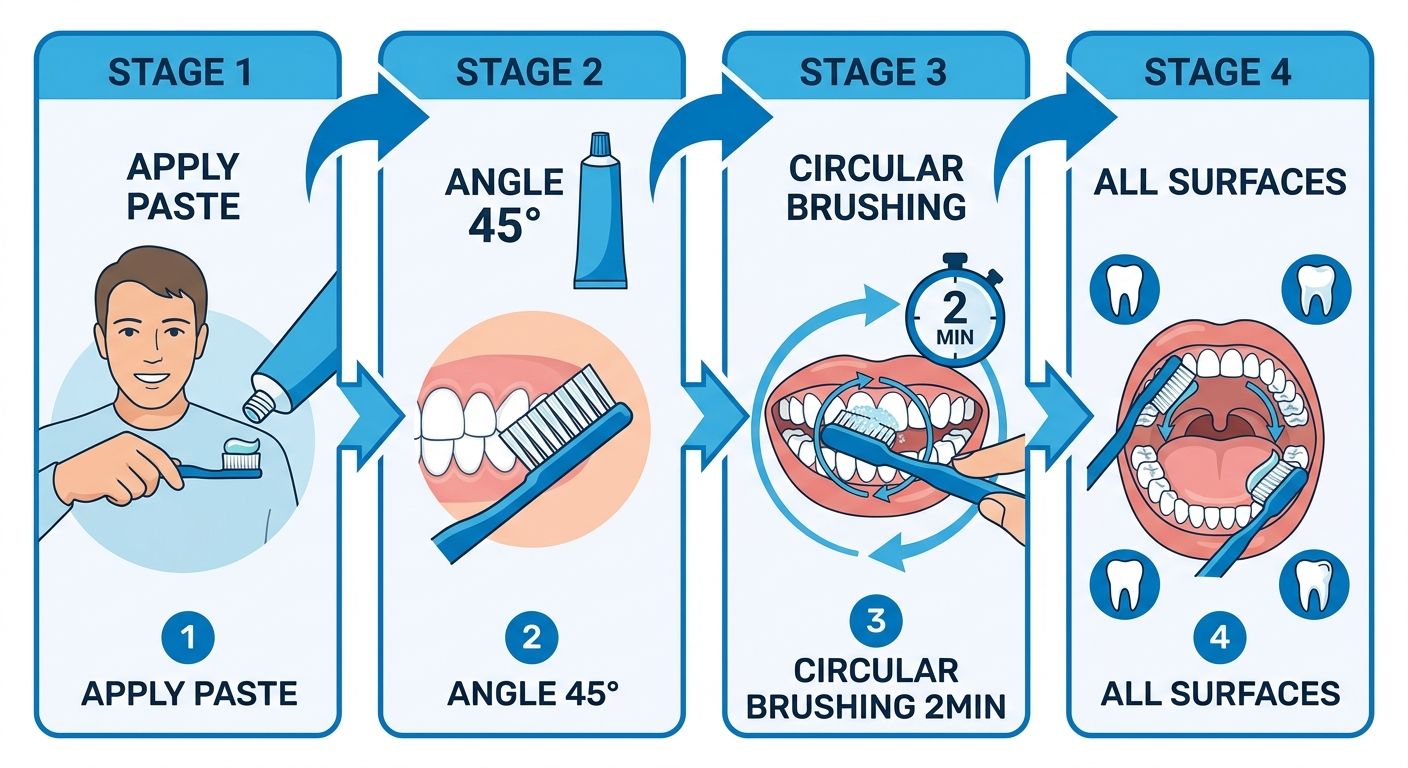
    According to the Canadian Dental Association, everyone should brush for two full minutes using a fluoride toothpaste. Proper technique means holding a soft-bristled brush at a 45-degree angle to the gums and using short, circular strokes to clean all tooth surfaces. For children, early childhood tooth decay prevention starts even before the first tooth appears, and our team at Smilo Family Dental suggests turning brushing into a fun daily ritual. Let your child choose a colourful brush, use a two-minute timer or a favourite song, and create a simple reward chart to celebrate consistency. Remember to swap out toothbrushes every three to four months, or sooner if the bristles look frayed.

    Four-step family brushing routine infographic with fluoride toothpaste application, 45-degree brushing angle, two-minute circular brushing, and all tooth surfaces coverage
    Build a consistent family brushing routine in four steps

    Once a daily dental routine feels automatic, you can layer in the next essential step — adding flossing to your oral care lineup.

    2. Floss: The Missing Step in Family Oral Care

    Looking for family dental health tips 2026 to boost your household’s routine? Many London families diligently brush twice a day but skip the one habit that cleans the spaces a toothbrush simply cannot reach. At Smilo Family Dental, we see flossing as the quiet hero of preventive dental care routines — it gently removes the plaque and food debris trapped between teeth, stopping gum inflammation and cavities before they start.

    We encourage parents to start children young. As soon as two little teeth touch, usually around age two or three, gentle floss picks or soft ribbon floss can clear those tight spots without irritating sensitive gums. For toddlers, kneeling face-to-face and making it a playful countdown works wonders; for school-aged kids, letting them choose colourful flossers builds ownership. When parents floss alongside their children, it becomes a shared moment rather than a chore, reinforcing Gentle care, for every generation.

    Timing matters. Flossing before brushing loosens hidden debris so that the fluoride from toothpaste can reach between teeth more effectively, supporting early childhood tooth decay prevention. Paired with regular checkups, this simple step rounds out a genuinely protective routine. It takes only a minute, costs very little, and gives every smile in the house a healthier foundation — a habit worth keeping all year long.

    3. Choose the Right Toothbrush for Better Gum Health

    As part of your family dental health tips 2026, selecting the right toothbrush plays a direct role in gum health. The Canadian Dental Association (CDA) recommends focusing on a few key features for every family member. Your toothbrush truly is the cornerstone of preventive dental care routines.

    • Soft bristles prevent gum irritation and enamel wear.
    • A small head easily reaches tight spaces and gumlines.
    • Replace your brush every 3–4 months, or sooner if bristles splay.
    • Electric brushes with pressure sensors help avoid excessive force; manual brushing works well with proper technique.
    • Look for the CDA Seal of Recognition as a mark of quality.
    • Pro tip: rotate two brushes so one stays dry between uses, reducing bacteria.

    For children, an extra-soft, small-headed brush with a large handle supports early childhood tooth decay prevention while being easy for little hands to hold.

    We believe in gentle care, for every generation—and it starts with the right toothbrush. For more official oral health guidance, you can also consult the Government of Canada. Once you’ve chosen the right brush, proper technique can further protect your gums, helping you experience stress-free, award-winning dental care.

    4. Prevent Cavities in Children with Simple Habits

    Establishing in family dental health tips 2026 is one of the most impactful steps you can take for your child’s lifelong smile. At Smilo Family Dental, we believe that preventive dental care routines should feel simple and achievable, seamlessly fitting into your family’s day.

    We recommend these gentle, effective habits to keep little teeth strong and cavity-free:

    • Brush Together Twice a Day: Use a pea-sized amount of fluoride toothpaste and supervise brushing until your child is about 7 or 8 years old. This simple act is the foundation of child cavity prevention.
    • Floss Once Teeth Touch: Introduce a child-friendly flosser as soon as two teeth meet, making it a fun and easy part of their nightly ritual. This completes a thorough preventive dental care routine.
    • Choose Water Over Sugary Drinks: Limit sugary snacks and avoid frequent sipping on juice or other sweet beverages. Water is the best choice for early childhood tooth decay prevention throughout the day.
    • Start Dental Checkups Early: The Canadian Paediatric Society and Government of Canada recommend a child’s first visit by their first birthday or when their first tooth appears, and continuing with regular checkups every six months.
    • Trust in Fluoride: Fluoride is a natural mineral that helps remineralize enamel and fight early childhood tooth decay, making it a vital part of pediatric oral care habits.

    Gentle care, for every generation, starts with these simple steps. Our team is here to support your family’s journey to healthy smiles with stress-free, award-winning care. We invite you to book a checkup and make up-to-date family dental health tips 2026 part of your routine today.

    5. Eat for Strong Enamel

    Beyond cleaning routines, what you eat also builds strong enamel. As part of your family dental health tips for 2026, we recommend filling your plate with calcium-rich foods like dairy, leafy greens, and almonds—these support remineralization to strengthen enamel. Vitamin D from egg yolks and fatty fish helps your body use that calcium, while phosphorus in meat, eggs, and fish adds extra protection. And don’t forget water—whether fluoridated or plain, it rinshes away acids and debris that can weaken teeth. According to the FDI World Dental Federation, a balanced diet low in sugar is essential for lifelong oral health.

    For parents, choosing the right snacks is a key part of early childhood tooth decay prevention. Limit sticky, sugary treats like candy and dried fruit, which cling to teeth and feed decay-causing bacteria. Acidic drinks like soda or citrus juice can erode enamel, so we suggest swapping them for water or milk, or using a straw to minimize contact.

    Small eating habits make a big difference. Pair acidic foods with dairy (yes, cheese counts!) to buffer pH and reduce acid wear. Avoid brushing immediately after an acidic meal or drink, as softened enamel can be damaged; instead, rinse with water. Save sweets for mealtimes, when increased saliva helps protect your teeth. Incorporating these dietary choices into your preventive dental care routines will give your enamel the best chance to stay strong, though they’re general tips and not absolute guarantees.

    6. Understand the Mouth-Body Connection

    As we look ahead with family dental health tips 2026, understanding the mouth-body connection is key to whole-family wellness. At Smilo Family Dental, we see oral health as more than just a bright smile—it’s a window into your overall well-being. The FDI World Dental Federation defines oral health as an essential part of general health and quality of life, a view we champion every day. Research from the Government of Canada shows that conditions like periodontitis are linked to diabetes, heart disease, and stroke. Gum disease may also increase the risk of pregnancy complications such as preterm birth and low birth weight. This mouth-health connection means preventive dental care routines support more than your teeth—they help protect your entire body. Early childhood tooth decay prevention is vital, too, because poor oral health in children can affect growth and development. Even signs like bleeding gums can signal broader issues. Gentle care, for every generation starts with recognizing that a healthy mouth supports a healthier life.

    7. Make Dental Visits a Positive Family Experience

    As part of our family dental health tips for 2026, we recommend creating a welcoming environment that puts every family member at ease. A positive first visit can set the tone for lifelong oral health. These family dental health tips for 2026 can help establish a foundation of trust and comfort for patients of all ages.

    Schedule family appointments together to normalize the experience and reduce individual anxiety. Our team encourages parents to use friendly, encouraging language when discussing dental visits, avoiding words that might cause unnecessary worry. Early childhood tooth decay prevention starts with positive first impressions, and our preventive dental care routines include gentle cleanings and exams designed for even the youngest smiles.

    For parents who need restorative solutions, we offer gentle and effective dental implants as part of our full-service family dentistry. Our minimally invasive techniques, such as air abrasion and laser dentistry, make procedures more comfortable for everyone. Small rewards like stickers or toothbrushes after checkups create lasting positive associations.

    Gentle care, for every generation. We use age-appropriate explanations and a compassionate approach so every visit feels safe and supportive. Experience Stress-Free, Award-Winning Dental Care with a team dedicated to your family’s comfort.

    8. Stay Ahead with 2026 Preventive Innovations

    At Smilo Family Dental, staying current with family dental health tips 2026 means integrating the latest preventive innovations into every visit. The Canadian Dental Association (CDA) recommends routine preventive care as the cornerstone of a healthy smile, and we build on that foundation with gentle, technology-driven approaches.

    Our office uses air abrasion for early cavity detection without the need for traditional drills, making the experience more comfortable for patients of all ages. Laser dentistry allows us to screen for gum disease painlessly, and iTero digital scanning provides ongoing preventive monitoring that catches subtle changes early. These advanced tools work hand in hand with consistent preventive dental care routines to stop problems before they start.

    For our youngest patients, early childhood tooth decay prevention is especially important. By combining gentle laser screenings and digital scans with regular checkups, we help families avoid the discomfort of cavities and invasive procedures. We invite you to book a preventive checkup today and experience how our gentle care, for every generation, keeps smiles healthy and bright.

    Your Family’s Path to a Healthier Smile in 2026

    Looking for family dental health tips 2026 to kick off your new year? Our approach to family dental care is built on gentle, consistent habits that protect every smile in your household. From early childhood tooth decay prevention in London, Ontario to preventive dental care routines for teens and adults, we focus on minimally invasive techniques and education. The Canadian Dental Association reminds us that healthy smiles start with good habits at a young age, and our team is here to make that journey stress-free for every generation. Book your family’s first checkup of 2026 today — our flexible scheduling and custom-quote process make it easy to prioritize oral health without added stress. Let’s talk about what works for your family’s schedule and budget.

    Resources

  • Common Dental Problems in Children: A Parent’s Guide

    Table of Contents

    Common Dental Problems in Children in London, Ontario: What Every Parent Should Know

    Taking care of children’s teeth starts with knowing what problems to watch for. Understanding common dental problems in children helps parents take early action, and families in London, Ontario can turn to our team for gentle, award-winning support.

    Early childhood caries — also called baby bottle tooth decay — is the most frequent kids’ dental issue we see. It develops when a child’s teeth are exposed to sugary liquids from bottles or sippy cups for extended periods. Our Smilo Family Dental FAQ explains that limiting juice in bottles, wiping gums after feedings, and scheduling a first checkup by age one are the best lines of defense against childhood tooth decay.

    Malocclusion in children refers to bite misalignment that can affect speech, chewing, and self-esteem. The Canadian Dental Association recommends an orthodontic evaluation by age seven, and our team watches for early signs during routine exams. If we spot emerging bite alignment problems, we’ll guide you toward timely, minimally invasive solutions.

    Prolonged thumb sucking beyond age four can also contribute to bite problems. Gentle discouragement at home works for most children, but when the habit persists, consulting a pediatric dentist at Smilo Family Dental helps protect your child’s developing smile.

    Understanding these issues is the first step; here’s how we can help. London, Ontario families have access to stress-free, family-focused care right in Hyde Park. Gentle care, for every generation.

    Why Children Experience Dental Problems and How to Prevent Them

    To understand how to protect your child’s smile, it helps to first recognize the most common dental problems in children. As a parent, noticing a white spot on a tooth or spotting a little blood during brushing can be concerning. The good news is that frequent dental issues in kids, like early childhood caries, malocclusion in children, and gum disease, are largely preventable with the right habits. We believe that informed parents raise healthier smiles. Here is a quick overview of typical oral health problems among children and the simple steps that keep them at bay.

    Comparison of Common Childhood Dental Problems
    ProblemPrimary CauseKey SymptomsCommon TreatmentsPrevention
    Early Childhood CariesProlonged exposure to sugary liquids (bottle, sippy cup) and poor oral hygieneWhite spots, brown spots, toothache, sensitivityFluoride varnish, fillings, crowns in severe casesLimit sugar, brush with fluoride toothpaste, regular dental visits
    MalocclusionGenetics, thumb sucking, prolonged pacifier use, early tooth lossCrooked teeth, overbite, underbite, difficulty chewingBraces, clear aligners (Invisalign), palatal expandersDiscourage thumb sucking beyond age 4, early orthodontic evaluation
    Gum Disease (Gingivitis)Plaque buildup from poor brushing and flossingRed, swollen, bleeding gums during brushingProfessional cleaning, improved oral hygieneBrush twice daily, floss daily, regular dental exams

    This table gives you a snapshot of childhood tooth decay, bite issues, and gum inflammation. Each condition has unique triggers, but they all share a common solution: consistent at-home care paired with professional monitoring. Below, we expand on what each problem means for your little one.

    Early Childhood Caries

    Early childhood caries, often called baby bottle tooth decay, develops when a child’s teeth are frequently exposed to sugary liquids like milk, formula, or juice. According to our own FAQs at Smilo Family Dental, this condition commonly appears when a child falls asleep with a bottle or uses a sippy cup throughout the day. Early signs include white or brown spots on the teeth, progressing to sensitivity and toothaches. The primary culprit is prolonged sugar contact without adequate cleaning. Prevention focuses on limiting sugary drinks, wiping gums after feeding, and beginning to brush with a rice-sized smear of fluoride toothpaste as soon as the first tooth appears. Gentle care, for every generation, starts with these first tiny teeth.

    Malocclusion

    Malocclusion simply means misaligned teeth, and it often shows up as crowding, an overbite, or difficulty chewing. Genetics play a major role, but habits like thumb sucking beyond age four or extended pacifier use can also shift developing jaws and teeth. At our family dental clinic, we recommend an early orthodontic evaluation by age seven. This does not mean your child will need braces immediately. It gives us a chance to spot potential problems early and guide jaw growth, sometimes avoiding more complex treatment later. Breaking prolonged sucking habits and maintaining space after early tooth loss are two powerful ways to reduce the severity of malocclusion in children.

    Gum Disease

    Yes, gum disease can affect children. Childhood gingivitis usually appears as red, puffy gums that bleed during brushing. The root cause is plaque buildup from inconsistent brushing and flossing. The good news is that in its early stage, gingivitis is completely reversible. A professional cleaning in London, coupled with improved daily brushing and flossing, quickly restores gum health. Encouraging your child to brush for two full minutes, twice a day, and introducing flossing when teeth begin to touch prevents plaque from hardening into more serious issues. We make these visits fun and educational so kids leave feeling proud of their clean smiles.

    Visual comparison of common childhood dental problems and prevention

    All three of these common dental problems in children share a straightforward path to prevention. Brush twice daily with fluoride toothpaste, maintain a low-sugar diet, and keep scheduled dental visits. A child’s first appointment should happen by age one or within six months of the first tooth. Now that you know what to watch for, exploring dentistry for children can give you even more practical tips to keep your child’s smile healthy and bright.

    Malocclusion, Gum Disease, and How Sealants Protect Your Child’s Teeth

    Beyond cavities, two other concerns parents should watch for are malocclusion and gum disease. Many families face common dental problems in children, and recognizing these issues early makes treatment simpler and more effective. We believe that understanding these conditions helps you feel confident about your child’s oral health journey.

    What Is Malocclusion and How Does It Affect Children?

    Malocclusion in children occurs when teeth are misaligned, causing an improper bite. This condition often stems from genetics, but habits like prolonged thumb sucking or extended pacifier use can also contribute.

    Malocclusion may affect more than just tooth alignment. Children with malocclusion sometimes struggle with chewing and speech development. Persistent crowding or jaw discrepancies can also impact self-esteem, especially during the school years when peer interactions increase. Our team identifies alignment issues during routine checkups and discusses timing for early orthodontic assessment, which helps guide future treatment decisions.

    The following table compares two common approaches for correcting malocclusion in children.

    Treatment Options for Malocclusion in Children
    TreatmentAge RangeDurationVisibilityCost RangeEffectiveness for Severe Cases
    Traditional Braces7–16 years12–36 monthsHighly visible (metal brackets and wires)$3,000–$7,000Excellent
    Invisalign (Clear Aligners)7–18 years (with compliance)6–18 monthsNearly invisible$3,500–$8,000Good to moderate

    Pricing varies; we provide a custom quote after examination.

    Both options offer distinct advantages depending on the child’s age, the severity of malocclusion, and lifestyle preferences. Traditional braces remain the go-to solution for complex alignment challenges, delivering excellent correction even in severe cases. Invisalign aligners offer a nearly invisible alternative that suits many older children and teens who are diligent about wear schedules. During a consultation, we review your child’s unique needs and explain which path aligns with their comfort and long-term oral health.

    Recognizing Gum Disease in Kids: Signs and Prevention

    Gingivitis, an early form of gum disease, can appear even in young children. Parents often notice it first through bleeding during brushing or flossing.

    Common signs of gum disease in kids include:

    • Gums that bleed easily, especially after brushing
    • Red, swollen, or tender gum tissue
    • Persistent bad breath not resolved by brushing
    • Gums that appear to be receding or pulling away from teeth

    Prevention starts with consistent home care supervised by an adult. We encourage parents to brush their child’s teeth twice daily with a soft-bristled brush and to introduce flossing as soon as teeth touch. Routine professional cleanings remove plaque that home care may miss, reducing the risk of inflammation. When caught early, gingivitis is completely reversible with improved hygiene habits.

    How Dental Sealants Work to Prevent Cavities

    Our dentistry for children includes sealant applications to protect your child’s molars from decay. Sealants are thin, protective coatings painted onto the chewing surfaces of back teeth, where deep grooves trap food and bacteria. The material bonds quickly and hardens, creating a smooth shield that blocks cavity-causing plaque.

    Sealants are especially effective against early childhood caries. Research shows they can reduce the risk of molar decay by up to 80%, according to Smilo Family Dental’s own clinical guidance. The process takes only minutes per tooth and requires no numbing, making it a comfortable experience for young patients.

    We recommend sealants when the first permanent molars emerge, typically around age 6 or 7. A second round is often placed when the second molars arrive, usually between ages 12 and 13. Combined with regular brushing, a balanced diet, and routine checkups, sealants provide lasting protection during cavity-prone years. Understanding these issues helps you protect your child’s smile—our team is here to support you every step of the way. Gentle care, for every generation applies to orthodontic treatments too, and we are proud to offer that same compassionate approach whether we are applying sealants, monitoring gum health, or planning alignment care.

    Everyday Strategies to Protect Your Child’s Teeth from Cavities and Decay

    Protecting your child from common dental problems in children starts at home and begins earlier than many parents think. Tooth decay is the most prevalent chronic childhood disease, but with the right everyday habits, we can help your child grow up with a strong, healthy smile. At Smilo Family Dental, we believe prevention is a partnership — between our team, you, and your little one — built on gentle guidance and evidence-based care.

    Building a Good Oral Hygiene Routine for Children

    Establishing a consistent oral hygiene routine is the foundation of cavity prevention, and the approach changes as your child grows. For infants aged 0 to 2, we recommend wiping the gums with a soft, damp cloth after each feeding and graduating to brushing erupting teeth with a rice-sized smear of fluoride toothpaste. Never put your baby to bed with a bottle of milk or juice, as this habit is directly linked to early childhood caries in infants and toddlers.

    By ages 3 to 5, most children are ready to brush twice a day using a pea-sized amount of fluoride toothpaste with a parent’s help. Once teeth begin to touch, we show families how to introduce daily flossing. Making hygiene fun — through songs, timers, or a favorite toothbrush — transforms brushing from a chore into a positive habit. For school-aged children from 6 to 12, we encourage independent brushing with an adult checking for thoroughness, plus daily flossing and possibly a fluoride mouthwash if we advise it.

    To make these steps easy to follow, we have summarized age-appropriate dental care milestones in the table below.

    Age-Appropriate Dental Care Milestones
    Age RangeOral Hygiene PracticesDietary RecommendationsProfessional Care
    0–2 yearsWipe gums with soft cloth; brush erupting teeth with rice-sized fluoride toothpasteBreast milk/formula; avoid sugary drinks; no bottles at bedtimeFirst dental visit by age 1
    3–5 yearsBrush twice daily with pea-sized fluoride toothpaste; begin flossingLimit juice and sticky snacks; encourage water and crunchy fruits/veggiesEvery 6 months; fluoride varnish applications
    6–12 yearsIndependent brushing with supervision; floss daily; consider mouthwashBalanced diet; minimize soda and candy; regular water intakeEvery 6 months; sealants on permanent molars; orthodontic evaluation

    Each stage builds on the last, and we are here to guide you through every milestone with patience, encouragement, and plenty of praise for your child’s efforts.

    The Role of Diet in Preventing Tooth Decay

    Beyond the toothbrush, what lands on your child’s plate plays a powerful role in their oral health. Sugary and starchy foods fuel the bacteria that cause cavities, while tooth-friendly choices help neutralize acids and strengthen enamel. For toddlers, this means limiting juice to no more than 4 to 6 ounces a day and avoiding sticky fruit snacks that cling to teeth. Water remains the best beverage between meals, and crunchy vegetables like carrots and celery naturally scrub teeth as your child chews.

    Diet is especially important during the early years when primary teeth are most vulnerable to early childhood caries. We encourage parents to think of snacks as mini-meals that can either protect or harm teeth. Cheese, yogurt, and nuts provide calcium and phosphates that support remineralization, while frequent grazing on crackers, dried fruit, or sugary drinks creates an all-day acid bath on enamel. A simple rule: if it’s sweet or sticky, save it for mealtime when saliva production is higher and follow it with a drink of water.

    Healthy habits at home are powerful, but they work best when combined with regular professional support.

    When to Schedule Your Child’s First Dental Visit and What to Expect

    The Canadian Dental Association and our team at Smilo Family Dental agree: your child’s first dental visit should happen by their first birthday or within six months of the first tooth appearing. This initial “happy visit” is a gentle introduction designed to build trust and comfort. We show your child the chair, count their teeth, check their gums, and may apply fluoride varnish if indicated — all at a pace that respects their readiness.

    At Smilo Family Dental, we follow RCDSO dental standards and guidelines to ensure your child receives safe, evidence-based care from the very first visit. After this introduction, we recommend professional checkups every six months. For children aged 3 to 5, fluoride varnish applications add an extra layer of protection, while for the 6-to-12 age group we often discuss sealants on permanent molars and whether an orthodontic evaluation is timely. Identifying issues such as malocclusion in children early allows us to plan ahead and intervene when treatment is simplest and most effective.

    Combining a thoughtful home routine with professional preventive care sets the stage for a lifetime of healthy smiles. Gentle care, for every generation.

    Addressing Advanced Dental Issues and When to See a Specialist

    Among the most common dental problems in children are advanced issues that go beyond routine cavities, requiring a specialist’s expertise for proper management. At Smilo Family Dental, we monitor every young smile closely so that when concerns like severe early childhood caries or malocclusion in children emerge, we can guide families toward timely, coordinated care.

    Early childhood caries is an aggressive form of tooth decay in toddlers and preschoolers—often linked to prolonged bottle use or frequent sugary snacking. Signs that decay has reached an advanced stage include visible brown or black spots, pain when chewing, or swelling that suggests infection. In these situations, specialist intervention such as pulp therapy or extraction may be needed, and the Royal College of Dental Surgeons of Ontario (RCDSO) provides regulatory guidance on when sedation or hospital-based treatment is appropriate for very young or anxious patients.

    Malocclusion in children—abnormal bite alignment—can also signal that a specialist evaluation is beneficial. Common indicators include crossbite, open bite, deep bite, or an excessive overjet. An orthodontic assessment is often recommended around age seven, when the permanent molars have erupted and the jaw is still growing. While not every bite irregularity requires immediate treatment, early identification helps us coordinate referrals to trusted orthodontists and plan care that supports healthy development.

    During your child’s routine checkup, our team assesses for these advanced dental issues and explains findings in clear, reassuring language. If specialist care is warranted—whether with a pediatric dentist, an orthodontist, or an oral surgeon—we handle the referral seamlessly and remain your partner throughout the process. We focus on gentle, personalized support rather than making promises of specific outcomes, because every child’s oral health journey is unique. Gentle care, for every generation, means we are committed to connecting your family with the right expertise at the right time, so you can experience stress-free, award-winning dental care at every stage.

    Frequently Asked Questions About Children’s Dental Health

    We know parents have many questions about common dental problems in children — here are answers to the most common ones.

    • Q: When should my child first see a dentist? We recommend scheduling the first visit within six months of the first tooth appearing, and no later than age one. Early exams help us catch potential concerns and establish a dental home.
    • Q: How can I prevent cavities in my baby’s teeth? Avoid putting your baby to bed with a bottle, limit sugary drinks, and clean their gums with a soft cloth before teeth erupt. Early childhood caries — severe tooth decay in babies and toddlers — is largely preventable with these simple habits.
    • Q: Why do baby teeth matter? Primary teeth are essential for proper chewing, clear speech development, and holding space for permanent teeth. Healthy baby teeth set the stage for a lifetime of good oral health.
    • Q: How much toothpaste should my child use? For children under three, use a smear the size of a grain of rice. For ages three to six, a pea-sized amount of fluoride toothpaste is appropriate — always supervise to encourage spitting, not swallowing.
    • Q: Is thumb-sucking harmful to my child’s teeth? Thumb-sucking is natural for infants and toddlers. If the habit continues past age four or five, it can begin to affect the alignment of permanent teeth and we can suggest gentle solutions.
    • Q: What is malocclusion and when should it be checked? Malocclusion in children refers to poor bite alignment or crowding. The Canadian Dental Association recommends an orthodontic evaluation around age seven so we can identify any developing concerns early.

    Every child’s smile is unique. If you have questions or would like to schedule a visit, contact Smilo Family Dental in London, Ontario, we are always happy to provide personalized guidance for your family.

    Building a Lifetime of Healthy Smiles for Your Child

    Now that you understand common dental problems in children, the good news is that proactive care makes all the difference. Early childhood caries and other issues don’t have to shape your child’s future. By scheduling routine checkups from a young age, we can catch concerns before they escalate, using minimally invasive techniques like air abrasion and bonding that keep visits comfortable. Monitoring for malocclusion in children allows us to guide developing jaw growth and potentially reduce the need for extensive orthodontics later. We’re here to give your child the best start for lifelong oral health, with friendly support for insurance claims. Gentle care, for every generation.

    Resources

  • Pediatric Dental Care Best Practices: Expert Guide for 2026

    Table of Contents

    Pediatric Dental Care Best Practices for London Families

    Establishing pediatric dental care best practices early sets the foundation for a lifetime of healthy smiles. For families in London, Ontario, these best practices begin with a child’s first dental visit, which we recommend scheduling by age one or within six months of their first tooth appearing. Our experienced pediatric team at Smilo Family Dental believes that early, preventive care is the most effective way to support your child’s developing oral health in a comfortable, reassuring environment.

    Preventive pediatric protocols form the cornerstone of our approach, with regular dental checkups every six months allowing us to monitor growth and detect potential issues early. We integrate minimally invasive techniques, such as air abrasion and digital x-rays, to make treatments as gentle as possible. During these visits, we focus on best practices for children’s oral health, including professional cleanings and discussing the benefits of protective treatments. When appropriate, we use dental sealants to shield vulnerable back teeth and provide fluoride treatment to strengthen developing enamel. Our London, Ontario families trust our experienced pediatric dentist to deliver age-appropriate care that helps prevent tooth decay without causing anxiety.

    Building a trusted dental home is a key part of our gentle dental routines for kids, and it helps make each subsequent visit a positive, familiar experience. We focus on creating a calm clinical atmosphere and using a reassuring, educational approach that aims to reduce fear and build lasting confidence in the dentist’s chair. By making early preventive care a natural part of your child’s routine, we help establish the habits that protect their smile well into adulthood. Gentle care, for every generation.

    Building a Foundation for Lifelong Oral Health

    Establishing a strong foundation for your child’s oral health begins long before their first tooth appears. Following pediatric dental care best practices from infancy helps prevent cavities and creates positive habits that will last a lifetime. At Smilo Family Dental, we believe that gentle, consistent care from the very start is what sets the stage for healthy smiles through every generation.

    The table below offers a quick overview of how daily oral care evolves from infancy through the preschool years. Use it as your go-to reference as your little one grows.

    Age-based Oral Care Routines
    Age GroupKey HabitsProducts to UseProfessional Visits
    Infants (0–12 months)Wipe gums after feeding; begin brushing when first tooth appearsSoft-bristled infant toothbrush, fluoride-free training toothpasteFirst dental visit by age 1 or within 6 months of first tooth
    Toddlers (1–3 years)Brush twice daily with supervision; limit sugary drinksPea-sized amount of fluoride toothpaste, age-appropriate brushEvery 6 months for exam and professional fluoride varnish
    Preschoolers (3–5 years)Brush independently with supervision; floss when teeth touch; avoid bedtime bottlesFluoride toothpaste, child-friendly floss picks, mouthguard if neededContinue 6-month checkups; discuss sealants for first permanent molars

    We know that every smile we care for deserves a routine that matches its stage of development. With Gentle care, for every generation, our team is here to guide you through each new phase so that you and your child can Experience Stress-Free, Award-Winning Dental Care right from the very first visit.

    Infants (0–12 months): The Beginning of Bright Smiles

    Oral care truly starts right from birth. After each feeding, we recommend gently wiping your baby’s gums with a clean, damp cloth. This simple step removes bacteria and sugars, keeping the mouth fresh before teeth even erupt. When that first little tooth peeps through, it is time to graduate to a soft-bristled infant toothbrush and a smear of fluoride-free training toothpaste. Brush twice daily, focusing on the new tooth and the surrounding gums.

    The Canadian Dental Association advises scheduling the initial dental visit by age one, or within six months of the first tooth’s arrival. This milestone appointment helps establish a dental home where your child’s unique needs are understood from the start. Finding a trusted pediatric dentist in London, ON makes this first encounter a positive, reassuring experience for both parent and child.

    Toddlers (1–3 years): Growing Independence and Stronger Teeth

    As your baby becomes a busy toddler, oral care routines evolve to keep pace with their development. We encourage parents to continue brushing twice daily, now using a pea-sized amount of fluoride toothpaste. Because toddlers are still learning to spit rather than swallow, direct supervision during brushing is essential. Limiting sugary drinks, including juice, and offering water between meals further protects those precious baby teeth.

    Professional checkups every six months play a critical role at this stage. During these visits we apply fluoride varnish, a highly effective preventive treatment that strengthens developing enamel and significantly reduces cavity risk. Our own FAQ guidance at Smilo Family Dental confirms that regular professional fluoride applications are one of the most reliable ways to keep toddler teeth strong and healthy.

    Preschoolers (3–5 years): Building Independence with Support

    Preschoolers are eager to do things “all by myself,” and brushing is no exception. We support this growing independence while reminding parents that a grown-up should still supervise to ensure every tooth surface is reached. When teeth begin to touch, it is time to introduce daily flossing. Child-friendly floss picks make this new habit easier for small hands and more engaging for reluctant flossers. At this age we also stress the importance of avoiding bedtime bottles that contain anything other than plain water, because prolonged exposure to milk or juice overnight can quickly lead to decay.

    Around age six the first permanent molars typically erupt, which means preschool checkups are the perfect opportunity to discuss dental sealants. These thin, protective coatings are painted onto the chewing surfaces of back teeth, shielding the deep grooves where cavities often start. Combined with ongoing fluoride treatment, sealants give your child’s adult teeth powerful protection from day one.

    After establishing daily routines that grow with your child, let’s explore the professional treatments that give your child’s smile extra protection against common childhood dental issues.

    Preventive Treatments: Dental Sealants and Fluoride Varnish

    Beyond brushing and flossing, we offer two powerful preventive treatments that give your child’s teeth an extra layer of protection. As part of pediatric dental care best practices, dental sealants and fluoride varnish work together to significantly reduce the risk of childhood cavities.

    Dental Sealants: How They Protect Permanent Molars

    Dental sealants are thin, plastic coatings painted onto the chewing surfaces of permanent molars. The back teeth have deep pits and fissures where food particles and cavity-causing bacteria easily get trapped, making them vulnerable even with good brushing habits. A sealant fills in these grooves, creating a smooth, easy-to-clean surface that physically blocks decay before it starts.

    The ideal time for sealant application is when the first permanent molars erupt, typically around 6–7 years, and again when the second molars come in at 12–13 years. This timing lets us protect the teeth from the moment they appear, long before any signs of decay could develop.

    Applying sealants is one of the quickest and easiest procedures we do. There is absolutely no drilling or numbing involved — we simply clean and dry the tooth, apply a gentle conditioning gel to help the sealant bond, paint on the liquid resin, and then harden it with a special curing light. The entire process takes just a few minutes per tooth and is completely painless for your child. A pediatric dentist can assess your child’s molars and recommend the ideal timing for sealants, ensuring they receive maximum protection during these critical developmental windows.

    Our own clinical experience and patient education resources consistently show that sealants provide reliable, long-term defense. When properly maintained with regular checkups, a single application can last 5–10 years, after which we can easily reapply if needed. Because sealants are a non-invasive treatment that never requires removing any tooth structure, they sit comfortably on the tooth and your child won’t even know they’re there.

    Professional Fluoride Treatments: Benefits and Frequency

    Professional fluoride treatment, most often delivered as a concentrated varnish, is a topical therapy that remineralizes and strengthens tooth enamel across all surfaces. Unlike sealants that target specific fissures, fluoride works to repair microscopic weak spots anywhere on the teeth, making the entire enamel layer more resistant to the acid attacks that cause cavities.

    We can begin applying fluoride varnish as early as the eruption of the very first baby tooth, which makes it an invaluable preventive tool even for toddlers. At every routine checkup, which we recommend every six months, our team paints a thin layer of varnish directly onto each tooth. The application itself is fast, entirely painless, and well-tolerated by even the youngest children. The varnish sets immediately upon contact with saliva, hardening into a temporary shield that actively draws minerals like calcium and phosphate back into the enamel.

    Getting the most benefit from fluoride varnish depends on simple aftercare. According to our clinic’s official aftercare guidance, it is important to wait 30 minutes before eating or drinking anything so the varnish can fully absorb and bond to the teeth. We also suggest sticking to soft foods for the rest of the day and avoiding hot beverages to prevent the varnish from softening. These small steps make a meaningful difference in how long the protective effects last.

    Regular, six-month fluoride applications can reduce the incidence of early childhood carie by up to 40% over time. By strengthening enamel and even reversing very early signs of decay, fluoride treatment is one of the most effective and simple ways we support your child’s foundation for lifelong oral health.

    Sealants vs. Fluoride: A Side-by-Side Comparison

    To help you decide, here is a side-by-side comparison of sealants and fluoride varnish. Understanding the unique role each plays makes it easier to see how these treatments complement each other in a complete preventive plan.

    Sealants vs. Fluoride Varnish for Children
    FeatureDental SealantsFluoride Varnish
    Primary PurposePhysical barrier that seals pits and fissures of molarsTopical fluoride application that remineralizes all tooth surfaces
    Typical Age for First Application6–7 years (first permanent molars); 12–13 years (second permanent molars)As early as first tooth eruption; every 6 months thereafter
    Longevity5–10 years with proper care; can be re-appliedLasts several months; re-applied at each dental visit
    Pain / DiscomfortNone – non-invasive, no drillingNone – quick paint-on application
    Safety for ToddlersNot typically used on primary teeth; reserved for permanent molarsSafe for toddlers when applied by a professional; immediate supervision ensures no swallowing
    Cavity Reduction (studies)80% reduction in pit-and-fissure caries over 2 yearsUp to 40% reduction in early childhood caries with regular application

    The table highlights why we recommend both strategies for comprehensive protection: sealants deliver targeted, long-lasting defense for back teeth, while fluoride varnish strengthens all surfaces and benefits children of every age. These study-based estimates underscore how preventive care dramatically lowers cavity risk without any discomfort or recovery time.

    Preventive treatments for kids: dental sealants vs. fluoride varnish.

    We understand that every child is unique, and the right combination of treatments depends on factors like tooth eruption timing, existing cavity history, and daily habits. Our pediatric dentist can help you choose the best preventive plan for your child. Book a checkup today to discuss sealants and fluoride treatment. Because we truly believe in gentle care, for every generation, our approach is always tailored to keep your child comfortable, informed, and excited about their smile.

    Supporting Your Child’s Dental Visit and Home Care Routine

    Now that you understand why early dental visits matter, we’re here to share the practical steps that make each visit successful and build strong at-home habits. In pediatric dental care best practices, a supportive, family-focused approach helps children feel safe and parents feel confident. At Smilo Family Dental, we believe that gentle care, for every generation, starts with preparation and prevention.

    Preparing for the First Dental Visit

    A little planning turns your child’s first appointment into a positive adventure. We recommend booking during a calm, unhurried time of day when your child is usually well-rested. Here’s a handy checklist for what to bring and how to get ready:

    • Bring your child’s health card, insurance details, and a list of any medications.
    • Talk about the visit using friendly, positive words—mention “counting teeth” and “a gentle ride in the chair,” and avoid words like “pain” or “needle.”
    • Before the visit, you can check the RCDSO dentist registry to confirm your dentist is licensed and in good standing.
    • Pack a favourite small toy or comfort item for reassurance.

    During the CDA-recommended age-1 exam, we focus on making your little one feel welcome. The experience includes a gentle ride in the chair, counting teeth, and showing you how to care for those new smiles at home. We’ll also apply a fluoride varnish to protect tiny teeth and answer all your questions.

    Home Care Strategies for Cavity Prevention

    Building a consistent routine at home is one of the most powerful ways to prevent cavities. We encourage brushing twice a day with a pea-sized amount of fluoride toothpaste as soon as the first tooth appears. As soon as two teeth touch, it’s time to start flossing gently each day. These small habits help protect developing enamel and keep gums healthy. Limiting sugary snacks and drinks—especially juice and soda—also makes a big difference. Water is the best choice between meals and at bedtime. Our team often recommends preventive treatments like dental sealants for protecting molars and professional fluoride treatment to strengthen teeth. Sealants are a thin plastic coating applied to the chewing surfaces of back teeth, creating a smooth, easy-to-clean barrier against cavity-causing bacteria. We typically suggest sealants once permanent molars erupt, giving your child’s smile extra protection during cavity-prone years.

    Anxiety-Reduction Techniques That Work

    Every child is unique, so we tailor our approach to help each young patient feel at ease. One of our most trusted methods is tell-show-do: we first explain each step in child-friendly language, demonstrate it on a model or finger, and then perform it gently in your child’s mouth—effective for ages 3–8. We also use distillation during treatment, such as a favourite video or an engaging conversation, which can be adapted for any age with the right content. Positive reinforcement, like praise, stickers, or a small reward after cooperative behavior, encourages confidence in children aged 2–10. For older kids (8+), breathing and relaxation exercises—deep belly breaths, visualizing a happy place, or progressive muscle relaxation—help calm nerves. The following table compares these common techniques so you and our team can choose the best approach for your child.

    Techniques to Ease Dental Anxiety in Children
    TechniqueHow It WorksBest For Age GroupPreparation Needed
    Tell-Show-DoExplain step by step, demonstrate on a model, then apply in the child’s mouth3–8 yearsNo special equipment; clinician training required
    Distraction (toys, videos, conversation)Redirect attention away from dental instruments during the procedureAll ages (content tailored)Bring a favourite small toy or agree on a video beforehand
    Positive ReinforcementPraise, stickers, or small rewards after cooperative behaviour2–10 yearsClinic supplies rewards; parents reinforce at home
    Breathing / Relaxation ExercisesDeep breathing, visual imagery, or progressive muscle relaxation8+ yearsPractice at home; clinician coaches during visit

    We find that a combination of these techniques often works best. Our team will talk through the options with you and adapt as we learn what makes your child most comfortable.

    With these supportive strategies in place—preparing early, maintaining daily routines, and using anxiety-reducing techniques—your child can enjoy a lifetime of healthy smiles. At Smilo Family Dental, we’re honoured to be your partners in gentle, family-focused care.

    Caring for Older Children and Teens

    As your child enters the tween and teen years, their dental needs change in exciting ways, and pediatric dental care best practices evolve to address new risks. At Smilo Family Dental, we help families in London navigate this transition with personalized guidance for adolescents. We focus on protecting second molars, preventing sports injuries, and maintaining hygiene with braces, so your teen’s growing independence is supported by strong oral health habits.

    Understanding these differences helps you support your teen’s growing independence while ensuring their smile stays healthy.

    When we talk about dental sealants for older children, our team often refers parents to our own FAQ, where Smilo Family Dental explains that sealants are safe and effective when applied to second molars in adolescents. This is one of the most reliable ways to shield these new permanent teeth from decay. At the same time, a fluoride treatment in adolescents continues to be a cornerstone of cavity prevention. Our FAQ on fluoride safety confirms that fluoride toothpaste and mouthwash are safe for teens, though we caution that acidic drinks like sports beverages and soda can erode enamel. We suggest rinsing with water after consumption to help neutralize acids.

    Teens often feel self-conscious about their appearance—especially if they wear braces or notice discoloration—and fear of pain from extractions or orthodontic adjustments is common. We use minimally invasive techniques and advanced diagnostics to make visits as comfortable as possible. As parents, you can encourage independence while monitoring compliance: remind your teen to avoid sticky foods with braces and to wear a properly fitted mouthguard consistently during sports. Our team can help with custom mouthguard fitting and provide braces-friendly hygiene tips.

    Helping your teen build confidence in their oral care routine now sets the foundation for a lifetime of healthy smiles. Experience Stress-Free, Award-Winning Dental Care with Smilo Family Dental, where gentle care, for every generation, is more than a promise—it’s how we practice every day.

    Frequently Asked Questions About Pediatric Dental Care

    Wondering about pediatric dental care best practices? Here are answers to common questions we hear from parents. We recommend a first visit by age one. Q: At what age should my child first see a dentist? According to our pediatric guidelines, schedule the first dental visit by your child’s first birthday or when the first tooth appears. Q: Are dental sealants safe for kids? Yes—dental sealants are a safe, protective coating that shields chewing surfaces. In our practice, we explain sealants differ from fillings: a filling repairs a cavity, while a child’s dental sealant is a preventive layer applied to healthy enamel. Q: How does fluoride treatment help? A professional fluoride treatment strengthens developing enamel, making teeth more resistant to decay and supporting children’s preventive care. Gentle care, for every generation—our team is here to help your child smile with confidence.

    Nurturing a Lifetime of Healthy Smiles

    The foundation for a lifetime of healthy smiles truly begins in childhood, and early, positive dental experiences are key to building lasting oral health habits. At Smilo Family Dental, we combine gentle, minimally invasive techniques with a warm, family-first atmosphere to make every visit stress-free. Gentle care, for every generation, is our commitment to your family. We look forward to caring for your family’s smiles for years to come, with kindness, gentle guidance, and ongoing preventive support.

    Resources

  • Best Dental Implants in Canada: 2026 Cost Guide

    Best Dental Implants in Canada: 2026 Cost Guide

    Table of Contents

    Dental Implants in London, Ontario

    For residents seeking dental implants in London, Ontario, we at Smilo Family Dental provide reliable, stress-free solutions. As your local experts, we deliver award-winning implant dentistry tailored to your needs.

    Procedure

    Our dental implant procedure starts with a thorough consultation, followed by precise implant placement, a healing period for osseointegration, and final crown attachment. According to Smilo Family Dental’s service page, this process ensures optimal results.

    Benefits

    Dental implants offer durability lasting 20+ years, natural appearance, and improved chewing function for patients in London, Ontario.

    Costs

    Dental implants cost in Canada varies by implant number, materials, and clinic pricing at Smilo Family Dental. We offer flexible payments for affordable dental implants.

    Book your consultation today in London, Ontario. Beyond basics, explore specialized implant types below.

    Oral Health Landscape in London, Ontario

    Narrowing our focus to London, Ontario, we see a vibrant oral health scene driven by an aging population and growing demand for restorative dentistry. Local practices regulated by the Royal College of Dental Surgeons of Ontario (RCDSO) offer advanced options like preventive dental care in London to help maintain smiles and prevent tooth loss. For those needing tooth replacement, dental implants stand out as a top choice among patients seeking durable, natural-looking solutions.

    At Smilo Family Dental, we guide patients through options with the following comparison, highlighting key factors for London, Ontario residents:

    Tooth Replacement Options Comparison in London, Ontario

    Tooth Replacement Options Comparison in London, Ontario
    AspectDental ImplantsBridgesDentures
    DurabilityLifetime with proper care5-15 years5-10 years
    Upfront Cost (CAD per tooth/unit)$3,000-$5,000$2,000-$4,000$1,000-$3,000
    MaintenanceLike natural teethAdjacent teeth grindingDaily removal & cleaning
    AestheticsHighly naturalVisible metal possibleBulkier appearance

    Approximate costs are based on Canadian Dental Association (CDA) guidelines for Ontario, with durability estimates from RCDSO standards and local averages for the London region, as per authoritative provincial regulatory standards from the Royal College of Dental Surgeons of Ontario (RCDSO) and national professional association benchmarks from the Canadian Dental Association (CDA). Dental implants offer superior long-term value despite higher dental implants cost Canada, excelling in aesthetics and maintenance similar to the dental implant procedure. Bridges require altering healthy teeth, while dentures demand daily upkeep.

    These insights empower London, Ontario patients to weigh options based on lifestyle and budget. For instance, active families often prefer implants for their seamless integration and minimal disruption.

    Infographic comparing dental implants, bridges, and dentures by durability, cost, maintenance, and aesthetics for London, Ontario.

    Tooth replacement options: implants vs bridges vs dentures in London, Ontario

    We recommend dental implants for suitable candidates seeking lasting results. Schedule a consultation at Smilo Family Dental to explore your implant dentistry needs. For those considering dental implants, the procedure involves precise steps tailored to your smile.

    Dental Implant Services at Smilo Family Dental

    For advanced tooth replacement, we at Smilo Family Dental offer state-of-the-art dental implants procedure. Our dental implants in Canada provide reliable, natural-looking solutions for missing teeth, using premium systems like Straumann or Nobel Biocare for exceptional results.

    We specialize in single-tooth, multiple teeth, and full-arch implant dentistry to suit your needs. Benefits include a natural look and feel, durability lasting over 20 years, and preservation of your jawbone. As per Smilo Family Dental’s service details, these tooth replacement implants restore function and confidence with personalized care.

    Our process starts with a thorough consultation and 3D imaging for precision planning. Next comes implant placement surgery, followed by a healing period of 3-6 months, and final crown attachment. The Canadian Dental Association (CDA) outlines this standard dental implants procedure we follow meticulously.

    Recovery typically involves 1-2 weeks of soreness, with 95-98% success rates noted in Smilo Family Dental’s FAQs for suitable candidates—those with healthy gums and sufficient bone density. We offer competitive dental implants cost Canada pricing, plus flexible payments and insurance support for stress-free care.

    Ready to reclaim your smile? Book your free consultation with us in London, ON today. Learn more about affordability and comfort options ahead. Experience gentle care, for every generation and every smile.

    Local Factors for Dental Implants in Ontario

    In Ontario, additional local considerations shape the dental implants landscape. From stringent regulatory standards to cost variations and insurance coverage, these factors ensure safe, accessible care for procedures like dental implants. At Smilo Family Dental in London, ON, we prioritize these to deliver stress-free experiences.

    Adherence to Ontario dental standards is mandatory for every dental implant procedure. The Royal College of Dental Surgeons of Ontario (RCDSO) mandates rigorous sterilization protocols and qualified practitioners, boosting success rates above national averages through enhanced infection control and scope of practice guidelines.0

    Dental implants cost Canada varies locally; Smilo Family Dental cites per-implant pricing typically ranging from $3,000 to $6,000 CAD, depending on bone grafting or other needs. Urban clinics in areas like London often see slightly higher fees than rural spots due to overhead.

    Enhancements to the Public Service Dental Care Plan, per the Treasury Board of Canada Secretariat, cover dental implants up to specified limits for eligible Ontario public servants.1

    Key local factors include:

    • RCDSO-mandated sterilization and qualifications
    • Bone grafting influencing implant costs
    • Public service insurance eligibility
    • Urban-rural pricing differences in Ontario
    • Provincial regs supporting higher success rates

    Understanding these factors ensures smooth preparation for your dental implant procedure. We’re here in London to guide you with flexible payments and insurance support.

    Starting Your Dental Implant Journey in London

    Ready to transform your smile with dental implants in London? At Smilo Family Dental, we begin your journey with a personalized consultation to assess your needs and discuss options. This first visit addresses concerns like procedure expectations and builds confidence for lasting results. We explain each step, review imaging and timelines, and create a personalized plan that minimizes downtime while maximising long-term oral health outcomes effectively.

    Prepare for your dental implant procedure using Smilo Family Dental’s practical clinic-specific preparation guidelines. Key steps include:

    • Fast before surgery as instructed, typically 6-8 hours.
    • Adjust medications with your doctor’s approval.
    • Arrange transportation home post-procedure.
    • Maintain excellent oral hygiene.
    • Wear comfortable clothing and bring allergy lists.

    Qualifying patients may access the Province of Ontario’s authoritative oral maxillofacial rehabilitation program for implant support.

    Contact us at Smilo Family Dental today for your consultation. We guide you through dental implants cost Canada factors with flexible options for stress-free care.

    Achieve Your Smile with Dental Implants

    Achieve your smile with dental implants. These offer a permanent fix for tooth loss, helping you regain confidence with lifelike, durable results.

    Titanium posts fuse to the jawbone, supporting natural-looking crowns. The dental implant procedure includes consultation, surgery for placement, healing via osseointegration, and crown attachment. Dental implants cost in Canada typically ranges $3,000-$5,000 per implant. For minor alignment, clear aligners may suffice per Smilo Family Dental FAQ, but implants fully restore missing teeth.

    We invite you to consult with our London, ON team today.

    This article was researched and written with the assistance of AI tools.

    Resources