
Table of Contents
- Understanding Wisdom Tooth Extraction in London, Ontario
- Basics of Wisdom Teeth and When Removal Is Needed
- The Wisdom Tooth Extraction Procedure Explained
- Practical Recovery After Wisdom Tooth Extraction
- Advanced Considerations for Wisdom Tooth Extraction
- Common Questions About Wisdom Tooth Extraction
- Taking the Next Step in Your Dental Health
Understanding Wisdom Tooth Extraction in London, Ontario
Many people believe wisdom teeth always cause trouble, but that is not entirely true. These third molars emerge between ages 17 and 25, and while not everyone needs wisdom teeth extraction in London, about 90% experience at least one impacted tooth that can lead to complications. At Smilo Family Dental, we understand how concerning wisdom tooth extraction in London, Ontario, can feel, especially for families navigating these changes.
Wisdom teeth often lack space to erupt properly, resulting in impaction, where they remain trapped in the jawbone or gums. This can cause crowding, misalignment of other teeth, pain, infection, or even damage to adjacent molars. Signs you need wisdom teeth removed include persistent jaw pain, swelling, or difficulty opening your mouth. We recommend extraction for impacted teeth surgery when these issues arise, or proactively if x-rays show potential risks like cysts. Not all wisdom teeth require removal, but early evaluation helps prevent bigger problems down the line.
At our clinic on 1195 Hyde Park Rd., our team led by Dr. Jimmy Chopra offers gentle, minimally invasive care using advanced digital x-rays and air-abrasion techniques for patient comfort. With hours Monday through Saturday and a patient-first approach, we provide flexible payment plans, insurance support, and easy online booking to make the process smooth.
This guide covers everything from recognizing symptoms to recovery and wisdom teeth removal cost, helping you make informed decisions for healthier smiles.
Basics of Wisdom Teeth and When Removal Is Needed
At Smilo Family Dental, we believe in empowering our patients with knowledge about their oral health, especially when it comes to wisdom teeth. These third molars typically begin to emerge between the ages of 17 and 21, acting like uninvited guests at the back of your mouth. In our practice in London, Ontario, wisdom tooth extraction in London, Ontario, often comes into play when these teeth lack the space to grow properly, leading to various complications. Understanding their anatomy helps you recognize potential third molar issues early.
Wisdom teeth, or third molars, are the last set to develop, located at the very back of the upper and lower jaws. They usually erupt in a vertical position, aligning with your other teeth, but the modern jaw often does not have enough room due to evolutionary changes in human diet and skull size. This can result in impaction, where the teeth become trapped in the bone or gum tissue. We often see these signs in young adults during routine checkups, and early monitoring is key to our patient-first approach.
To illustrate common positions, here is a comparison of how wisdom teeth can present and the associated concerns:
| Position Type | Description | Common Issues | Extraction Likelihood |
|---|---|---|---|
| Vertical (Normal) | Fully erupted in line with other teeth | No major alignment problems | Rarely needs extraction unless decay occurs |
| Horizontal (Impacted) | Lies sideways against second molar | Crowding, infection risk | High – often recommended prophylactically |
| Partial Eruption | Partially breaks through gum | Pericoronitis, decay | Moderate to high based on symptoms |
This table highlights why position matters so much. Early detection using our precision diagnostics, like digital x-rays and iTero scanners, allows us to spot these issues before they worsen. At Smilo Family Dental, we prioritize gentle care with these advanced tools to provide clear images of your wisdom teeth position and root development, ensuring informed decisions without unnecessary stress.
Now, let us talk about the signs you need wisdom teeth removed. These symptoms can vary, but they often signal that intervention is necessary. According to wisdom teeth removal guidelines from the Mayo Clinic, up to 85% of people may require removal due to complications. Common indicators include:
- Persistent jaw pain or stiffness, especially around the back of the mouth, which might feel like a constant ache during chewing.
- Swelling or tenderness in the gums near the wisdom teeth area, sometimes accompanied by bad breath from trapped food particles.
- Crowding or shifting of front teeth, as the emerging molars push against existing ones.
- Repeated infections or pericoronitis, an inflammation around partially erupted teeth that causes fever and difficulty opening the mouth.
- Headaches or earaches that stem from impaction symptoms, like pressure building in the jawbone.
If you are experiencing any of these, we recommend scheduling a visit promptly. Jaw pain, for instance, is a classic sign of needing wisdom teeth extraction, but not all wisdom teeth cause problems – healthy, fully erupted ones that you can clean easily often stay put.
Diagnosis starts with a thorough exam and imaging. We use our iTero scanner for a detailed 3D view, which helps assess if the teeth are impacted or causing damage. Ontario oral health guidelines from Canada Public Health emphasize regular checkups to catch issues like gum disease early, and we align with this by advising self-exams at home. Factors like your age play a big role; younger patients recover faster because roots are less developed.
Myths about wisdom teeth abound, but let us separate facts from fiction. One common myth is that everyone must remove them – reality: only if they are problematic, as per dental associations. Another is that extraction always leads to dry socket; fact: with our minimally invasive techniques, risks are low, and we guide you through recovery. We also hear concerns about wisdom teeth removal cost, which varies by complexity but can be managed with our flexible payment plans and insurance support. Debunking these helps ease anxiety, and our family-focused team is here to answer questions.
Ultimately, not all wisdom teeth need extraction, but recognizing signs like infection or crowding is crucial. Once signs are confirmed, understanding the extraction process is key.
The Wisdom Tooth Extraction Procedure Explained
At Smilo Family Dental, we understand that facing a wisdom tooth extraction procedure can feel daunting, but our patient-first approach ensures a smooth experience. Our team in London, Ontario, specializes in gentle care for every generation, using advanced techniques to minimize discomfort and preserve your natural smile. Whether dealing with impacted molars or straightforward removals, we walk you through each stage with transparency and precision diagnostics like digital x-rays.
Preparing for Your Extraction Appointment
Your journey begins with a comprehensive consultation at our clinic on Hyde Park Road. We start by reviewing your dental history and discussing signs you need wisdom teeth removed, such as pain, crowding, or infection risks from impaction. Our experienced dentists, including Dr. Jimmy Chopra, Dr. HyoKeun (Michael) Cho, and Dr. Halim Sbenati, perform a thorough exam using iTero scanners and digital x-rays to assess tooth position and plan the best approach for wisdom tooth extraction in London, Ontario.
This preparation sets clear expectations and addresses any concerns, helping you feel confident. For instance, if sedation is needed, we review options to ensure your comfort. We also discuss factors influencing wisdom teeth removal cost, like the complexity of impaction or anesthesia choice, to provide transparent estimates with our flexible payment plans. Bring a driver if sedation is planned, and avoid eating heavy meals beforehand to optimize safety. Millions of these procedures occur annually with high success rates, as noted in reliable dental guidelines, allowing us to tailor care effectively for all ages.
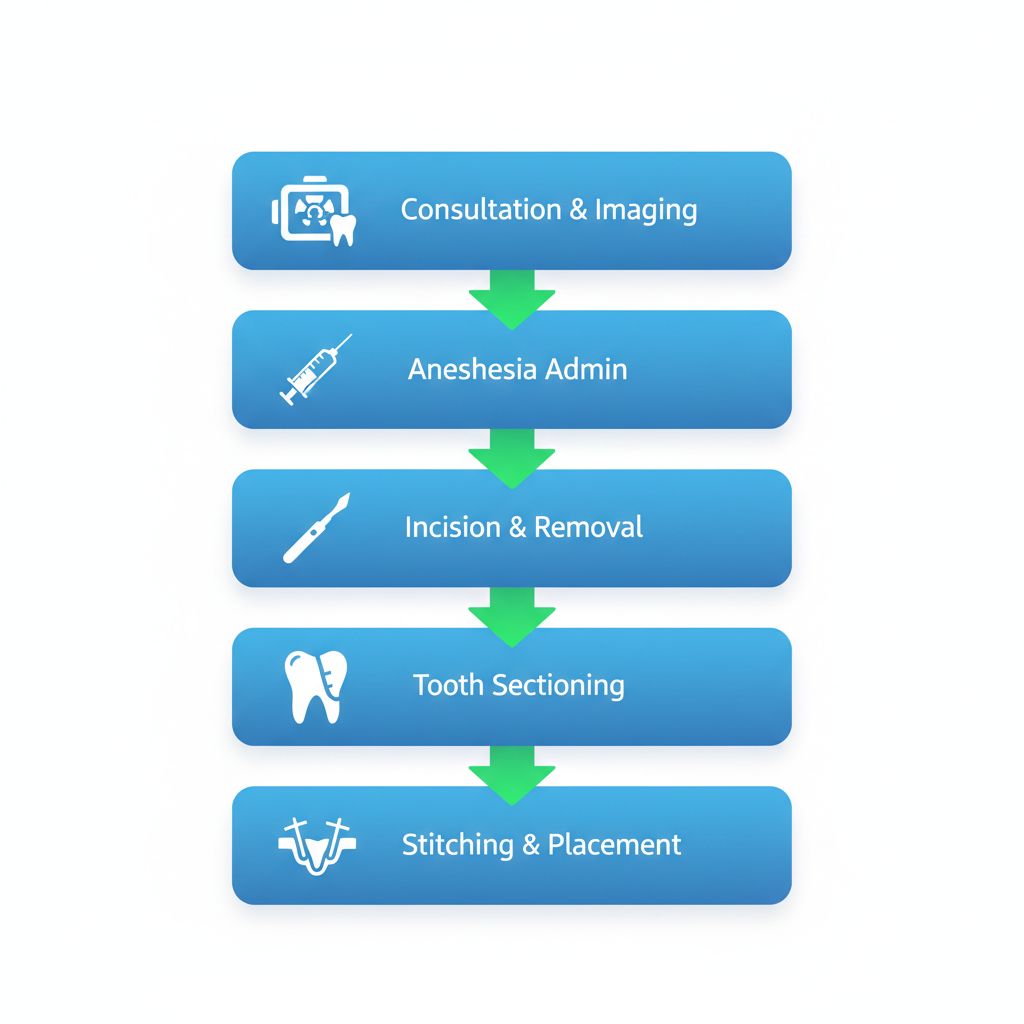
Step-by-step wisdom tooth extraction procedure illustration
Step-by-Step Extraction Process
We prioritize your comfort throughout the surgical tooth removal, employing minimally invasive techniques like air-abrasion where possible to preserve tooth structure and reduce recovery time. Here is how we proceed:
- Anesthesia Administration: Once settled in our welcoming chair, we apply local anesthesia to numb the area around the wisdom tooth. For more anxious patients or complex cases, we offer sedation options, such as nitrous oxide or oral sedatives, to help you relax without full general anesthesia. Our goal is gentle care, ensuring you feel at ease from the start.
- Incision and Access: If the tooth is impacted, we make a small incision in the gum tissue to expose it, using advanced tools for precision. For partially erupted teeth, this step is often minimal. We may gently remove a thin layer of overlying bone if needed, always aiming to keep the process as non-invasive as possible.
- Tooth Sectioning and Removal: The tooth is carefully divided into smaller sections using gentle instruments, then extracted piece by piece. This technique, especially for impacted molar procedures, prevents excessive force and protects surrounding structures. At Smilo Family Dental, our digital tools guide us for exacting work, reducing trauma.
- Cleaning and Closure: We clean the extraction site thoroughly to remove debris, then place dissolvable stitches if an incision was made. Gauze is applied to control bleeding, and we provide detailed instructions before you leave.
This process typically varies based on whether it is a simple or surgical extraction, but our team ensures efficiency while focusing on your well-being. By using methods like those on our minimally invasive care page, we preserve as much natural tissue as possible, leading to smoother outcomes.
The choice between simple and surgical methods depends on your specific case, such as tooth position and impaction level. We evaluate this during consultation to recommend the most suitable option, balancing effectiveness with minimal discomfort.
| Aspect | Simple Extraction | Surgical Extraction |
|---|---|---|
| Anesthesia | Local only | Local with possible sedation |
| Duration | 20-30 minutes per tooth | 45-60 minutes, stitches may be needed |
| Recovery | Minimal swelling | More swelling, dry socket risk |
Post-Procedure Care Basics
Immediately after your extraction, we monitor you briefly in our clinic to ensure stability before heading home. Bite gently on the gauze for 30-45 minutes to aid clotting, and avoid rinsing vigorously that first day to protect the site. Our team provides personalized aftercare instructions, emphasizing rest and hydration to support recovery.
Common tips include using ice packs for swelling and sticking to soft foods like yogurt or soup. Over-the-counter pain relief, as recommended, helps manage any discomfort, and we advise contacting us for signs of issues like excessive bleeding. This initial care bridges into full recovery, where following our guidance prevents complications and promotes healing.
Practical Recovery After Wisdom Tooth Extraction
Recovering from wisdom tooth extraction in London, Ontario, is typically straightforward when you follow our patient-centered aftercare guidelines at Smilo Family Dental. We understand that the thought of post-surgery healing can feel daunting, but do not worry – most patients experience smooth recovery with proper extraction aftercare. This section outlines practical steps to manage discomfort and promote healing, drawing on evidence-based advice to help you get back to your routine quickly.
Immediate Post-Op Instructions
In the first 24-48 hours after your procedure, focus on rest and gentle care to minimize bleeding and swelling. We advise biting down firmly on the gauze pad placed over the extraction site for about 30-45 minutes to control any initial bleeding, which is normal and usually stops within a few hours. If bleeding persists, replace the gauze and apply gentle pressure – avoid rinsing or spitting vigorously, as this can dislodge the blood clot.
For pain relief at home, take over-the-counter medications like ibuprofen as directed, or use any prescribed painkillers from our team. According to reliable sources, dry socket – a painful condition where the blood clot is lost – occurs in only 2-5% of cases, but preventing it starts with avoiding straws and smoking. Apply ice packs wrapped in a cloth to your cheeks for 15-20 minutes on and off to reduce swelling, which peaks around day two. Rest with your head elevated, and stick to our Smilo Family Dental instructions for a comfortable start to healing. We recommend soft, cool foods and plenty of fluids to stay hydrated without irritating the site.
| Recovery Stage | Simple Extraction | Surgical Extraction |
|---|---|---|
| Days 1-2 | Mild swelling, soft foods | Moderate swelling, ice packs essential; Rest, prescribed meds |
| Days 3-7 | Return to work, gradual diet | Stitch removal if needed, avoid strenuous activity; Monitor for dry socket |
| Week 2+ | Full healing, normal activities | Extended soft tissue healing; Follow-up x-ray possible |
Diet and Activity Guidelines
Transitioning your diet and activities thoughtfully supports optimal healing after wisdom tooth extraction. Start with liquids like smoothies, broths, and yogurt for the first day, then progress to soft foods such as mashed potatoes, applesauce, and scrambled eggs by day two. Avoid hot, spicy, crunchy, or chewy items that could irritate the site – steering clear of seeds, nuts, and straws prevents complications like dry socket.
We recommend resuming light activities after 24-48 hours, but hold off on strenuous exercise, heavy lifting, or bending over for at least a week to avoid increased bleeding. Gradually reintroduce normal eating around day three for simple extractions, but surgical cases may need softer options longer. Drink plenty of water and maintain oral hygiene with careful brushing around the area, starting rinses as we advise. By following these guidelines, you will aid post-surgery healing and reduce risks, much like the general practices for oral health care in Canada that emphasize balanced nutrition.
When to Contact Your Dentist
While most recoveries are uneventful, knowing when to reach out ensures peace of mind. Contact us at Smilo Family Dental if you experience severe pain not relieved by medication, excessive bleeding after 24 hours, or swelling that worsens after day three – these could signal infection or other issues. Warning: Fever over 101°F, pus discharge, or difficulty swallowing or breathing requires immediate attention. Unlike signs you need wisdom teeth removed, such as persistent jaw pain or crowding before the procedure, post-op symptoms like uncontrolled swelling differ and warrant a check.
Dry socket, though rare at 2-5%, presents as throbbing pain around days three to five – do not hesitate to call our extended-hour line. We also advise follow-up visits one to two weeks post-op to monitor healing, especially for surgical extractions. Beyond physical recovery, understanding potential follow-up expenses related to wisdom teeth removal cost can help you plan; our flexible payment plans ease this.
Advanced Considerations for Wisdom Tooth Extraction
While recovery is a key focus after wisdom tooth extraction in London, Ontario, understanding the financial side ensures a smooth overall experience. At Smilo Family Dental, we help families navigate these aspects with transparency and support. Costs can vary based on several factors, making it essential to plan ahead for wisdom teeth removal cost.
Cost Factors Influencing Extraction Expenses
The total extraction expenses depend on the procedure’s complexity and scope. For a single simple extraction, fees are generally lower compared to multiple teeth or surgical cases. Impacted wisdom teeth often require more intricate work, increasing dental surgery budgeting needs. Here are key influencers:
- Type of Extraction: Simple pulls are straightforward and less costly, while impacted or surgical ones involve incisions and may need sedation, raising the overall wisdom teeth removal cost.
- Number of Teeth: Removing one tooth is more affordable than all four, as each additional procedure adds time and resources.
- Location and Additional Needs: Fees in urban areas like London may reflect local standards, and extras like X-rays or anesthesia contribute to the final bill.
By addressing signs you need wisdom teeth removed early, patients can avoid higher costs from complications later. We provide detailed estimates during consultations to aid in dental surgery budgeting.
Navigating Insurance Coverage in Ontario
In Ontario, dental insurance plays a vital role in managing wisdom teeth removal cost. The Canadian Dental Care Plan (CDCP) covers children under 18 for basic extractions as preventive care, while adults rely on private plans through employers or individual policies. Coverage typically includes routine procedures but varies for surgical ones, often requiring pre-approval for medical necessity. We assist with claims processing to maximize benefits and minimize surprises. Out-of-pocket amounts depend on deductibles, co-pays, and plan limits – simple cases fare better than complex impacted removals.
| Factor | Typically Covered by Insurance | Often Out-of-Pocket |
|---|---|---|
| Simple Extraction | Yes, under basic dental plans | N/A, Routine preventive |
| Impacted/Surgical | Partial, if medically necessary | Full if cosmetic or elective |
| Follow-Up Care | Yes, routine visits | Complications treatment, Varies by plan |
Common Questions About Wisdom Tooth Extraction
What are early signs of wisdom teeth complications? Early signs you need wisdom teeth removed include persistent pain around the back of your mouth, swelling, or difficulty opening your jaw. Per Mayo Clinic, impacted teeth can lead to infections or cysts if not addressed. We recommend monitoring for these signs during routine cleanings at Smilo Family Dental to catch issues early.
Can swollen gums mean I need wisdom teeth removed? Yes, swollen gums often signal molar concerns from partially erupted wisdom teeth, trapping food and bacteria. This can cause gum disease or cavities, as noted by Mayo Clinic. Our gentle care team in London, Ontario, can evaluate during a checkup to determine if wisdom tooth extraction in London, Ontario is necessary.
When should I see a dentist for wisdom teeth issues? Seek care if you experience ongoing pain, repeated infections, or jaw stiffness. Mayo Clinic advises consulting a professional for evaluation, especially in young adults for easier recovery. We at Smilo Family Dental encourage prompt visits to prevent complications.
How much does wisdom teeth removal cost? Wisdom teeth removal cost varies based on complexity, typically ranging from $200 to $600 per tooth, including consultations. Factors like sedation add to the total. Our flexible payment plans make it accessible – contact us for a personalized quote.
How do I know if my wisdom teeth are causing problems? Watch for crowding, bad breath, or unexplained bleeding gums, common with misaligned growth. If healthy and positioned well, removal may not be needed, per Mayo Clinic. Schedule an exam with us for x-rays and expert advice on your oral health.
Taking the Next Step in Your Dental Health
As we have explored, recognizing signs you need wisdom teeth removed early can prevent complications from wisdom tooth extraction in London, Ontario. From the straightforward procedure and essential recovery tips to understanding wisdom teeth removal cost, timely action supports long-term oral health.
At Smilo Family Dental, our patient-first approach emphasizes gentle care and minimally invasive options, benefiting every generation with preventive dental wellness steps. We are committed to extended hours and flexible payment plans for your convenience.
Ready to prioritize your smile? Visit us at 1195 Hyde Park Rd. for a consultation, or book online today. We are here to help.
Resources
- Get Safe Wisdom Teeth Extraction in London Ontario
- Save Teeth with Expert Root Canal Therapy in London
- Restore Smiles with Permanent Dental Implants in London
- Discover Comprehensive Family Dental Services in London Ontario
- Repair Cavities Using Natural Dental Fillings in London
- Preserve Teeth Through Minimally Invasive Dental Care
- Straighten Teeth Discreetly with Invisalign in London
- Learn Wisdom Tooth Extraction Procedure and Recovery Tips
- Maintain Oral Health with Canadian Care Guidelines
- Follow Expert Guidelines for Wisdom Teeth Removal