• Call or text us now

    (519) 474-0220 Powered by Nexhealth

  • 1195 Hyde Park Rd.

    Unit 1, London, ON N6H 5K6

Stress-Free Dentist in London, ON | Smilo Family Dental

Tag: family dental clinic

  • Common Dental Problems in Children: A Parent’s Guide

    Table of Contents

    Common Dental Problems in Children in London, Ontario: What Every Parent Should Know

    Taking care of children’s teeth starts with knowing what problems to watch for. Understanding common dental problems in children helps parents take early action, and families in London, Ontario can turn to our team for gentle, award-winning support.

    Early childhood caries — also called baby bottle tooth decay — is the most frequent kids’ dental issue we see. It develops when a child’s teeth are exposed to sugary liquids from bottles or sippy cups for extended periods. Our Smilo Family Dental FAQ explains that limiting juice in bottles, wiping gums after feedings, and scheduling a first checkup by age one are the best lines of defense against childhood tooth decay.

    Malocclusion in children refers to bite misalignment that can affect speech, chewing, and self-esteem. The Canadian Dental Association recommends an orthodontic evaluation by age seven, and our team watches for early signs during routine exams. If we spot emerging bite alignment problems, we’ll guide you toward timely, minimally invasive solutions.

    Prolonged thumb sucking beyond age four can also contribute to bite problems. Gentle discouragement at home works for most children, but when the habit persists, consulting a pediatric dentist at Smilo Family Dental helps protect your child’s developing smile.

    Understanding these issues is the first step; here’s how we can help. London, Ontario families have access to stress-free, family-focused care right in Hyde Park. Gentle care, for every generation.

    Why Children Experience Dental Problems and How to Prevent Them

    To understand how to protect your child’s smile, it helps to first recognize the most common dental problems in children. As a parent, noticing a white spot on a tooth or spotting a little blood during brushing can be concerning. The good news is that frequent dental issues in kids, like early childhood caries, malocclusion in children, and gum disease, are largely preventable with the right habits. We believe that informed parents raise healthier smiles. Here is a quick overview of typical oral health problems among children and the simple steps that keep them at bay.

    Comparison of Common Childhood Dental Problems
    ProblemPrimary CauseKey SymptomsCommon TreatmentsPrevention
    Early Childhood CariesProlonged exposure to sugary liquids (bottle, sippy cup) and poor oral hygieneWhite spots, brown spots, toothache, sensitivityFluoride varnish, fillings, crowns in severe casesLimit sugar, brush with fluoride toothpaste, regular dental visits
    MalocclusionGenetics, thumb sucking, prolonged pacifier use, early tooth lossCrooked teeth, overbite, underbite, difficulty chewingBraces, clear aligners (Invisalign), palatal expandersDiscourage thumb sucking beyond age 4, early orthodontic evaluation
    Gum Disease (Gingivitis)Plaque buildup from poor brushing and flossingRed, swollen, bleeding gums during brushingProfessional cleaning, improved oral hygieneBrush twice daily, floss daily, regular dental exams

    This table gives you a snapshot of childhood tooth decay, bite issues, and gum inflammation. Each condition has unique triggers, but they all share a common solution: consistent at-home care paired with professional monitoring. Below, we expand on what each problem means for your little one.

    Early Childhood Caries

    Early childhood caries, often called baby bottle tooth decay, develops when a child’s teeth are frequently exposed to sugary liquids like milk, formula, or juice. According to our own FAQs at Smilo Family Dental, this condition commonly appears when a child falls asleep with a bottle or uses a sippy cup throughout the day. Early signs include white or brown spots on the teeth, progressing to sensitivity and toothaches. The primary culprit is prolonged sugar contact without adequate cleaning. Prevention focuses on limiting sugary drinks, wiping gums after feeding, and beginning to brush with a rice-sized smear of fluoride toothpaste as soon as the first tooth appears. Gentle care, for every generation, starts with these first tiny teeth.

    Malocclusion

    Malocclusion simply means misaligned teeth, and it often shows up as crowding, an overbite, or difficulty chewing. Genetics play a major role, but habits like thumb sucking beyond age four or extended pacifier use can also shift developing jaws and teeth. At our family dental clinic, we recommend an early orthodontic evaluation by age seven. This does not mean your child will need braces immediately. It gives us a chance to spot potential problems early and guide jaw growth, sometimes avoiding more complex treatment later. Breaking prolonged sucking habits and maintaining space after early tooth loss are two powerful ways to reduce the severity of malocclusion in children.

    Gum Disease

    Yes, gum disease can affect children. Childhood gingivitis usually appears as red, puffy gums that bleed during brushing. The root cause is plaque buildup from inconsistent brushing and flossing. The good news is that in its early stage, gingivitis is completely reversible. A professional cleaning in London, coupled with improved daily brushing and flossing, quickly restores gum health. Encouraging your child to brush for two full minutes, twice a day, and introducing flossing when teeth begin to touch prevents plaque from hardening into more serious issues. We make these visits fun and educational so kids leave feeling proud of their clean smiles.

    Visual comparison of common childhood dental problems and prevention

    All three of these common dental problems in children share a straightforward path to prevention. Brush twice daily with fluoride toothpaste, maintain a low-sugar diet, and keep scheduled dental visits. A child’s first appointment should happen by age one or within six months of the first tooth. Now that you know what to watch for, exploring dentistry for children can give you even more practical tips to keep your child’s smile healthy and bright.

    Malocclusion, Gum Disease, and How Sealants Protect Your Child’s Teeth

    Beyond cavities, two other concerns parents should watch for are malocclusion and gum disease. Many families face common dental problems in children, and recognizing these issues early makes treatment simpler and more effective. We believe that understanding these conditions helps you feel confident about your child’s oral health journey.

    What Is Malocclusion and How Does It Affect Children?

    Malocclusion in children occurs when teeth are misaligned, causing an improper bite. This condition often stems from genetics, but habits like prolonged thumb sucking or extended pacifier use can also contribute.

    Malocclusion may affect more than just tooth alignment. Children with malocclusion sometimes struggle with chewing and speech development. Persistent crowding or jaw discrepancies can also impact self-esteem, especially during the school years when peer interactions increase. Our team identifies alignment issues during routine checkups and discusses timing for early orthodontic assessment, which helps guide future treatment decisions.

    The following table compares two common approaches for correcting malocclusion in children.

    Treatment Options for Malocclusion in Children
    TreatmentAge RangeDurationVisibilityCost RangeEffectiveness for Severe Cases
    Traditional Braces7–16 years12–36 monthsHighly visible (metal brackets and wires)$3,000–$7,000Excellent
    Invisalign (Clear Aligners)7–18 years (with compliance)6–18 monthsNearly invisible$3,500–$8,000Good to moderate

    Pricing varies; we provide a custom quote after examination.

    Both options offer distinct advantages depending on the child’s age, the severity of malocclusion, and lifestyle preferences. Traditional braces remain the go-to solution for complex alignment challenges, delivering excellent correction even in severe cases. Invisalign aligners offer a nearly invisible alternative that suits many older children and teens who are diligent about wear schedules. During a consultation, we review your child’s unique needs and explain which path aligns with their comfort and long-term oral health.

    Recognizing Gum Disease in Kids: Signs and Prevention

    Gingivitis, an early form of gum disease, can appear even in young children. Parents often notice it first through bleeding during brushing or flossing.

    Common signs of gum disease in kids include:

    • Gums that bleed easily, especially after brushing
    • Red, swollen, or tender gum tissue
    • Persistent bad breath not resolved by brushing
    • Gums that appear to be receding or pulling away from teeth

    Prevention starts with consistent home care supervised by an adult. We encourage parents to brush their child’s teeth twice daily with a soft-bristled brush and to introduce flossing as soon as teeth touch. Routine professional cleanings remove plaque that home care may miss, reducing the risk of inflammation. When caught early, gingivitis is completely reversible with improved hygiene habits.

    How Dental Sealants Work to Prevent Cavities

    Our dentistry for children includes sealant applications to protect your child’s molars from decay. Sealants are thin, protective coatings painted onto the chewing surfaces of back teeth, where deep grooves trap food and bacteria. The material bonds quickly and hardens, creating a smooth shield that blocks cavity-causing plaque.

    Sealants are especially effective against early childhood caries. Research shows they can reduce the risk of molar decay by up to 80%, according to Smilo Family Dental’s own clinical guidance. The process takes only minutes per tooth and requires no numbing, making it a comfortable experience for young patients.

    We recommend sealants when the first permanent molars emerge, typically around age 6 or 7. A second round is often placed when the second molars arrive, usually between ages 12 and 13. Combined with regular brushing, a balanced diet, and routine checkups, sealants provide lasting protection during cavity-prone years. Understanding these issues helps you protect your child’s smile—our team is here to support you every step of the way. Gentle care, for every generation applies to orthodontic treatments too, and we are proud to offer that same compassionate approach whether we are applying sealants, monitoring gum health, or planning alignment care.

    Everyday Strategies to Protect Your Child’s Teeth from Cavities and Decay

    Protecting your child from common dental problems in children starts at home and begins earlier than many parents think. Tooth decay is the most prevalent chronic childhood disease, but with the right everyday habits, we can help your child grow up with a strong, healthy smile. At Smilo Family Dental, we believe prevention is a partnership — between our team, you, and your little one — built on gentle guidance and evidence-based care.

    Building a Good Oral Hygiene Routine for Children

    Establishing a consistent oral hygiene routine is the foundation of cavity prevention, and the approach changes as your child grows. For infants aged 0 to 2, we recommend wiping the gums with a soft, damp cloth after each feeding and graduating to brushing erupting teeth with a rice-sized smear of fluoride toothpaste. Never put your baby to bed with a bottle of milk or juice, as this habit is directly linked to early childhood caries in infants and toddlers.

    By ages 3 to 5, most children are ready to brush twice a day using a pea-sized amount of fluoride toothpaste with a parent’s help. Once teeth begin to touch, we show families how to introduce daily flossing. Making hygiene fun — through songs, timers, or a favorite toothbrush — transforms brushing from a chore into a positive habit. For school-aged children from 6 to 12, we encourage independent brushing with an adult checking for thoroughness, plus daily flossing and possibly a fluoride mouthwash if we advise it.

    To make these steps easy to follow, we have summarized age-appropriate dental care milestones in the table below.

    Age-Appropriate Dental Care Milestones
    Age RangeOral Hygiene PracticesDietary RecommendationsProfessional Care
    0–2 yearsWipe gums with soft cloth; brush erupting teeth with rice-sized fluoride toothpasteBreast milk/formula; avoid sugary drinks; no bottles at bedtimeFirst dental visit by age 1
    3–5 yearsBrush twice daily with pea-sized fluoride toothpaste; begin flossingLimit juice and sticky snacks; encourage water and crunchy fruits/veggiesEvery 6 months; fluoride varnish applications
    6–12 yearsIndependent brushing with supervision; floss daily; consider mouthwashBalanced diet; minimize soda and candy; regular water intakeEvery 6 months; sealants on permanent molars; orthodontic evaluation

    Each stage builds on the last, and we are here to guide you through every milestone with patience, encouragement, and plenty of praise for your child’s efforts.

    The Role of Diet in Preventing Tooth Decay

    Beyond the toothbrush, what lands on your child’s plate plays a powerful role in their oral health. Sugary and starchy foods fuel the bacteria that cause cavities, while tooth-friendly choices help neutralize acids and strengthen enamel. For toddlers, this means limiting juice to no more than 4 to 6 ounces a day and avoiding sticky fruit snacks that cling to teeth. Water remains the best beverage between meals, and crunchy vegetables like carrots and celery naturally scrub teeth as your child chews.

    Diet is especially important during the early years when primary teeth are most vulnerable to early childhood caries. We encourage parents to think of snacks as mini-meals that can either protect or harm teeth. Cheese, yogurt, and nuts provide calcium and phosphates that support remineralization, while frequent grazing on crackers, dried fruit, or sugary drinks creates an all-day acid bath on enamel. A simple rule: if it’s sweet or sticky, save it for mealtime when saliva production is higher and follow it with a drink of water.

    Healthy habits at home are powerful, but they work best when combined with regular professional support.

    When to Schedule Your Child’s First Dental Visit and What to Expect

    The Canadian Dental Association and our team at Smilo Family Dental agree: your child’s first dental visit should happen by their first birthday or within six months of the first tooth appearing. This initial “happy visit” is a gentle introduction designed to build trust and comfort. We show your child the chair, count their teeth, check their gums, and may apply fluoride varnish if indicated — all at a pace that respects their readiness.

    At Smilo Family Dental, we follow RCDSO dental standards and guidelines to ensure your child receives safe, evidence-based care from the very first visit. After this introduction, we recommend professional checkups every six months. For children aged 3 to 5, fluoride varnish applications add an extra layer of protection, while for the 6-to-12 age group we often discuss sealants on permanent molars and whether an orthodontic evaluation is timely. Identifying issues such as malocclusion in children early allows us to plan ahead and intervene when treatment is simplest and most effective.

    Combining a thoughtful home routine with professional preventive care sets the stage for a lifetime of healthy smiles. Gentle care, for every generation.

    Addressing Advanced Dental Issues and When to See a Specialist

    Among the most common dental problems in children are advanced issues that go beyond routine cavities, requiring a specialist’s expertise for proper management. At Smilo Family Dental, we monitor every young smile closely so that when concerns like severe early childhood caries or malocclusion in children emerge, we can guide families toward timely, coordinated care.

    Early childhood caries is an aggressive form of tooth decay in toddlers and preschoolers—often linked to prolonged bottle use or frequent sugary snacking. Signs that decay has reached an advanced stage include visible brown or black spots, pain when chewing, or swelling that suggests infection. In these situations, specialist intervention such as pulp therapy or extraction may be needed, and the Royal College of Dental Surgeons of Ontario (RCDSO) provides regulatory guidance on when sedation or hospital-based treatment is appropriate for very young or anxious patients.

    Malocclusion in children—abnormal bite alignment—can also signal that a specialist evaluation is beneficial. Common indicators include crossbite, open bite, deep bite, or an excessive overjet. An orthodontic assessment is often recommended around age seven, when the permanent molars have erupted and the jaw is still growing. While not every bite irregularity requires immediate treatment, early identification helps us coordinate referrals to trusted orthodontists and plan care that supports healthy development.

    During your child’s routine checkup, our team assesses for these advanced dental issues and explains findings in clear, reassuring language. If specialist care is warranted—whether with a pediatric dentist, an orthodontist, or an oral surgeon—we handle the referral seamlessly and remain your partner throughout the process. We focus on gentle, personalized support rather than making promises of specific outcomes, because every child’s oral health journey is unique. Gentle care, for every generation, means we are committed to connecting your family with the right expertise at the right time, so you can experience stress-free, award-winning dental care at every stage.

    Frequently Asked Questions About Children’s Dental Health

    We know parents have many questions about common dental problems in children — here are answers to the most common ones.

    • Q: When should my child first see a dentist? We recommend scheduling the first visit within six months of the first tooth appearing, and no later than age one. Early exams help us catch potential concerns and establish a dental home.
    • Q: How can I prevent cavities in my baby’s teeth? Avoid putting your baby to bed with a bottle, limit sugary drinks, and clean their gums with a soft cloth before teeth erupt. Early childhood caries — severe tooth decay in babies and toddlers — is largely preventable with these simple habits.
    • Q: Why do baby teeth matter? Primary teeth are essential for proper chewing, clear speech development, and holding space for permanent teeth. Healthy baby teeth set the stage for a lifetime of good oral health.
    • Q: How much toothpaste should my child use? For children under three, use a smear the size of a grain of rice. For ages three to six, a pea-sized amount of fluoride toothpaste is appropriate — always supervise to encourage spitting, not swallowing.
    • Q: Is thumb-sucking harmful to my child’s teeth? Thumb-sucking is natural for infants and toddlers. If the habit continues past age four or five, it can begin to affect the alignment of permanent teeth and we can suggest gentle solutions.
    • Q: What is malocclusion and when should it be checked? Malocclusion in children refers to poor bite alignment or crowding. The Canadian Dental Association recommends an orthodontic evaluation around age seven so we can identify any developing concerns early.

    Every child’s smile is unique. If you have questions or would like to schedule a visit, contact Smilo Family Dental in London, Ontario, we are always happy to provide personalized guidance for your family.

    Building a Lifetime of Healthy Smiles for Your Child

    Now that you understand common dental problems in children, the good news is that proactive care makes all the difference. Early childhood caries and other issues don’t have to shape your child’s future. By scheduling routine checkups from a young age, we can catch concerns before they escalate, using minimally invasive techniques like air abrasion and bonding that keep visits comfortable. Monitoring for malocclusion in children allows us to guide developing jaw growth and potentially reduce the need for extensive orthodontics later. We’re here to give your child the best start for lifelong oral health, with friendly support for insurance claims. Gentle care, for every generation.

    Resources

  • Pediatric Cavities Treatment Ontario: Complete Guide for Parents

    Pediatric Cavities Treatment Ontario: Complete Guide for Parents

    Table of Contents

    Pediatric Cavities Treatment in Ontario: What Parents Need to Know

    For families in London and across the province, accessing effective pediatric cavities treatment in Ontario is a cornerstone of childhood health. Early childhood caries—the clinical term for cavities in baby teeth—remains the most common chronic childhood disease in Canada, and recent Public Health Ontario data indicates a notably high prevalence in communities throughout the region. Left untreated, these cavities can lead to pain, infection, difficulty eating or speaking, and even damage to the developing permanent teeth beneath.

    The standard treatment pathway in Ontario begins with a dental examination using digital X-rays to diagnose the extent of decay. From there, we discuss restorative options that range from minimally invasive approaches like silver diamine fluoride for very early lesions to traditional fillings and crowns for more advanced cases. When children’s dental fillings in Ontario are needed, our team uses child-friendly language, local anesthetic for comfort, and proven behavior guidance techniques to ensure a positive, stress-free experience.

    As a practice focused on dentistry for children, we understand the unique needs of young patients and their parents. By using advanced diagnostics like iTero scanning, we catch early childhood caries in Ontario early, often avoiding more invasive procedures. Smilo Family Dental is here to provide gentle care, for every generation, and we’re happy to help you navigate coverage through programs like Healthy Smiles Ontario or your private insurance plan. From minimally invasive approaches to restorative fillings, here are the pediatric cavity treatments available in Ontario today.

    Understanding Early Childhood Caries in Ontario

    When a child’s smile shows signs of trouble, many parents in Ontario begin searching for information about pediatric cavities treatment in Ontario, seeking answers before the discomfort worsens. This is often diagnosed as early childhood caries (ECC), an aggressive and infectious disease that affects the primary teeth of infants and young children. Unlike the common term “baby bottle tooth decay,” ECC is a complex condition driven by bacteria that feed on sugars from liquids like juice and milk. Our team at Smilo Family Dental approaches this diagnosis with empathy, understanding how worrying it can be for a family.

    The process begins when frequent exposure to sugary snacks or drinks fuels acid attacks on tooth enamel. These acids cause demineralization, stripping away essential minerals and creating weak spots. Saliva naturally works to repair this through remineralization, but when the balance tips too often, white spot lesions—the first visible sign—begin to form along the gumline. In Ontario, this silent progression means we are seeing early childhood caries across Ontario as a preventable but widespread concern among our youngest patients. Early understanding is the first step in breaking this cycle of decay.

    What Are Early Childhood Caries?

    Early childhood caries is not just a simple cavity. It is an aggressive, transmissible bacterial infection that can spread and rapidly damage multiple teeth if left untreated. Our practice explains to parents that this disease affects primary teeth much faster than adult cavities develop. While many think of it as a harmless stage, the reality is that untreated ECC can lead to pain, infection, and difficulties with eating and speaking for a child. Dentistry for children is our focus, ensuring that even the youngest patients feel safe while we address this condition.

    This disease thrives on a cycle of acid attacks and mineral loss. Every time a child consumes a sugary substance, the bacteria in their mouth produce acids that can last for up to 20 minutes. Without consistent oral hygiene habits starting early, the enamel cannot recover, setting the stage for cavity formation. Our team works with parents to disrupt this cycle through preventive education and gentle intervention, creating a path toward a healthier mouth from the very first visit.

    Risk Factors for Children in Ontario

    Parents in Ontario should be aware of both universal and local factors that increase a child’s risk for developing cavities. Diet plays a leading role, with frequent consumption of sugary drinks, sticky snacks, and even prolonged use of a bottle at naptime contributing to a constant acid environment. Equally important are oral hygiene routines, where inconsistent brushing and flossing allow plaque to flourish. However, local realities in Ontario, such as the lack of community water fluoridation in certain areas, remove a key protective element that strengthens developing enamel.

    Access to timely and culturally competent care is another significant hurdle. Families in rural or underserved regions across the province can face delays in getting a first appointment, allowing small problems to escalate into bigger ones. These combined risks are why we see many cases of early childhood caries in Ontario that could have been prevented with early intervention. Smilo Family Dental is committed to making preventive care accessible, and we encourage parents to begin using a children oral hygiene guide well before their child’s first tooth erupts.

    Signs and Stages of Cavities in Kids

    Cavities do not appear overnight; they develop through several recognizable stages that parents can learn to spot. The very first warning is the appearance of chalky white spots along the gumline, a sign of early demineralization. At this stage, the damage can often be reversed with improved hygiene and fluoride. If these white spots are missed, the decay advances into the second stage, presenting as brown spots or discoloration on the tooth surface. This indicates the decay has spread past the enamel into the softer dentin layer.

    The most serious stage is frank cavitation, where holes become clearly visible and may cause sensitivity to sweets or temperature. By this point, the condition requires professional treatment, and for many families, this leads to the need for children’s dental fillings in Ontario to restore the tooth’s structure. Recognizing this progression from white spots to visible cavities empowers parents with the knowledge that early action can prevent the most invasive treatments. Our clinic’s approach is always to catch these signs early, preserving as much natural tooth structure as possible.

    The Importance of Early Detection

    The single most effective step we can take is early detection. We firmly believe in the benchmark established by the Canadian Dental Association (CDA), which recommends a child’s first dental visit by age one, or within six months of the first tooth appearing. This visit is not just a quick look; it is a comprehensive opportunity to identify risks and establish a preventive plan before any disease begins. Catching a cavity at the white spot stage allows us to use simple, non-invasive strategies, avoiding the need for fillings entirely.

    When a child visits Smilo Family Dental, we employ advanced diagnostic tools like digital x-rays, which expose your child to minimal radiation while revealing hidden decay between teeth. This technology shows us cavity treatment for kids that is not yet visible to the naked eye, enabling us to use air abrasion or other minimally invasive techniques rather than traditional drilling. Once identified early, effective treatment options vary from remineralization to gentle, tooth-colored fillings, all provided with our practice’s commitment to stress-free care.

    The Spectrum of Pediatric Cavity Treatment Options

    Discovering that your child has a cavity can feel overwhelming, but it’s important to know that modern pediatric care offers a wide range of gentle, effective solutions. Our approach to dentistry for children is rooted in minimally invasive, fear-free care, and we always start with the most conservative treatment possible. When you’re researching pediatric cavities treatment in Ontario, we want you to feel fully informed and confident that there is a personalized path to restore your little one’s healthy, happy smile.

    Non-Invasive Approaches: Reversing Early Decay

    It’s natural to hope there might be a way to stop a cavity without drilling, and in the very earliest stages, there often is. For white spot lesions — the chalky, demineralized marks that signal the start of decay — we can use professional fluoride varnish to halt the process. This isn’t a simple rinse; the varnish is a sticky, high-concentration fluoride paste painted directly onto the spot to remineralize and strengthen the enamel, effectively stopping the cavity in its tracks. For young children showing signs of early childhood caries in Ontario, this is a powerful first line of defense.

    Deep grooves on back molars are another trouble spot where ‘sugar bugs’ love to hide. Here, we can apply a dental sealant, which is a thin, protective coating bonded onto the chewing surface. The process is completely non-invasive, quick, and painless, creating a smooth barrier that prevents food and bacteria from settling in. These preventive treatments align perfectly with our goal to preserve every bit of your child’s natural tooth structure.

    Minimally Invasive Restorative Care

    When a cavity has progressed beyond the earliest demineralization and created a small hole, we need to gently clean it out and restore the tooth. For parents searching for children’s dental fillings in Ontario, we want you to know this process is far more delicate than you might imagine. We use a tooth-colored composite resin that bonds directly to the tooth, and we remove only the decayed portion using a gentle air abrasion tool — a stream of compressed air and fine particles — or a tiny, quiet drill, preserving healthy enamel.

    The composite is then placed in precise layers and each one is hardened with a special blue curing light, immediately restoring the tooth’s form and function. This technique is so minimally invasive that it often eliminates the need for local anesthetic, allowing us to place a beautiful, natural-looking filling that blends seamlessly with your child’s smile.

    Advanced Restorative Treatments for Severe Cavities

    Sometimes, despite our best preventive efforts, decay can spread deeper into the tooth and affect the inner nerve. If your child’s cavity is very large or causing them pain, you may be worried about losing the tooth entirely, but we have advanced ways to save it. When decay reaches the pulp in the crown of the tooth, a procedure called a pulpotomy can be performed. This involves gently removing the infected portion of the pulp and placing a soothing, medicated dressing inside the tooth before sealing it.

    It’s important to know this is distinctly different from an adult root canal; it’s a pediatric procedure designed to keep the primary tooth in place until it naturally falls out. After a pulpotomy, the tooth is often fitted with a stainless steel or tooth-colored crown to restore its strength and function, ensuring your child can eat, speak, and smile comfortably while waiting for their adult tooth to emerge.

    The table below illustrates our step-wise philosophy clearly. We will always explore every conservative option first, such as fluoride varnish for a small white spot or a sealant for a vulnerable groove, before considering a filling. All of our recommendations are based on a thorough diagnostic exam and tailored to your child’s specific needs and your family’s goals.

    Pediatric Cavity Treatment Overview
    Treatment OptionBest ForProcedure SummaryWhat to Expect
    Fluoride VarnishEarly white spot lesionsTopical application of fluorideQuick, painless; requires repeat visits
    Dental SealantsDeep grooves on molarsBonding thin coating to chewing surfacesNon-invasive; highly effective protection
    Tooth-Colored FillingsVisible cavities without nerve involvementRemoving decay and bonding composite resinMinimally invasive; tooth matches natural shade
    Pulpotomy/CrownExtensive decay reaching the nerveRemoving infected pulp and placing a crownRequires anesthetic; restores strength and function

    Sedation and Comfort Options for Children

    We understand that a parent’s biggest concern is often how their child will feel during treatment, and keeping young patients comfortable and at ease is the heart of our practice. Every visit is built on gentle techniques and honest, child-friendly communication. We use the ‘tell-show-do’ method, where we take the time to explain every step in simple terms, demonstrate on a finger or tooth model, and then perform the procedure only once your child is ready.

    For added comfort, we place a topical numbing jelly on the gums before any injections so the sensation is minimal. Laughing gas, or nitrous oxide, is a very safe and effective sedation option that we often call ‘happy air’ — it’s inhaled through a fun, scented nose mask and helps children relax while remaining fully awake and responsive. Our team is highly experienced in working with kids of all temperaments, and our calming approach helps build trust that sets the stage for a lifetime of positive dental visits and good oral health habits at home.

    What to Expect During Your Child’s Cavity Treatment Visit

    Parents often feel a wave of anxiety when they hear the words “cavity” and “child” in the same sentence. At Smilo Family Dental, we make the process of pediatric cavities treatment Ontario trusts as gentle and transparent as possible. We use minimally invasive techniques, like air abrasion, to treat early childhood caries Ontario without the noise of a traditional drill. This guide walks you through each stage so your family can approach the appointment with confidence.

    Before the Appointment: Preparation Tips

    Preparation helps make the experience positive for everyone. We encourage you to talk to your child using playful language, explaining that we will clean the “sugar bugs” off their teeth. Choosing friendly terms like “tooth tickles” instead of mentioning drills or needles goes a long way in building trust. Here are a few tips for a smooth start:

    • Pack their favourite comfort item, such as a small stuffed animal or blanket.
    • Bring a list of questions you have about the procedure or recovery.
    • Read a story together about a cheerful character visiting the dentist.

    By framing the visit as an adventure, you set the stage for a calm and cooperative experience in the treatment room.

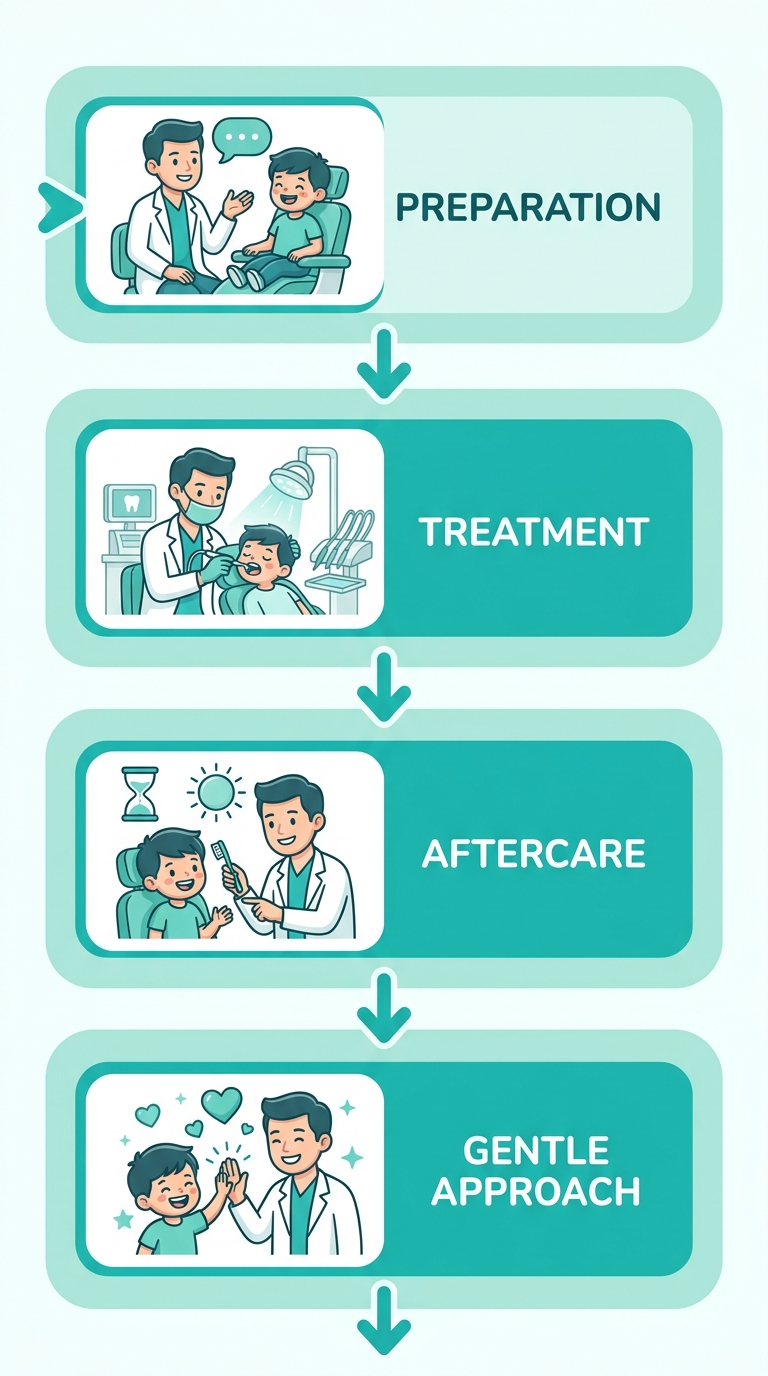
    Four-stage process flow for a child's cavity treatment visit at Smilo Family Dental

    Gentle, step-by-step cavity treatment process for children at Smilo Family Dental

    Step-by-Step: The Filling Procedure

    Once your child is comfortably seated, we explain every step before it happens, a technique called “tell-show-do.” For children’s dental fillings Ontario, our team begins by applying a gentle numbing gel so that any sensation is minimized. We may then use a dental dam to isolate the tooth and keep the area dry and comfortable. The careful sequence follows these clinical steps:

    1. Numbing: A jelly-like topical anesthetic is placed on the gum before any local anesthetic, making the process feel like a light touch.
    2. Preparation: Using precise air abrasion or conservative instruments, we gently remove only the decayed portion of the tooth.
    3. Restoration: We place the tooth-coloured composite filling with expert precision, matching the shade to your child’s natural enamel.
    4. Curing: A special blue curing light instantly hardens the material, making it strong enough to chew with right away.
    5. Polishing: We perform a final polish and bite check so the filling feels smooth and natural to your child’s tongue.

    Once the filling is polished and complete, the next phase of care begins at home.

    Aftercare and Recovery Following Treatment

    Leaving our office, your child will likely feel normal, but the lip and cheek area will stay numb for 1-2 hours. During this window, it is vital to prevent chewing on the numb tissue to avoid accidental bites. Once the sensation returns, follow these tips for a speedy recovery:

    • Serve only soft foods like yogurt, applesauce, or oatmeal for the first meal.
    • Avoid sticky or hard snacks for the remainder of the day.
    • Use age-appropriate pain relievers only if your child experiences any gum tenderness.
    • Resume gentle brushing and flossing the same evening, taking extra care around the new filling.

    Always follow your pediatrician’s dosage guidelines when giving any medication. The comfort and safety protocols we follow in the clinic extend directly into these straightforward aftercare instructions.

    Our Gentle, Stress-Free Approach in London, Ontario

    Our entire team has refined a caring protocol by treating over 5,000 patients, and we see the relief on parents’ faces every day. From the moment a child sits in the chair, we use ceiling-mounted TVs for distraction and “tell-show-do” so there are no surprises. This commitment to comfort and prevention is the foundation of our dentistry for children. Our team’s experience helps children visibly shift from nervous to proud by the time they pick a prize from our treasure chest, leaving unafraid and ready to come back.

    We also ease parental stress by handling insurance paperwork, offering flexible payment arrangements, and making sure every visit reflects our belief in “Flexible payments, stress-free insurance.” Our approach ensures that treating childhood tooth decay becomes just another positive milestone in your family’s health journey in London, Ontario.

    Ontario Dental Benefits and Prevention Best Practices

    Caring for a child’s teeth can feel overwhelming, especially when facing the cost of treating cavities and arranging fillings. Understanding how Ontario’s public dental programs help with pediatric cavities treatment ontario can bring immediate peace of mind. We help make that care affordable by guiding families through available benefits and building strong prevention routines.

    Canada Dental Benefit is an interim federal program that makes restorative care accessible for eligible families. To apply, confirm your child is under 12 years old and that your adjusted family net income is below $90,000. Gather your dental care receipts and submit the claim online through CRA My Account or by calling the dedicated CRA phone line. The benefit provides up to $650 per child per year for fillings, extractions, and other restorative treatments. We accept this benefit and our team helps with claim questions so you can focus on what matters.

    Does Healthy Smiles Ontario Cover Fillings?

    Yes, Healthy Smiles Ontario is a government-funded program that covers fillings for eligible children 17 and under. This includes children’s dental fillings ontario—a crucial restoration that stops tooth decay from worsening. To qualify as a low-income household, a separate application must be submitted through the Ministry of Health website. Once enrolled, children receive checkups, cleanings, and necessary restorative work without out-of-pocket fees. We welcome HSO patients and walk families through eligibility and coverage so there are no surprises.

    Daily Habits to Prevent Childhood Cavities

    Even with coverage, the best filling is the one your child never needs. Preventing childhood cavity care starts with limiting sugary snacks and juice frequency. Introduce fluoride toothpaste when the first tooth appears and maintain a twice-daily brushing routine with parental supervision until about age eight. Once any two teeth touch, begin flossing daily. These small daily habits dramatically lower the risk of early childhood caries Ontario—a term dentists use for severe tooth decay in very young children—and keep little smiles healthy between checkups.

    Partnering with a Dental Home in London, Ontario

    A dental home creates the foundation for lifelong oral health through consistent, familiar care. Schedule your child’s first visit by their first birthday or when that first tooth appears, then maintain six-month checkups so we can detect early childhood caries before fillings are needed. We focus on minimally invasive care and use advanced diagnostics to catch decay early. Our location in London, Ontario means families have a trusted team that knows their history, accepts CDB and HSO, and supports stress-free treatment. Once you’ve established a prevention plan and a dental home, the next step is knowing what to expect during a cavity treatment visit.

    We believe every child deserves gentle, award-winning care, and we are here to make that possible through every stage of growth.

    Stress-Free Pediatric Dental Care in London, Ontario

    When a child needs pediatric cavities treatment in Ontario, parents often feel anxious about how their little one will handle the experience. At Smilo Family Dental, we believe dentistry for children should build confidence, not fear. Our team in London, Ontario focuses on creating calm, positive visits from the moment families walk through the door. We warmly greet each child, offer a gentle tour of our office, and introduce our iTero scanner to replace messy, uncomfortable impressions. Our compassionate team uses age-appropriate language, so kids understand each step without feeling rushed or surprised.

    We also coach parents on recognizing early childhood caries in Ontario, a prevalent condition we address proactively to prevent bigger problems later. When we detect small cavities, we opt for minimally invasive techniques like air abrasion and tooth-colored composite fillings whenever possible, avoiding traditional drilling that can heighten anxiety. These quick restorations preserve more natural tooth structure and are an excellent option for children’s dental fillings in Ontario, helping kids leave the chair with a healthy smile and a sense of accomplishment. After treatment, we celebrate every child’s courage with positive reinforcement, ensuring the memory of their visit feels supportive.

    Families appreciate our flexible scheduling, which includes evening and weekend appointments so dental visits never disrupt school or work routines. Our coaching empowers parents with simple strategies to prepare children at home, like reading stories about the dentist and avoiding negative language. We believe positive early dental experiences prevent adult dental anxiety, staying true to our promise of gentle care, for every generation. This foundation of comfort naturally extends to all our restorative options, opening the door to discussions about how we manage children’s specific treatment needs with the same empathetic approach.

    This article was researched and written with the assistance of AI tools.

    Resources