
• Call or text us now

    (519) 474-0220 Powered by Nexhealth

  • 1195 Hyde Park Rd.

    Unit 1, London, ON N6H 5K6

Stress-Free Dentist in London, ON | Smilo Family Dental

Tag: pediatric dentistry London ON

  • First Dental Visit for Toddlers: Complete Parent Guide

    First Dental Visit for Toddlers: Complete Parent Guide

    Table of Contents

    Welcoming Your Toddler to Their First Dental Visit in London, Ontario

    At Smilo Family Dental, we understand that a toddler’s first visit is a major family milestone. Our London, Ontario team is dedicated to providing a warm, supportive environment where your child can feel safe while exploring the dentist’s office for the first time. By starting dental care early, you are investing in your child’s long-term comfort and health.

    What to Expect During a Toddler’s First Dental Exam

    A child’s first dental experience sets the tone for a lifetime of oral health habits. At Smilo Family Dental, we believe this initial visit should be informative, comfortable, and stress-free for both you and your little one. Knowing exactly what will happen can significantly reduce any anxiety, turning what might seem like a daunting appointment into a positive milestone.

    When Should a Toddler Have Their First Dental Visit?

    Planning your child’s first dental visit for toddlers is a crucial step in establishing a foundation for lifelong wellness. The Canadian Dental Association, along with our team at Smilo Family Dental, recommends scheduling this important appointment by the age of one, or within six months of the eruption of the first baby tooth. This early introduction allows us to monitor development from the very start and catch potential issues before they become concerns.

    We designed our dental checkup for toddlers Canada to be a gentle, no-pressure experience. The primary goal of this visit is not to perform complex procedures but to familiarize your child with our family-friendly environment. You will have the opportunity to ask questions about brushing techniques, thumb-sucking habits, and your child’s nutritional impact on oral health. Our team will discuss any findings with you and provide a personalized treatment and payment plan tailored to your child’s specific needs.

    What Happens During a Toddler’s First Dental Exam?

    When you arrive at our London, Ontario office for your child’s first dental visit, our caring team will guide you through a series of calm, non-invasive steps. We use a gentle, minimally invasive approach designed to build trust and ensure your toddler feels safe at every moment.

    Here is what you can expect during the exam:

    • Welcome and Introduction: You and your toddler will be warmly introduced to our dental team, allowing your child to acclimate to the new surroundings.
    • Knee-to-Knee Examination: You will sit knee-to-knee with the dentist, holding your child securely in your lap. This comforting position keeps your toddler feeling safe while allowing us a clear view of their teeth and gums.
    • Teeth Counting and Gentle Cleaning: We will count your child’s teeth using a small, soft-bristled brush, demonstrating proper cleaning techniques for you to use at home.
    • Fluoride Varnish Application: To protect against decay, we may apply a gentle fluoride varnish with a fruity flavor, which is quick and well-tolerated by young children.
    • Parent Education and Q&A: Finally, we will discuss oral development milestones and answer all of your questions about home care routines.

    Common Signs of Tooth Decay in Toddlers

    Despite diligent brushing, childhood cavities remain a worry for many parents. Understanding the early signs can help you identify common dental problems in children before they worsen. Early childhood tooth decay, sometimes called early childhood caries, is often linked to dietary habits like frequent snacking or sleeping with a bottle, which exposes teeth to sugars for extended periods.

    The earliest indicator is often the appearance of “white spot lesions” along the gumline, particularly on the upper front teeth. These chalky white marks signal the beginning stage of enamel demineralization and are reversible with prompt professional care. As decay progresses, you might notice signs of tooth decay in children such as brown or black spots developing on the tooth surface. Your child may also exhibit increased sensitivity to sweet, hot, or cold foods, or you might visually detect a small hole or pit in the tooth. Spotting these symptoms early allows us to intervene with remineralization strategies or minimally invasive treatments, preventing more significant issues down the road.

    The Long-Term Benefits of Early Dental Visits

    Bringing your child in for their first dental visit for toddlers is one of the most important steps you can take toward a lifetime of healthy smiles. At Smilo Family Dental, we believe that Gentle care, for every generation starts with a positive, stress-free introduction to oral health early in life. By establishing a dental home before problems arise, we help London families build the foundation for lifelong wellness, prevent minor issues from becoming major concerns, and navigate the financial support available for children’s dental care.

    Building a Foundation for Lifelong Oral Health

    We recommend scheduling a child’s initial checkup for little ones by age one or within six months of their first tooth erupting. This first exam is not just about looking for cavities; it is about creating a comfortable, trusting relationship. When a toddler visits us and has a gentle, engaging experience, it can help build a positive association with dental care from the very start.

    This early dental home may reduce anxiety later in life and often leads to a willingness to attend regular checkups. Our team uses a friendly, tell-show-do approach to help children feel safe and in control. Over time, these positive early childhood screening visits reinforce consistent at-home brushing and flossing habits, setting the stage for a lifetime of proactive, rather than reactive, care.

    Identifying and Preventing Early Decay

    Routine exams allow us to identify signs of tooth decay in children long before they become painful or visible to the naked eye. During a dental checkup for toddlers in Canada, we look for early warning indicators such as white-spot lesions on the enamel. These chalky areas signal demineralization, which, if caught in time, can often be reversed with prescription fluoride varnish, strengthening the tooth without any drilling.

    For slightly more advanced early decay, we offer minimally invasive treatments like air abrasion or protective sealants. These techniques allow us to gently clean and shield tiny grooves in the teeth, frequently without the need for numbing or traditional drills. By catching issues at this reversible stage, we help your child avoid more complex procedures later, making each visit a comfortable, stress-free experience.

    Financial Benefits: Coverage Under the Canada Dental Benefit

    We understand that navigating the cost of care is a key part of planning for your family’s health. For eligible families, the Canada Dental Benefit provides significant relief, offering coverage of up to $650 per child per year for essential dental services. Additionally, Ontario government programs like Healthy Smiles Ontario and CINOT provide free preventive and routine care for children from low-income households.

    At Smilo Family Dental, our knowledgeable team helps you understand exactly what your plan covers and handles the submission of claims on your behalf. If a treatment is not fully covered, we offer flexible payment plans without hidden fees:

    • We help you verify eligibility and maximize your Canada Dental Benefit claim.
    • We directly bill your insurance provider to minimize your upfront costs.
    • We set up custom, no-surprise payment schedules for any remaining balance.

    By starting early, you set your child up for a lifetime of healthy smiles—and we will guide you through every stage, from that very first appointment right here in London.

    How a Toddler Dental Checkup Works

    Here’s exactly what happens during a toddler checkup at our clinic, so you know what to expect. A first dental visit for toddlers is a gentle introduction to oral health care, designed to build trust and keep your child smiling brightly. Our team in London is proud to offer Gentle care, for every generation, and that starts with making your little one’s experience positive and stress-free.

    Step-by-Step: The Toddler Dental Exam

    Your visit begins with a warm welcome and a brief chat. We’ll talk with you about your child’s general health, eating habits, and any concerns you might have. This helps us understand your toddler’s needs before the exam begins. You’re always welcome to ask questions—we’re here to listen.

    The core of a toddler dental checkup is the knee-to-knee exam. You’ll sit with our dentist, knee-to-knee, and your child will sit comfortably on your lap. We then gently lower your toddler’s head back onto our lap for a clear view of their teeth. This position keeps your child feeling secure while we do a quick and thorough count of all their teeth.
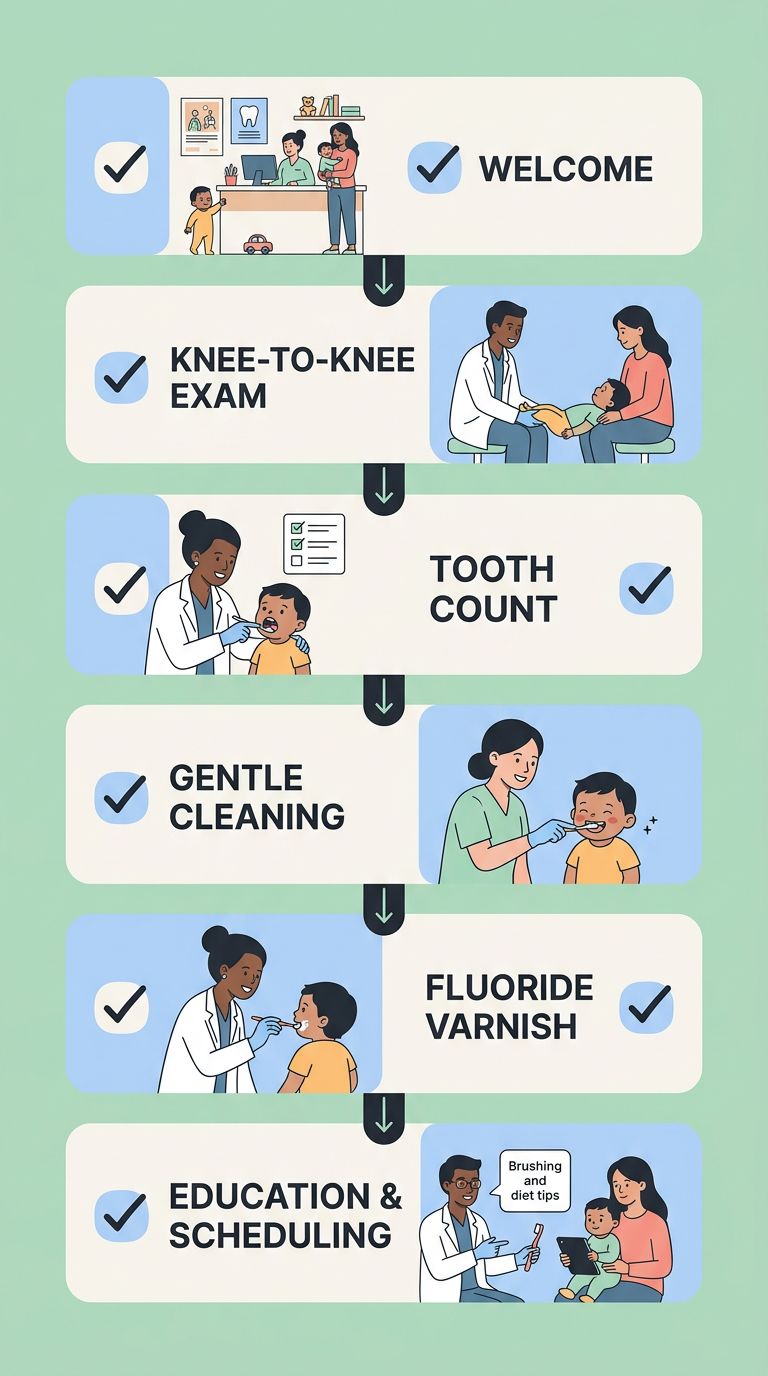
    Vertical process flow showing six steps of a toddler's first dental checkup at Smilo Family Dental, from welcome through knee-to-knee exam, tooth count, gentle cleaning, fluoride varnish, to education and scheduling.

    Gentle six-step toddler dental checkup process at Smilo Family Dental

    How Long Does a Toddler Dental Checkup Take?

    Many parents wonder, how long is toddler dental checkup at our clinic? The hands-on exam itself is typically very brief, lasting about 15 to 30 minutes. This short window is plenty of time for a thorough assessment while respecting your toddler’s limited attention span.

    What to Bring to Your Toddler’s First Appointment

    To make your child’s first visit as smooth as possible, here’s a handy checklist of items to bring with you:

    • Your child’s health card
    • Any dental insurance information
    • A list of current medications
    • A favorite comfort item, like a small toy or blanket
    • A small snack or drink for after the visit
    • A written list of any questions you have for our team

    Preparing Your Toddler for a Stress-Free Dental Visit

    Preparing for the first dental visit for toddlers can feel overwhelming, but with a little planning, you can make it a positive milestone for your child. The Canadian Dental Association (CDA) recommends scheduling that initial appointment early to establish a foundation of gentle, routine care. At Smilo Family Dental, we believe a stress-free introduction helps children build trust and sets the stage for a lifetime of healthy smiles.

    Tips for Preparing Your Toddler at Home

    • Read Together: Introduce the concept with children’s books like The Berenstain Bears Visit the Dentist, which frames a checkup as a fun adventure.
    • Role-Play a Visit: Take turns being the dentist. Let your toddler practice opening wide while you count their teeth, then switch roles so they feel in control.
    • Use Positive Language: Frame the visit as a chance to show off their sparkling smile. Avoid words like “hurt” or “shot,” and never use the visit as a threat.
    • Skip the Bribes: Rewarding with candy can send mixed messages. Instead, remind them that the dentist’s job is to keep their teeth healthy and strong.
    • Time It Right: Schedule the appointment during your child’s most alert window, typically after a nap and a light snack, to avoid a tired or hungry meltdown.

    Creating a Positive Dental Visit Experience

    Our gentle approach helps prevent common dental problems in children by building trust early. As soon as you walk through the door at Smilo Family Dental, we want your child to feel welcome, not worried.

    Finding a Kid-Friendly Dentist in Southwestern Ontario

    For a dental checkup for toddlers in Canada, choosing a familiar and welcoming environment is key. Parents looking in the London area should seek out a family-focused practice that emphasizes pediatric care and offers the scheduling flexibility a young family needs.

    Start Your Toddler’s Dental Journey with Confidence

    At Smilo Family Dental, we believe that a lifetime of healthy smiles begins with a positive first experience. Scheduling your child’s first dental visit for toddlers is a simple yet powerful step toward lifelong oral health. In Canada, the Canadian Dental Association recommends that a toddler have their initial dental checkup for toddlers in Canada by age one, or within six months of their first tooth emerging. This early introduction helps us gently monitor development and prevent issues before they start.

    Resources

  • Oral Conscious Sedation: Essential Guide for Anxiety-Free Dentistry

    Oral Conscious Sedation: Essential Guide for Anxiety-Free Dentistry

    Table of Contents

    What Is Oral Conscious Sedation?

    Oral conscious sedation is a gentle, non-invasive method we use to help patients overcome dental fear. It is a key part of our stress-free dentistry approach, designed to make your visit as comfortable as possible. Rather than facing treatment with anxiety, you simply take a prescribed sedative pill before your appointment.

    By the time you settle into the treatment chair, the medication is working to create a deeply calm state. You remain fully awake and can respond to our team’s instructions, but you feel completely relaxed and unconcerned about the dental work. This makes it an excellent entry point for those exploring sedation dentistry for anxiety, without the loss of consciousness associated with general anesthesia or the needles required for IV sedation dentistry.

    This type of oral sedation is often recommended for patients with mild to severe dental anxiety, those who need extensive restorative care, or individuals who struggle with a strong gag reflex. The medication typically begins working within 30 to 60 minutes and provides sustained comfort throughout the procedure. Knowing what it is and how it feels, let’s explore who can benefit most from this gentle approach.

    Understanding Oral Conscious Sedation — How It Works and What to Expect

    Let’s look more closely at one of the most popular methods we use at Smilo Family Dental for helping patients overcome dental fear: oral conscious sedation. This pill-based approach provides an effective way to manage anxiety without needles or intravenous lines. By taking a single sedative pill before your appointment, you can experience a calm and relaxed state throughout your visit. Many patients tell us that this anxiety-free dental care option transforms their entire experience, turning what was once a dreaded appointment into something manageable and even comfortable.

    What Exactly Is Oral Conscious Sedation?

    Oral conscious sedation involves taking a prescribed sedative pill before your scheduled dental treatment at Smilo Family Dental. It is important to understand that this is not general anesthesia — you will not be unconscious or asleep during your procedure. Instead, you remain awake and able to respond to our team’s instructions, but you enter a state of deep physical and mental relaxation. This type of pill-based sedation is an excellent option for patients who feel nervous about dental visits but do not require the deeper sedation achieved through IV methods. Our goal is to help you feel at ease while allowing us to complete your necessary dental work safely and efficiently.

    How Does Oral Conscious Sedation Feel?

    Most patients describe the sensation of oral conscious sedation as a gradual onset of drowsiness and calmness about 15 to 30 minutes after taking the medication. Smilo Family Dental patient feedback confirms that people often experience a comfortable heaviness in their limbs and a noticeable reduction in worry or fear. Many individuals find that their perception of time shifts during the appointment, so a longer procedure frequently feels as though it passes in just minutes. While you may drift between light sleep and wakefulness, you will remain responsive to our voices and gentle touch. For those seeking dental sedation regulations adherence and anxiety relief, this form of sedation dentistry for anxiety offers a reassuring pathway to getting the care you need without overwhelming stress.

    Safety and Monitoring During Your Appointment

    Safety is our top priority whenever we administer oral sedation medication. Before your appointment, your dentist completes a thorough pre-assessment to confirm your candidacy for the sedative pill and to rule out any potential concerns. During the procedure, our team continuously monitors your vital signs to track your heart rate, blood pressure, and oxygen levels, ensuring your well-being at every stage. We follow strict dental sedation regulations set by our governing college to ensure your safety. Throughout your visit, your dentist and at least one trained assistant or hygienist remain with you, providing attentive, gentle care for every generation. Our team members are fully focused on your comfort, responding quickly if you need anything while you are in a deeply relaxed state.

    Recovery Timeline: How Long Does Oral Sedation Last?

    The effects of oral conscious sedation are designed to last through your dental treatment and gradually fade over the hours that follow. After your procedure, you can expect residual drowsiness to persist for approximately four to six hours. Because the medication impairs coordination and judgment during this window, we require that you arrange for a responsible adult to drive you home afterward — this is a critical part of our safety protocol at Smilo Family Dental. We strongly recommend that you plan to take the remainder of the day to rest at home and avoid driving, operating machinery, or making important decisions.

    Once you know what to expect during and after oral sedation, you may be curious about who is a good candidate. Next, we’ll discuss that.

    Benefits of Oral Conscious Sedation for Anxious Patients

    For many people, visiting the dentist triggers significant anxiety, making it difficult to receive even routine care. Oral conscious sedation offers a powerful solution, allowing patients to undergo necessary dental treatments in a deeply relaxed, awake state. Unlike simply “toughing it out,” this approach transforms the dental experience from a source of fear into a manageable, often pleasant appointment. At Smilo Family Dental, we believe this gentle method plays a crucial role in our commitment to stress-free dentistry.

    Overcoming Severe Dental Anxiety and Phobia

    Severe dental phobia can prevent individuals from seeking care for years, leading to worsening oral health and more complex problems down the road. Oral sedation is specifically designed to address this barrier. By taking a prescribed pill before the appointment, patients with moderate to severe anxiety can achieve a profound state of calm. Our clinical team notes that patients remain conscious and able to respond to instructions, but the overwhelming fear is dramatically reduced. This means a person who once dreaded a simple cleaning can now comfortably receive the restorative treatments they truly need, breaking a painful cycle of avoidance without the associated stress.

    Suitable for All Ages: Children and Adults

    Dental anxiety does not discriminate by age, and neither should the available solutions. When administered by an experienced practitioner, oral conscious sedation is a safe and effective option for both children and adults. Our team carefully evaluates each patient’s medical history to determine their suitability for sedation. At Smilo Family Dental, we’ve seen how this technique can help a nervous child sit calmly for a filling or an adult with a lifelong fear finally address their dental health. This safety profile, grounded in professional oversight, makes oral sedation a versatile tool in our family-focused practice.

    No Needles, No Pain — A Gentle Alternative

    One of the most significant advantages of oral sedation is its needle-free administration, making it an ideal choice for patients who are phobic of injections. The medication is simply a pill taken by mouth, which aligns perfectly with our minimally invasive philosophy of care. The sedative effect eases not only anxiety but also heightens the threshold for discomfort, creating a more gentle overall experience. While we always use local anesthetic to numb the treatment area, the relaxing effect of the sedative ensures the initial numbing process is far less memorable or daunting.

    Tackling Multiple Procedures in One Visit

    Because the calming effects of oral sedatives last for several hours, they open the door to a more efficient approach to dental care. This longer duration of relaxation allows us to perform multiple treatments—such as fillings, crowns, and extractions—all in a single, comfortable appointment. This means fewer visits overall for our nervous patients. For a busy parent or a professional with a packed schedule, the ability to consolidate necessary dental work into one stress-free session is a profound benefit, reducing both the time commitment and the emotional toll of repeated visits.

    Choosing the right sedation method depends on your specific anxiety level, the procedure’s complexity, and your personal comfort. The following comparison breaks down the key differences between oral conscious sedation, nitrous oxide, and IV sedation.

    Oral Conscious Sedation vs. Other Sedation Dentistry Options
    FeatureOral Conscious SedationNitrous Oxide (Laughing Gas)IV Sedation
    Administration MethodPill taken by mouthInhalation maskIntravenous injection
    Level of ConsciousnessAwake but deeply relaxedFully awake, mild relaxationDrowsy to asleep (moderate sedation)
    Needle-FreeYesYesNo (requires IV line)
    Best ForModerate to severe anxietyMild anxiety, shorter proceduresSevere phobia, complex procedures
    Recovery TimeSeveral hours; driver requiredMinutes; no driver required1–2 hours; driver required
    Insurance Coverage in OntarioOften partially coveredOften coveredMay require pre-approval

    For patients seeking sedation dentistry for anxiety, the primary difference between oral and IV sedation often comes down to the needle-free aspect and the level of consciousness. Unlike IV sedation dentistry, which requires an injection to start an intravenous line, oral sedation is a simple pill, a factor that is particularly reassuring for needle-phobic individuals. Nitrous oxide provides a much lighter form of relaxation and wears off almost instantly, making it perfect for mild nervousness during quick visits but less suitable for severe phobia or lengthy appointments. We will help you understand which path is right for your unique needs.

    The Oral Conscious Sedation Process — From Consultation to Recovery

    If you have been exploring your options for a calmer treatment experience, we have designed the oral conscious sedation pathway to make every step predictable and reassuring. Our team in London, Ontario walks you through a clear, four-stage plan that keeps you comfortable, informed, and fully supported. Understanding the flow ahead of time is one of the best ways to quiet pre-appointment nerves, and sedation dentistry for anxiety is something we tailor personally to your needs.

    Step 1: The Initial Consultation and Health Assessment

    Your journey begins with a private conversation where we learn about your medical history, past dental experiences, and the specific worries that bring you in. We review any medications, allergies, or health conditions that could influence how your body responds to sedation, then perform a gentle examination of your mouth and airway. This thorough screening ensures that oral sedation is a safe fit for you. If you have concerns about other forms of relaxation — such as laughing gas or IV sedation — we can compare them briefly so you understand why the pill-based route suits your situation best. By the end of the visit, you will have a clear treatment plan and the confidence that every precaution has been taken.

    Step 2: Preparing for Your Sedation Appointment

    A smooth sedation day starts with a few simple steps at home. Because the medication needs an empty stomach to work safely and effectively, we follow a strict fasting rule — no food or drink for a set number of hours before your appointment, as outlined in our pre-treatment guidance. You will also need to arrange a responsible adult to drive you to and from our Hyde Park office, as the lingering effects of the sedative make operating a vehicle unsafe. Wear loose, comfortable clothing with sleeves that can be rolled up easily for the blood-pressure cuff, and leave contact lenses and jewellery at home if possible. When you arrive, we confirm that all preparation steps are in place so we can proceed with complete peace of mind.

    Step 3: Administration and What Happens During Treatment

    Once you are settled in the treatment chair, we give you a single pill to swallow with a small sip of water — this is the same oral medication you discussed during your consultation. Over the next hour, a deep wave of relaxation gradually washes over you while you remain awake and able to respond to our voices. Unlike laughing gas, which is inhaled through a mask, the oral sedative produces a more profound calm that helps even highly anxious patients feel at ease. A member of our clinical team stays with you continuously, monitoring your heart rate, blood pressure, and oxygen levels while the dentist performs the planned dentistry. You may feel pleasantly drowsy, and many patients later remember very little of the procedure itself — exactly the gentle, stress-free experience we aim to provide.

    Step 4: Recovery and Post-Treatment Instructions

    After the final restoration is placed, we help you move to a quiet recovery area where you can rest while the sedation gradually fades. It is normal to feel groggy, lightheaded, or slightly unsteady for a few hours, and mild short-term amnesia about the treatment is common. We keep you under observation until you are stable enough to go home with your driver. For the next 24 hours, avoid driving, operating machinery, or making important decisions. Stay hydrated, take it easy for the remainder of the day, and choose soft, lukewarm foods if your mouth feels tender. Should any unusual symptoms appear, our team is only a phone call away. With these simple aftercare steps, most patients bounce back quickly and are genuinely surprised by how manageable the whole day turned out to be.

    Oral Conscious Sedation vs. Other Sedation Options — Choosing the Right Approach

    Now that you’re familiar with what oral conscious sedation is and how it works, the next natural question is how it compares to other sedation methods. Choosing between sedation options can feel overwhelming, but at Smilo Family Dental, we believe that understanding the differences helps you make an informed, confident decision about your care. Whether you’re a nervous patient or simply curious about what’s available, we’re here to walk you through the pros and cons of each approach.

    Oral conscious sedation offers a moderate-to-deep state of relaxation, often with limited or no memory of the procedure. It’s an excellent choice for patients with moderate to high anxiety or those facing longer appointments. As Smilo Family Dental explains in their overview of sedation types, the goal is always to tailor the method to your specific comfort level and treatment needs.

    Oral Conscious Sedation vs. Nitrous Oxide (Laughing Gas)

    Nitrous oxide, commonly known as laughing gas, delivers a mild, calming effect while keeping you fully aware and cooperative throughout the appointment. It works almost instantly and wears off just as quickly, so most patients can resume normal activities right after leaving the office. There’s no need for fasting or a driver afterward, which makes nitrous oxide a convenient option for shorter, less invasive treatments.

    In comparison, oral conscious sedation requires advance planning—you’ll take a prescribed pill about an hour before your visit and will need someone to drive you home. The deeper relaxation level also means you’re more likely to have only fragmented or no memory of the procedure. According to Smilo Family Dental’s comparison of these two methods, this makes oral sedation especially valuable for patients with significant dental anxiety or those undergoing longer or more complex work, such as wisdom teeth extraction or multiple fillings in one sitting.

    Oral Conscious Sedation vs. IV Sedation Dentistry

    IV sedation dentistry takes relaxation to the deepest level possible without general anesthesia. Medications are delivered directly into the bloodstream, so the onset is immediate and the depth of sedation can be adjusted continuously during the procedure. Unlike oral conscious sedation, patients under IV sedation typically have minimal cooperation and no memory of the treatment.

    Oral sedation still allows you to respond to simple instructions, which many people find reassuring. Both methods require fasting beforehand and a responsible adult to drive you home afterward. As a practice that prioritizes gentle, personalized care, Smilo Family Dental helps you weigh these differences carefully. IV sedation may be suggested for severe anxiety or particularly invasive surgeries, while oral sedation often provides a comfortable middle ground for most nervous patients.

    The table below offers a quick-reference comparison of the three main sedation options to help clarify the distinctions.

    Oral Conscious Sedation vs. IV Sedation vs. Nitrous Oxide
    FeatureOral Conscious SedationNitrous OxideIV Sedation
    Depth of RelaxationModerate to deepMildModerate to deep
    Onset Time30–60 minutesImmediateImmediate
    Fasting RequiredYesNoYes
    Memory of ProcedureLimited or noneFull memoryNone
    Patient CooperationCan respond to instructionsFully cooperativeMinimal cooperation
    Post-Operative CareRest at home; driver neededResume normal activities immediatelyRest at home; driver needed

    Building on these comparisons, it’s also important to understand how these methods relate to the broader idea of sleep dentistry.

    Sleep Dentistry for Children and Adults — What You Need to Know

    “Sleep dentistry” is a term many people hear, but it can mean different things depending on the context. For some, it describes the deeply relaxed state achieved with oral conscious sedation or IV sedation, where the patient dozes through treatment without remembering it. For others, it refers to general anesthesia, which is typically reserved for hospital-based or complex surgical procedures. At Smilo Family Dental, we focus on safe, controlled sedation methods that keep you comfortable without putting you fully to sleep.

    Both children and adults can benefit from sedation when it’s administered by trained professionals. Smilo Family Dental emphasizes safety as the top priority, monitoring vital signs throughout every sedation appointment. Whether it’s a child needing a calm, anxiety-free experience or an adult sitting for a longer procedure like Invisalign check-ups or restorative work, our team selects the appropriate sedation level for each individual case.

    How to Decide Which Sedation Option Is Right for You

    Your ideal sedation choice depends on several factors: your anxiety level, the type and length of your procedure, your medical history, and your personal comfort preferences. If you’re simply jittery about a quick cleaning, nitrous oxide may be all you need. For a lengthier appointment or deeper apprehension, oral conscious sedation or IV sedation often provides a better experience.

    Clear aligners treatments, for example, rarely require sedation during routine progress checks, but some patients with high dental anxiety prefer light sedation even for these short visits. At Smilo Family Dental, we take the time to discuss your concerns openly and recommend an approach that matches your needs. Our focus on gentle, stress-free care means you never have to settle for a one-size-fits-all solution.

    Now that you understand your options, learn how we prepare you for a stress-free visit.

    Take the First Step Toward Stress-Free Dental Care

    When you choose oral conscious sedation at our London clinic, you will find yourself in a deeply relaxed state while remaining awake and able to respond to gentle guidance from our team. Most patients feel remarkably calm throughout treatment, and it’s common to have little to no memory of the procedure itself.

    After your appointment, a responsible adult will need to drive you home while the medication wears off over a few hours. Some grogginess is normal at first, but you can expect to feel fully clear and alert by the following day.

    We understand how dental anxiety can keep you from the care you deserve, which is why we offer sedation dentistry for anxiety in London with a warm, family-focused approach. Our practice has earned a 4.8-star reputation among more than 5,000 patients, and we make it easy to get started with same-day consultations and flexible payment support. You will receive a personalized treatment plan and cost estimate with no surprises—just gentle care, for every generation. Call our team today at (519) 474-0220 or book online to schedule your stress-free visit.

    Resources

  • Family Dental Health Tips 2026: Essential Preventive Care

    Family Dental Health Tips 2026: Essential Preventive Care

    Table of Contents

    Family Dental Health Tips for London Families in 2026

    These family dental health tips for 2026 can help London families build strong oral health habits that last a lifetime. Our family dental care approach in London centers on simple, effective preventive dental care routines you can start today. As the Canadian Dental Association recommends, schedule your child’s first dental visit by age one for early childhood tooth decay prevention. Government of Canada guidelines stress brushing twice daily with fluoride toothpaste, flossing once a day, and choosing water over sugary drinks. For children at higher risk, ask about dental sealants and fluoride varnish. Making oral care a family activity turns healthy habits into lifelong cavity prevention. Gentle care, for every generation. When you prioritize family oral health, every checkup becomes a reason to smile.

    1. Build a Consistent Brushing Routine

    As part of family dental health tips 2026, building a consistent brushing routine is one of the most impactful preventive dental care routines your household can adopt. We believe that gentle, twice-daily habits set the stage for a lifetime of healthy smiles.

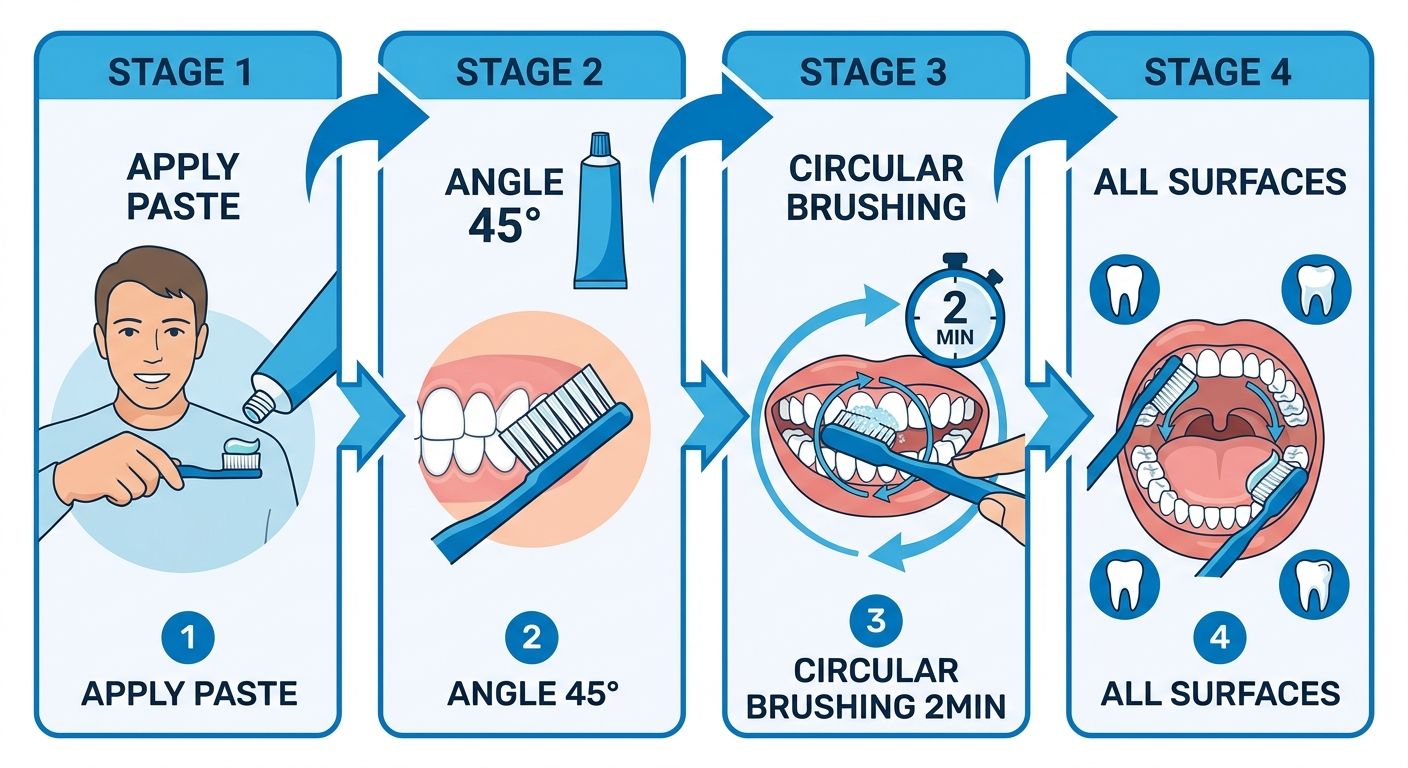
    According to the Canadian Dental Association, everyone should brush for two full minutes using a fluoride toothpaste. Proper technique means holding a soft-bristled brush at a 45-degree angle to the gums and using short, circular strokes to clean all tooth surfaces. For children, early childhood tooth decay prevention starts even before the first tooth appears, and our team at Smilo Family Dental suggests turning brushing into a fun daily ritual. Let your child choose a colourful brush, use a two-minute timer or a favourite song, and create a simple reward chart to celebrate consistency. Remember to swap out toothbrushes every three to four months, or sooner if the bristles look frayed.

    Four-step family brushing routine infographic with fluoride toothpaste application, 45-degree brushing angle, two-minute circular brushing, and all tooth surfaces coverage
    Build a consistent family brushing routine in four steps

    Once a daily dental routine feels automatic, you can layer in the next essential step — adding flossing to your oral care lineup.

    2. Floss: The Missing Step in Family Oral Care

    Looking for family dental health tips 2026 to boost your household’s routine? Many London families diligently brush twice a day but skip the one habit that cleans the spaces a toothbrush simply cannot reach. At Smilo Family Dental, we see flossing as the quiet hero of preventive dental care routines — it gently removes the plaque and food debris trapped between teeth, stopping gum inflammation and cavities before they start.

    We encourage parents to start children young. As soon as two little teeth touch, usually around age two or three, gentle floss picks or soft ribbon floss can clear those tight spots without irritating sensitive gums. For toddlers, kneeling face-to-face and making it a playful countdown works wonders; for school-aged kids, letting them choose colourful flossers builds ownership. When parents floss alongside their children, it becomes a shared moment rather than a chore, reinforcing Gentle care, for every generation.

    Timing matters. Flossing before brushing loosens hidden debris so that the fluoride from toothpaste can reach between teeth more effectively, supporting early childhood tooth decay prevention. Paired with regular checkups, this simple step rounds out a genuinely protective routine. It takes only a minute, costs very little, and gives every smile in the house a healthier foundation — a habit worth keeping all year long.

    3. Choose the Right Toothbrush for Better Gum Health

    As part of your family dental health tips 2026, selecting the right toothbrush plays a direct role in gum health. The Canadian Dental Association (CDA) recommends focusing on a few key features for every family member. Your toothbrush truly is the cornerstone of preventive dental care routines.

    • Soft bristles prevent gum irritation and enamel wear.
    • A small head easily reaches tight spaces and gumlines.
    • Replace your brush every 3–4 months, or sooner if bristles splay.
    • Electric brushes with pressure sensors help avoid excessive force; manual brushing works well with proper technique.
    • Look for the CDA Seal of Recognition as a mark of quality.
    • Pro tip: rotate two brushes so one stays dry between uses, reducing bacteria.

    For children, an extra-soft, small-headed brush with a large handle supports early childhood tooth decay prevention while being easy for little hands to hold.

    We believe in gentle care, for every generation—and it starts with the right toothbrush. For more official oral health guidance, you can also consult the Government of Canada. Once you’ve chosen the right brush, proper technique can further protect your gums, helping you experience stress-free, award-winning dental care.

    4. Prevent Cavities in Children with Simple Habits

    Establishing in family dental health tips 2026 is one of the most impactful steps you can take for your child’s lifelong smile. At Smilo Family Dental, we believe that preventive dental care routines should feel simple and achievable, seamlessly fitting into your family’s day.

    We recommend these gentle, effective habits to keep little teeth strong and cavity-free:

    • Brush Together Twice a Day: Use a pea-sized amount of fluoride toothpaste and supervise brushing until your child is about 7 or 8 years old. This simple act is the foundation of child cavity prevention.
    • Floss Once Teeth Touch: Introduce a child-friendly flosser as soon as two teeth meet, making it a fun and easy part of their nightly ritual. This completes a thorough preventive dental care routine.
    • Choose Water Over Sugary Drinks: Limit sugary snacks and avoid frequent sipping on juice or other sweet beverages. Water is the best choice for early childhood tooth decay prevention throughout the day.
    • Start Dental Checkups Early: The Canadian Paediatric Society and Government of Canada recommend a child’s first visit by their first birthday or when their first tooth appears, and continuing with regular checkups every six months.
    • Trust in Fluoride: Fluoride is a natural mineral that helps remineralize enamel and fight early childhood tooth decay, making it a vital part of pediatric oral care habits.

    Gentle care, for every generation, starts with these simple steps. Our team is here to support your family’s journey to healthy smiles with stress-free, award-winning care. We invite you to book a checkup and make up-to-date family dental health tips 2026 part of your routine today.

    5. Eat for Strong Enamel

    Beyond cleaning routines, what you eat also builds strong enamel. As part of your family dental health tips for 2026, we recommend filling your plate with calcium-rich foods like dairy, leafy greens, and almonds—these support remineralization to strengthen enamel. Vitamin D from egg yolks and fatty fish helps your body use that calcium, while phosphorus in meat, eggs, and fish adds extra protection. And don’t forget water—whether fluoridated or plain, it rinshes away acids and debris that can weaken teeth. According to the FDI World Dental Federation, a balanced diet low in sugar is essential for lifelong oral health.

    For parents, choosing the right snacks is a key part of early childhood tooth decay prevention. Limit sticky, sugary treats like candy and dried fruit, which cling to teeth and feed decay-causing bacteria. Acidic drinks like soda or citrus juice can erode enamel, so we suggest swapping them for water or milk, or using a straw to minimize contact.

    Small eating habits make a big difference. Pair acidic foods with dairy (yes, cheese counts!) to buffer pH and reduce acid wear. Avoid brushing immediately after an acidic meal or drink, as softened enamel can be damaged; instead, rinse with water. Save sweets for mealtimes, when increased saliva helps protect your teeth. Incorporating these dietary choices into your preventive dental care routines will give your enamel the best chance to stay strong, though they’re general tips and not absolute guarantees.

    6. Understand the Mouth-Body Connection

    As we look ahead with family dental health tips 2026, understanding the mouth-body connection is key to whole-family wellness. At Smilo Family Dental, we see oral health as more than just a bright smile—it’s a window into your overall well-being. The FDI World Dental Federation defines oral health as an essential part of general health and quality of life, a view we champion every day. Research from the Government of Canada shows that conditions like periodontitis are linked to diabetes, heart disease, and stroke. Gum disease may also increase the risk of pregnancy complications such as preterm birth and low birth weight. This mouth-health connection means preventive dental care routines support more than your teeth—they help protect your entire body. Early childhood tooth decay prevention is vital, too, because poor oral health in children can affect growth and development. Even signs like bleeding gums can signal broader issues. Gentle care, for every generation starts with recognizing that a healthy mouth supports a healthier life.

    7. Make Dental Visits a Positive Family Experience

    As part of our family dental health tips for 2026, we recommend creating a welcoming environment that puts every family member at ease. A positive first visit can set the tone for lifelong oral health. These family dental health tips for 2026 can help establish a foundation of trust and comfort for patients of all ages.

    Schedule family appointments together to normalize the experience and reduce individual anxiety. Our team encourages parents to use friendly, encouraging language when discussing dental visits, avoiding words that might cause unnecessary worry. Early childhood tooth decay prevention starts with positive first impressions, and our preventive dental care routines include gentle cleanings and exams designed for even the youngest smiles.

    For parents who need restorative solutions, we offer gentle and effective dental implants as part of our full-service family dentistry. Our minimally invasive techniques, such as air abrasion and laser dentistry, make procedures more comfortable for everyone. Small rewards like stickers or toothbrushes after checkups create lasting positive associations.

    Gentle care, for every generation. We use age-appropriate explanations and a compassionate approach so every visit feels safe and supportive. Experience Stress-Free, Award-Winning Dental Care with a team dedicated to your family’s comfort.

    8. Stay Ahead with 2026 Preventive Innovations

    At Smilo Family Dental, staying current with family dental health tips 2026 means integrating the latest preventive innovations into every visit. The Canadian Dental Association (CDA) recommends routine preventive care as the cornerstone of a healthy smile, and we build on that foundation with gentle, technology-driven approaches.

    Our office uses air abrasion for early cavity detection without the need for traditional drills, making the experience more comfortable for patients of all ages. Laser dentistry allows us to screen for gum disease painlessly, and iTero digital scanning provides ongoing preventive monitoring that catches subtle changes early. These advanced tools work hand in hand with consistent preventive dental care routines to stop problems before they start.

    For our youngest patients, early childhood tooth decay prevention is especially important. By combining gentle laser screenings and digital scans with regular checkups, we help families avoid the discomfort of cavities and invasive procedures. We invite you to book a preventive checkup today and experience how our gentle care, for every generation, keeps smiles healthy and bright.

    Your Family’s Path to a Healthier Smile in 2026

    Looking for family dental health tips 2026 to kick off your new year? Our approach to family dental care is built on gentle, consistent habits that protect every smile in your household. From early childhood tooth decay prevention in London, Ontario to preventive dental care routines for teens and adults, we focus on minimally invasive techniques and education. The Canadian Dental Association reminds us that healthy smiles start with good habits at a young age, and our team is here to make that journey stress-free for every generation. Book your family’s first checkup of 2026 today — our flexible scheduling and custom-quote process make it easy to prioritize oral health without added stress. Let’s talk about what works for your family’s schedule and budget.

    Resources