• Call or text us now

    (519) 474-0220 Powered by Nexhealth

  • 1195 Hyde Park Rd.

    Unit 1, London, ON N6H 5K6

Stress-Free Dentist in London, ON | Smilo Family Dental

Tag: Preventive Dentistry

  • Common Dental Problems in Children: A Parent’s Guide

    Table of Contents

    Common Dental Problems in Children in London, Ontario: What Every Parent Should Know

    Taking care of children’s teeth starts with knowing what problems to watch for. Understanding common dental problems in children helps parents take early action, and families in London, Ontario can turn to our team for gentle, award-winning support.

    Early childhood caries — also called baby bottle tooth decay — is the most frequent kids’ dental issue we see. It develops when a child’s teeth are exposed to sugary liquids from bottles or sippy cups for extended periods. Our Smilo Family Dental FAQ explains that limiting juice in bottles, wiping gums after feedings, and scheduling a first checkup by age one are the best lines of defense against childhood tooth decay.

    Malocclusion in children refers to bite misalignment that can affect speech, chewing, and self-esteem. The Canadian Dental Association recommends an orthodontic evaluation by age seven, and our team watches for early signs during routine exams. If we spot emerging bite alignment problems, we’ll guide you toward timely, minimally invasive solutions.

    Prolonged thumb sucking beyond age four can also contribute to bite problems. Gentle discouragement at home works for most children, but when the habit persists, consulting a pediatric dentist at Smilo Family Dental helps protect your child’s developing smile.

    Understanding these issues is the first step; here’s how we can help. London, Ontario families have access to stress-free, family-focused care right in Hyde Park. Gentle care, for every generation.

    Why Children Experience Dental Problems and How to Prevent Them

    To understand how to protect your child’s smile, it helps to first recognize the most common dental problems in children. As a parent, noticing a white spot on a tooth or spotting a little blood during brushing can be concerning. The good news is that frequent dental issues in kids, like early childhood caries, malocclusion in children, and gum disease, are largely preventable with the right habits. We believe that informed parents raise healthier smiles. Here is a quick overview of typical oral health problems among children and the simple steps that keep them at bay.

    Comparison of Common Childhood Dental Problems
    ProblemPrimary CauseKey SymptomsCommon TreatmentsPrevention
    Early Childhood CariesProlonged exposure to sugary liquids (bottle, sippy cup) and poor oral hygieneWhite spots, brown spots, toothache, sensitivityFluoride varnish, fillings, crowns in severe casesLimit sugar, brush with fluoride toothpaste, regular dental visits
    MalocclusionGenetics, thumb sucking, prolonged pacifier use, early tooth lossCrooked teeth, overbite, underbite, difficulty chewingBraces, clear aligners (Invisalign), palatal expandersDiscourage thumb sucking beyond age 4, early orthodontic evaluation
    Gum Disease (Gingivitis)Plaque buildup from poor brushing and flossingRed, swollen, bleeding gums during brushingProfessional cleaning, improved oral hygieneBrush twice daily, floss daily, regular dental exams

    This table gives you a snapshot of childhood tooth decay, bite issues, and gum inflammation. Each condition has unique triggers, but they all share a common solution: consistent at-home care paired with professional monitoring. Below, we expand on what each problem means for your little one.

    Early Childhood Caries

    Early childhood caries, often called baby bottle tooth decay, develops when a child’s teeth are frequently exposed to sugary liquids like milk, formula, or juice. According to our own FAQs at Smilo Family Dental, this condition commonly appears when a child falls asleep with a bottle or uses a sippy cup throughout the day. Early signs include white or brown spots on the teeth, progressing to sensitivity and toothaches. The primary culprit is prolonged sugar contact without adequate cleaning. Prevention focuses on limiting sugary drinks, wiping gums after feeding, and beginning to brush with a rice-sized smear of fluoride toothpaste as soon as the first tooth appears. Gentle care, for every generation, starts with these first tiny teeth.

    Malocclusion

    Malocclusion simply means misaligned teeth, and it often shows up as crowding, an overbite, or difficulty chewing. Genetics play a major role, but habits like thumb sucking beyond age four or extended pacifier use can also shift developing jaws and teeth. At our family dental clinic, we recommend an early orthodontic evaluation by age seven. This does not mean your child will need braces immediately. It gives us a chance to spot potential problems early and guide jaw growth, sometimes avoiding more complex treatment later. Breaking prolonged sucking habits and maintaining space after early tooth loss are two powerful ways to reduce the severity of malocclusion in children.

    Gum Disease

    Yes, gum disease can affect children. Childhood gingivitis usually appears as red, puffy gums that bleed during brushing. The root cause is plaque buildup from inconsistent brushing and flossing. The good news is that in its early stage, gingivitis is completely reversible. A professional cleaning in London, coupled with improved daily brushing and flossing, quickly restores gum health. Encouraging your child to brush for two full minutes, twice a day, and introducing flossing when teeth begin to touch prevents plaque from hardening into more serious issues. We make these visits fun and educational so kids leave feeling proud of their clean smiles.

    Visual comparison of common childhood dental problems and prevention

    All three of these common dental problems in children share a straightforward path to prevention. Brush twice daily with fluoride toothpaste, maintain a low-sugar diet, and keep scheduled dental visits. A child’s first appointment should happen by age one or within six months of the first tooth. Now that you know what to watch for, exploring dentistry for children can give you even more practical tips to keep your child’s smile healthy and bright.

    Malocclusion, Gum Disease, and How Sealants Protect Your Child’s Teeth

    Beyond cavities, two other concerns parents should watch for are malocclusion and gum disease. Many families face common dental problems in children, and recognizing these issues early makes treatment simpler and more effective. We believe that understanding these conditions helps you feel confident about your child’s oral health journey.

    What Is Malocclusion and How Does It Affect Children?

    Malocclusion in children occurs when teeth are misaligned, causing an improper bite. This condition often stems from genetics, but habits like prolonged thumb sucking or extended pacifier use can also contribute.

    Malocclusion may affect more than just tooth alignment. Children with malocclusion sometimes struggle with chewing and speech development. Persistent crowding or jaw discrepancies can also impact self-esteem, especially during the school years when peer interactions increase. Our team identifies alignment issues during routine checkups and discusses timing for early orthodontic assessment, which helps guide future treatment decisions.

    The following table compares two common approaches for correcting malocclusion in children.

    Treatment Options for Malocclusion in Children
    TreatmentAge RangeDurationVisibilityCost RangeEffectiveness for Severe Cases
    Traditional Braces7–16 years12–36 monthsHighly visible (metal brackets and wires)$3,000–$7,000Excellent
    Invisalign (Clear Aligners)7–18 years (with compliance)6–18 monthsNearly invisible$3,500–$8,000Good to moderate

    Pricing varies; we provide a custom quote after examination.

    Both options offer distinct advantages depending on the child’s age, the severity of malocclusion, and lifestyle preferences. Traditional braces remain the go-to solution for complex alignment challenges, delivering excellent correction even in severe cases. Invisalign aligners offer a nearly invisible alternative that suits many older children and teens who are diligent about wear schedules. During a consultation, we review your child’s unique needs and explain which path aligns with their comfort and long-term oral health.

    Recognizing Gum Disease in Kids: Signs and Prevention

    Gingivitis, an early form of gum disease, can appear even in young children. Parents often notice it first through bleeding during brushing or flossing.

    Common signs of gum disease in kids include:

    • Gums that bleed easily, especially after brushing
    • Red, swollen, or tender gum tissue
    • Persistent bad breath not resolved by brushing
    • Gums that appear to be receding or pulling away from teeth

    Prevention starts with consistent home care supervised by an adult. We encourage parents to brush their child’s teeth twice daily with a soft-bristled brush and to introduce flossing as soon as teeth touch. Routine professional cleanings remove plaque that home care may miss, reducing the risk of inflammation. When caught early, gingivitis is completely reversible with improved hygiene habits.

    How Dental Sealants Work to Prevent Cavities

    Our dentistry for children includes sealant applications to protect your child’s molars from decay. Sealants are thin, protective coatings painted onto the chewing surfaces of back teeth, where deep grooves trap food and bacteria. The material bonds quickly and hardens, creating a smooth shield that blocks cavity-causing plaque.

    Sealants are especially effective against early childhood caries. Research shows they can reduce the risk of molar decay by up to 80%, according to Smilo Family Dental’s own clinical guidance. The process takes only minutes per tooth and requires no numbing, making it a comfortable experience for young patients.

    We recommend sealants when the first permanent molars emerge, typically around age 6 or 7. A second round is often placed when the second molars arrive, usually between ages 12 and 13. Combined with regular brushing, a balanced diet, and routine checkups, sealants provide lasting protection during cavity-prone years. Understanding these issues helps you protect your child’s smile—our team is here to support you every step of the way. Gentle care, for every generation applies to orthodontic treatments too, and we are proud to offer that same compassionate approach whether we are applying sealants, monitoring gum health, or planning alignment care.

    Everyday Strategies to Protect Your Child’s Teeth from Cavities and Decay

    Protecting your child from common dental problems in children starts at home and begins earlier than many parents think. Tooth decay is the most prevalent chronic childhood disease, but with the right everyday habits, we can help your child grow up with a strong, healthy smile. At Smilo Family Dental, we believe prevention is a partnership — between our team, you, and your little one — built on gentle guidance and evidence-based care.

    Building a Good Oral Hygiene Routine for Children

    Establishing a consistent oral hygiene routine is the foundation of cavity prevention, and the approach changes as your child grows. For infants aged 0 to 2, we recommend wiping the gums with a soft, damp cloth after each feeding and graduating to brushing erupting teeth with a rice-sized smear of fluoride toothpaste. Never put your baby to bed with a bottle of milk or juice, as this habit is directly linked to early childhood caries in infants and toddlers.

    By ages 3 to 5, most children are ready to brush twice a day using a pea-sized amount of fluoride toothpaste with a parent’s help. Once teeth begin to touch, we show families how to introduce daily flossing. Making hygiene fun — through songs, timers, or a favorite toothbrush — transforms brushing from a chore into a positive habit. For school-aged children from 6 to 12, we encourage independent brushing with an adult checking for thoroughness, plus daily flossing and possibly a fluoride mouthwash if we advise it.

    To make these steps easy to follow, we have summarized age-appropriate dental care milestones in the table below.

    Age-Appropriate Dental Care Milestones
    Age RangeOral Hygiene PracticesDietary RecommendationsProfessional Care
    0–2 yearsWipe gums with soft cloth; brush erupting teeth with rice-sized fluoride toothpasteBreast milk/formula; avoid sugary drinks; no bottles at bedtimeFirst dental visit by age 1
    3–5 yearsBrush twice daily with pea-sized fluoride toothpaste; begin flossingLimit juice and sticky snacks; encourage water and crunchy fruits/veggiesEvery 6 months; fluoride varnish applications
    6–12 yearsIndependent brushing with supervision; floss daily; consider mouthwashBalanced diet; minimize soda and candy; regular water intakeEvery 6 months; sealants on permanent molars; orthodontic evaluation

    Each stage builds on the last, and we are here to guide you through every milestone with patience, encouragement, and plenty of praise for your child’s efforts.

    The Role of Diet in Preventing Tooth Decay

    Beyond the toothbrush, what lands on your child’s plate plays a powerful role in their oral health. Sugary and starchy foods fuel the bacteria that cause cavities, while tooth-friendly choices help neutralize acids and strengthen enamel. For toddlers, this means limiting juice to no more than 4 to 6 ounces a day and avoiding sticky fruit snacks that cling to teeth. Water remains the best beverage between meals, and crunchy vegetables like carrots and celery naturally scrub teeth as your child chews.

    Diet is especially important during the early years when primary teeth are most vulnerable to early childhood caries. We encourage parents to think of snacks as mini-meals that can either protect or harm teeth. Cheese, yogurt, and nuts provide calcium and phosphates that support remineralization, while frequent grazing on crackers, dried fruit, or sugary drinks creates an all-day acid bath on enamel. A simple rule: if it’s sweet or sticky, save it for mealtime when saliva production is higher and follow it with a drink of water.

    Healthy habits at home are powerful, but they work best when combined with regular professional support.

    When to Schedule Your Child’s First Dental Visit and What to Expect

    The Canadian Dental Association and our team at Smilo Family Dental agree: your child’s first dental visit should happen by their first birthday or within six months of the first tooth appearing. This initial “happy visit” is a gentle introduction designed to build trust and comfort. We show your child the chair, count their teeth, check their gums, and may apply fluoride varnish if indicated — all at a pace that respects their readiness.

    At Smilo Family Dental, we follow RCDSO dental standards and guidelines to ensure your child receives safe, evidence-based care from the very first visit. After this introduction, we recommend professional checkups every six months. For children aged 3 to 5, fluoride varnish applications add an extra layer of protection, while for the 6-to-12 age group we often discuss sealants on permanent molars and whether an orthodontic evaluation is timely. Identifying issues such as malocclusion in children early allows us to plan ahead and intervene when treatment is simplest and most effective.

    Combining a thoughtful home routine with professional preventive care sets the stage for a lifetime of healthy smiles. Gentle care, for every generation.

    Addressing Advanced Dental Issues and When to See a Specialist

    Among the most common dental problems in children are advanced issues that go beyond routine cavities, requiring a specialist’s expertise for proper management. At Smilo Family Dental, we monitor every young smile closely so that when concerns like severe early childhood caries or malocclusion in children emerge, we can guide families toward timely, coordinated care.

    Early childhood caries is an aggressive form of tooth decay in toddlers and preschoolers—often linked to prolonged bottle use or frequent sugary snacking. Signs that decay has reached an advanced stage include visible brown or black spots, pain when chewing, or swelling that suggests infection. In these situations, specialist intervention such as pulp therapy or extraction may be needed, and the Royal College of Dental Surgeons of Ontario (RCDSO) provides regulatory guidance on when sedation or hospital-based treatment is appropriate for very young or anxious patients.

    Malocclusion in children—abnormal bite alignment—can also signal that a specialist evaluation is beneficial. Common indicators include crossbite, open bite, deep bite, or an excessive overjet. An orthodontic assessment is often recommended around age seven, when the permanent molars have erupted and the jaw is still growing. While not every bite irregularity requires immediate treatment, early identification helps us coordinate referrals to trusted orthodontists and plan care that supports healthy development.

    During your child’s routine checkup, our team assesses for these advanced dental issues and explains findings in clear, reassuring language. If specialist care is warranted—whether with a pediatric dentist, an orthodontist, or an oral surgeon—we handle the referral seamlessly and remain your partner throughout the process. We focus on gentle, personalized support rather than making promises of specific outcomes, because every child’s oral health journey is unique. Gentle care, for every generation, means we are committed to connecting your family with the right expertise at the right time, so you can experience stress-free, award-winning dental care at every stage.

    Frequently Asked Questions About Children’s Dental Health

    We know parents have many questions about common dental problems in children — here are answers to the most common ones.

    • Q: When should my child first see a dentist? We recommend scheduling the first visit within six months of the first tooth appearing, and no later than age one. Early exams help us catch potential concerns and establish a dental home.
    • Q: How can I prevent cavities in my baby’s teeth? Avoid putting your baby to bed with a bottle, limit sugary drinks, and clean their gums with a soft cloth before teeth erupt. Early childhood caries — severe tooth decay in babies and toddlers — is largely preventable with these simple habits.
    • Q: Why do baby teeth matter? Primary teeth are essential for proper chewing, clear speech development, and holding space for permanent teeth. Healthy baby teeth set the stage for a lifetime of good oral health.
    • Q: How much toothpaste should my child use? For children under three, use a smear the size of a grain of rice. For ages three to six, a pea-sized amount of fluoride toothpaste is appropriate — always supervise to encourage spitting, not swallowing.
    • Q: Is thumb-sucking harmful to my child’s teeth? Thumb-sucking is natural for infants and toddlers. If the habit continues past age four or five, it can begin to affect the alignment of permanent teeth and we can suggest gentle solutions.
    • Q: What is malocclusion and when should it be checked? Malocclusion in children refers to poor bite alignment or crowding. The Canadian Dental Association recommends an orthodontic evaluation around age seven so we can identify any developing concerns early.

    Every child’s smile is unique. If you have questions or would like to schedule a visit, contact Smilo Family Dental in London, Ontario, we are always happy to provide personalized guidance for your family.

    Building a Lifetime of Healthy Smiles for Your Child

    Now that you understand common dental problems in children, the good news is that proactive care makes all the difference. Early childhood caries and other issues don’t have to shape your child’s future. By scheduling routine checkups from a young age, we can catch concerns before they escalate, using minimally invasive techniques like air abrasion and bonding that keep visits comfortable. Monitoring for malocclusion in children allows us to guide developing jaw growth and potentially reduce the need for extensive orthodontics later. We’re here to give your child the best start for lifelong oral health, with friendly support for insurance claims. Gentle care, for every generation.

    Resources

  • Pediatric Dental Care Best Practices: Expert Guide for 2026

    Table of Contents

    Pediatric Dental Care Best Practices for London Families

    Establishing pediatric dental care best practices early sets the foundation for a lifetime of healthy smiles. For families in London, Ontario, these best practices begin with a child’s first dental visit, which we recommend scheduling by age one or within six months of their first tooth appearing. Our experienced pediatric team at Smilo Family Dental believes that early, preventive care is the most effective way to support your child’s developing oral health in a comfortable, reassuring environment.

    Preventive pediatric protocols form the cornerstone of our approach, with regular dental checkups every six months allowing us to monitor growth and detect potential issues early. We integrate minimally invasive techniques, such as air abrasion and digital x-rays, to make treatments as gentle as possible. During these visits, we focus on best practices for children’s oral health, including professional cleanings and discussing the benefits of protective treatments. When appropriate, we use dental sealants to shield vulnerable back teeth and provide fluoride treatment to strengthen developing enamel. Our London, Ontario families trust our experienced pediatric dentist to deliver age-appropriate care that helps prevent tooth decay without causing anxiety.

    Building a trusted dental home is a key part of our gentle dental routines for kids, and it helps make each subsequent visit a positive, familiar experience. We focus on creating a calm clinical atmosphere and using a reassuring, educational approach that aims to reduce fear and build lasting confidence in the dentist’s chair. By making early preventive care a natural part of your child’s routine, we help establish the habits that protect their smile well into adulthood. Gentle care, for every generation.

    Building a Foundation for Lifelong Oral Health

    Establishing a strong foundation for your child’s oral health begins long before their first tooth appears. Following pediatric dental care best practices from infancy helps prevent cavities and creates positive habits that will last a lifetime. At Smilo Family Dental, we believe that gentle, consistent care from the very start is what sets the stage for healthy smiles through every generation.

    The table below offers a quick overview of how daily oral care evolves from infancy through the preschool years. Use it as your go-to reference as your little one grows.

    Age-based Oral Care Routines
    Age GroupKey HabitsProducts to UseProfessional Visits
    Infants (0–12 months)Wipe gums after feeding; begin brushing when first tooth appearsSoft-bristled infant toothbrush, fluoride-free training toothpasteFirst dental visit by age 1 or within 6 months of first tooth
    Toddlers (1–3 years)Brush twice daily with supervision; limit sugary drinksPea-sized amount of fluoride toothpaste, age-appropriate brushEvery 6 months for exam and professional fluoride varnish
    Preschoolers (3–5 years)Brush independently with supervision; floss when teeth touch; avoid bedtime bottlesFluoride toothpaste, child-friendly floss picks, mouthguard if neededContinue 6-month checkups; discuss sealants for first permanent molars

    We know that every smile we care for deserves a routine that matches its stage of development. With Gentle care, for every generation, our team is here to guide you through each new phase so that you and your child can Experience Stress-Free, Award-Winning Dental Care right from the very first visit.

    Infants (0–12 months): The Beginning of Bright Smiles

    Oral care truly starts right from birth. After each feeding, we recommend gently wiping your baby’s gums with a clean, damp cloth. This simple step removes bacteria and sugars, keeping the mouth fresh before teeth even erupt. When that first little tooth peeps through, it is time to graduate to a soft-bristled infant toothbrush and a smear of fluoride-free training toothpaste. Brush twice daily, focusing on the new tooth and the surrounding gums.

    The Canadian Dental Association advises scheduling the initial dental visit by age one, or within six months of the first tooth’s arrival. This milestone appointment helps establish a dental home where your child’s unique needs are understood from the start. Finding a trusted pediatric dentist in London, ON makes this first encounter a positive, reassuring experience for both parent and child.

    Toddlers (1–3 years): Growing Independence and Stronger Teeth

    As your baby becomes a busy toddler, oral care routines evolve to keep pace with their development. We encourage parents to continue brushing twice daily, now using a pea-sized amount of fluoride toothpaste. Because toddlers are still learning to spit rather than swallow, direct supervision during brushing is essential. Limiting sugary drinks, including juice, and offering water between meals further protects those precious baby teeth.

    Professional checkups every six months play a critical role at this stage. During these visits we apply fluoride varnish, a highly effective preventive treatment that strengthens developing enamel and significantly reduces cavity risk. Our own FAQ guidance at Smilo Family Dental confirms that regular professional fluoride applications are one of the most reliable ways to keep toddler teeth strong and healthy.

    Preschoolers (3–5 years): Building Independence with Support

    Preschoolers are eager to do things “all by myself,” and brushing is no exception. We support this growing independence while reminding parents that a grown-up should still supervise to ensure every tooth surface is reached. When teeth begin to touch, it is time to introduce daily flossing. Child-friendly floss picks make this new habit easier for small hands and more engaging for reluctant flossers. At this age we also stress the importance of avoiding bedtime bottles that contain anything other than plain water, because prolonged exposure to milk or juice overnight can quickly lead to decay.

    Around age six the first permanent molars typically erupt, which means preschool checkups are the perfect opportunity to discuss dental sealants. These thin, protective coatings are painted onto the chewing surfaces of back teeth, shielding the deep grooves where cavities often start. Combined with ongoing fluoride treatment, sealants give your child’s adult teeth powerful protection from day one.

    After establishing daily routines that grow with your child, let’s explore the professional treatments that give your child’s smile extra protection against common childhood dental issues.

    Preventive Treatments: Dental Sealants and Fluoride Varnish

    Beyond brushing and flossing, we offer two powerful preventive treatments that give your child’s teeth an extra layer of protection. As part of pediatric dental care best practices, dental sealants and fluoride varnish work together to significantly reduce the risk of childhood cavities.

    Dental Sealants: How They Protect Permanent Molars

    Dental sealants are thin, plastic coatings painted onto the chewing surfaces of permanent molars. The back teeth have deep pits and fissures where food particles and cavity-causing bacteria easily get trapped, making them vulnerable even with good brushing habits. A sealant fills in these grooves, creating a smooth, easy-to-clean surface that physically blocks decay before it starts.

    The ideal time for sealant application is when the first permanent molars erupt, typically around 6–7 years, and again when the second molars come in at 12–13 years. This timing lets us protect the teeth from the moment they appear, long before any signs of decay could develop.

    Applying sealants is one of the quickest and easiest procedures we do. There is absolutely no drilling or numbing involved — we simply clean and dry the tooth, apply a gentle conditioning gel to help the sealant bond, paint on the liquid resin, and then harden it with a special curing light. The entire process takes just a few minutes per tooth and is completely painless for your child. A pediatric dentist can assess your child’s molars and recommend the ideal timing for sealants, ensuring they receive maximum protection during these critical developmental windows.

    Our own clinical experience and patient education resources consistently show that sealants provide reliable, long-term defense. When properly maintained with regular checkups, a single application can last 5–10 years, after which we can easily reapply if needed. Because sealants are a non-invasive treatment that never requires removing any tooth structure, they sit comfortably on the tooth and your child won’t even know they’re there.

    Professional Fluoride Treatments: Benefits and Frequency

    Professional fluoride treatment, most often delivered as a concentrated varnish, is a topical therapy that remineralizes and strengthens tooth enamel across all surfaces. Unlike sealants that target specific fissures, fluoride works to repair microscopic weak spots anywhere on the teeth, making the entire enamel layer more resistant to the acid attacks that cause cavities.

    We can begin applying fluoride varnish as early as the eruption of the very first baby tooth, which makes it an invaluable preventive tool even for toddlers. At every routine checkup, which we recommend every six months, our team paints a thin layer of varnish directly onto each tooth. The application itself is fast, entirely painless, and well-tolerated by even the youngest children. The varnish sets immediately upon contact with saliva, hardening into a temporary shield that actively draws minerals like calcium and phosphate back into the enamel.

    Getting the most benefit from fluoride varnish depends on simple aftercare. According to our clinic’s official aftercare guidance, it is important to wait 30 minutes before eating or drinking anything so the varnish can fully absorb and bond to the teeth. We also suggest sticking to soft foods for the rest of the day and avoiding hot beverages to prevent the varnish from softening. These small steps make a meaningful difference in how long the protective effects last.

    Regular, six-month fluoride applications can reduce the incidence of early childhood carie by up to 40% over time. By strengthening enamel and even reversing very early signs of decay, fluoride treatment is one of the most effective and simple ways we support your child’s foundation for lifelong oral health.

    Sealants vs. Fluoride: A Side-by-Side Comparison

    To help you decide, here is a side-by-side comparison of sealants and fluoride varnish. Understanding the unique role each plays makes it easier to see how these treatments complement each other in a complete preventive plan.

    Sealants vs. Fluoride Varnish for Children
    FeatureDental SealantsFluoride Varnish
    Primary PurposePhysical barrier that seals pits and fissures of molarsTopical fluoride application that remineralizes all tooth surfaces
    Typical Age for First Application6–7 years (first permanent molars); 12–13 years (second permanent molars)As early as first tooth eruption; every 6 months thereafter
    Longevity5–10 years with proper care; can be re-appliedLasts several months; re-applied at each dental visit
    Pain / DiscomfortNone – non-invasive, no drillingNone – quick paint-on application
    Safety for ToddlersNot typically used on primary teeth; reserved for permanent molarsSafe for toddlers when applied by a professional; immediate supervision ensures no swallowing
    Cavity Reduction (studies)80% reduction in pit-and-fissure caries over 2 yearsUp to 40% reduction in early childhood caries with regular application

    The table highlights why we recommend both strategies for comprehensive protection: sealants deliver targeted, long-lasting defense for back teeth, while fluoride varnish strengthens all surfaces and benefits children of every age. These study-based estimates underscore how preventive care dramatically lowers cavity risk without any discomfort or recovery time.

    Preventive treatments for kids: dental sealants vs. fluoride varnish.

    We understand that every child is unique, and the right combination of treatments depends on factors like tooth eruption timing, existing cavity history, and daily habits. Our pediatric dentist can help you choose the best preventive plan for your child. Book a checkup today to discuss sealants and fluoride treatment. Because we truly believe in gentle care, for every generation, our approach is always tailored to keep your child comfortable, informed, and excited about their smile.

    Supporting Your Child’s Dental Visit and Home Care Routine

    Now that you understand why early dental visits matter, we’re here to share the practical steps that make each visit successful and build strong at-home habits. In pediatric dental care best practices, a supportive, family-focused approach helps children feel safe and parents feel confident. At Smilo Family Dental, we believe that gentle care, for every generation, starts with preparation and prevention.

    Preparing for the First Dental Visit

    A little planning turns your child’s first appointment into a positive adventure. We recommend booking during a calm, unhurried time of day when your child is usually well-rested. Here’s a handy checklist for what to bring and how to get ready:

    • Bring your child’s health card, insurance details, and a list of any medications.
    • Talk about the visit using friendly, positive words—mention “counting teeth” and “a gentle ride in the chair,” and avoid words like “pain” or “needle.”
    • Before the visit, you can check the RCDSO dentist registry to confirm your dentist is licensed and in good standing.
    • Pack a favourite small toy or comfort item for reassurance.

    During the CDA-recommended age-1 exam, we focus on making your little one feel welcome. The experience includes a gentle ride in the chair, counting teeth, and showing you how to care for those new smiles at home. We’ll also apply a fluoride varnish to protect tiny teeth and answer all your questions.

    Home Care Strategies for Cavity Prevention

    Building a consistent routine at home is one of the most powerful ways to prevent cavities. We encourage brushing twice a day with a pea-sized amount of fluoride toothpaste as soon as the first tooth appears. As soon as two teeth touch, it’s time to start flossing gently each day. These small habits help protect developing enamel and keep gums healthy. Limiting sugary snacks and drinks—especially juice and soda—also makes a big difference. Water is the best choice between meals and at bedtime. Our team often recommends preventive treatments like dental sealants for protecting molars and professional fluoride treatment to strengthen teeth. Sealants are a thin plastic coating applied to the chewing surfaces of back teeth, creating a smooth, easy-to-clean barrier against cavity-causing bacteria. We typically suggest sealants once permanent molars erupt, giving your child’s smile extra protection during cavity-prone years.

    Anxiety-Reduction Techniques That Work

    Every child is unique, so we tailor our approach to help each young patient feel at ease. One of our most trusted methods is tell-show-do: we first explain each step in child-friendly language, demonstrate it on a model or finger, and then perform it gently in your child’s mouth—effective for ages 3–8. We also use distillation during treatment, such as a favourite video or an engaging conversation, which can be adapted for any age with the right content. Positive reinforcement, like praise, stickers, or a small reward after cooperative behavior, encourages confidence in children aged 2–10. For older kids (8+), breathing and relaxation exercises—deep belly breaths, visualizing a happy place, or progressive muscle relaxation—help calm nerves. The following table compares these common techniques so you and our team can choose the best approach for your child.

    Techniques to Ease Dental Anxiety in Children
    TechniqueHow It WorksBest For Age GroupPreparation Needed
    Tell-Show-DoExplain step by step, demonstrate on a model, then apply in the child’s mouth3–8 yearsNo special equipment; clinician training required
    Distraction (toys, videos, conversation)Redirect attention away from dental instruments during the procedureAll ages (content tailored)Bring a favourite small toy or agree on a video beforehand
    Positive ReinforcementPraise, stickers, or small rewards after cooperative behaviour2–10 yearsClinic supplies rewards; parents reinforce at home
    Breathing / Relaxation ExercisesDeep breathing, visual imagery, or progressive muscle relaxation8+ yearsPractice at home; clinician coaches during visit

    We find that a combination of these techniques often works best. Our team will talk through the options with you and adapt as we learn what makes your child most comfortable.

    With these supportive strategies in place—preparing early, maintaining daily routines, and using anxiety-reducing techniques—your child can enjoy a lifetime of healthy smiles. At Smilo Family Dental, we’re honoured to be your partners in gentle, family-focused care.

    Caring for Older Children and Teens

    As your child enters the tween and teen years, their dental needs change in exciting ways, and pediatric dental care best practices evolve to address new risks. At Smilo Family Dental, we help families in London navigate this transition with personalized guidance for adolescents. We focus on protecting second molars, preventing sports injuries, and maintaining hygiene with braces, so your teen’s growing independence is supported by strong oral health habits.

    Understanding these differences helps you support your teen’s growing independence while ensuring their smile stays healthy.

    When we talk about dental sealants for older children, our team often refers parents to our own FAQ, where Smilo Family Dental explains that sealants are safe and effective when applied to second molars in adolescents. This is one of the most reliable ways to shield these new permanent teeth from decay. At the same time, a fluoride treatment in adolescents continues to be a cornerstone of cavity prevention. Our FAQ on fluoride safety confirms that fluoride toothpaste and mouthwash are safe for teens, though we caution that acidic drinks like sports beverages and soda can erode enamel. We suggest rinsing with water after consumption to help neutralize acids.

    Teens often feel self-conscious about their appearance—especially if they wear braces or notice discoloration—and fear of pain from extractions or orthodontic adjustments is common. We use minimally invasive techniques and advanced diagnostics to make visits as comfortable as possible. As parents, you can encourage independence while monitoring compliance: remind your teen to avoid sticky foods with braces and to wear a properly fitted mouthguard consistently during sports. Our team can help with custom mouthguard fitting and provide braces-friendly hygiene tips.

    Helping your teen build confidence in their oral care routine now sets the foundation for a lifetime of healthy smiles. Experience Stress-Free, Award-Winning Dental Care with Smilo Family Dental, where gentle care, for every generation, is more than a promise—it’s how we practice every day.

    Frequently Asked Questions About Pediatric Dental Care

    Wondering about pediatric dental care best practices? Here are answers to common questions we hear from parents. We recommend a first visit by age one. Q: At what age should my child first see a dentist? According to our pediatric guidelines, schedule the first dental visit by your child’s first birthday or when the first tooth appears. Q: Are dental sealants safe for kids? Yes—dental sealants are a safe, protective coating that shields chewing surfaces. In our practice, we explain sealants differ from fillings: a filling repairs a cavity, while a child’s dental sealant is a preventive layer applied to healthy enamel. Q: How does fluoride treatment help? A professional fluoride treatment strengthens developing enamel, making teeth more resistant to decay and supporting children’s preventive care. Gentle care, for every generation—our team is here to help your child smile with confidence.

    Nurturing a Lifetime of Healthy Smiles

    The foundation for a lifetime of healthy smiles truly begins in childhood, and early, positive dental experiences are key to building lasting oral health habits. At Smilo Family Dental, we combine gentle, minimally invasive techniques with a warm, family-first atmosphere to make every visit stress-free. Gentle care, for every generation, is our commitment to your family. We look forward to caring for your family’s smiles for years to come, with kindness, gentle guidance, and ongoing preventive support.

    Resources

  • Minimally Invasive Dentistry: Complete Guide for 2026

    Minimally Invasive Dentistry: Complete Guide for 2026

    Table of Contents

    Understanding Minimally Invasive Dentistry

    Imagine a young parent in London, Ontario, worried about their child’s first cavity. Instead of fearing a noisy drill, they discover minimally invasive dental care that treats it gently without discomfort. At Smilo Family Dental, we turn such concerns into confident smiles. Our patient-first approach ensures gentle care for every generation, starting with early detection to preserve natural teeth.

    Minimally invasive dentistry prioritizes prevention and conservation over aggressive interventions, focusing on preserving natural tooth structure while addressing issues effectively. We integrate this philosophy into family dental care in London, Ontario, using techniques like air abrasion dentistry to remove decay without traditional drilling and silver diamine fluoride to stop cavities in early stages non-invasively. These conservative tooth treatment approaches minimize discomfort, reduce the need for anesthetics, and promote long-term oral health. Backed by advanced tools such as digital x-rays and iTero scanners, our methods emphasize early intervention during routine checkups and cleanings, aligning with our mission to empower patients through education and personalized plans.

    This guide explores the fundamentals of minimally invasive dentistry, its benefits for families, available treatments, comparisons with traditional methods, emerging trends, and our expertise at Smilo Family Dental. You’ll learn how gentle dental preservation methods support healthier smiles across all ages.

    Ready to experience our extended hours and insurance support? Schedule a visit today for proactive, stress-free care that fits your family’s needs.

    Fundamentals of Minimally Invasive Dentistry

    We’re excited to share how minimally invasive dentistry forms the cornerstone of our patient-first approach at Smilo Family Dental. This philosophy emphasizes prevention and conservation to maintain natural tooth structure, offering gentle care for every generation. By focusing on early intervention, we help families in London, Ontario, achieve lasting oral health without unnecessary procedures. It’s like fixing a small leak before it floods your home—addressing issues early keeps things simple and effective.

    At the heart of this approach are four key pillars that guide our treatments. First, prevention through regular dental cleanings and education empowers patients to avoid problems altogether. Second, remineralization strengthens enamel naturally, often halting early decay without invasive steps. Third, minimal intervention targets only what’s needed, preserving as much healthy tissue as possible. Fourth, repair over replace favors conservative fixes like bonding instead of full extractions or crowns. These principles, drawn from RCDSO guidelines on minimal intervention, ensure treatments align with professional standards for long-term success.

    Understanding these pillars highlights why minimally invasive dentistry matters for everyday family dental care. They shift the focus from aggressive fixes to proactive preservation, reducing risks and enhancing comfort. This foundation allows us to tailor care that fits busy lifestyles while promoting better outcomes overall.

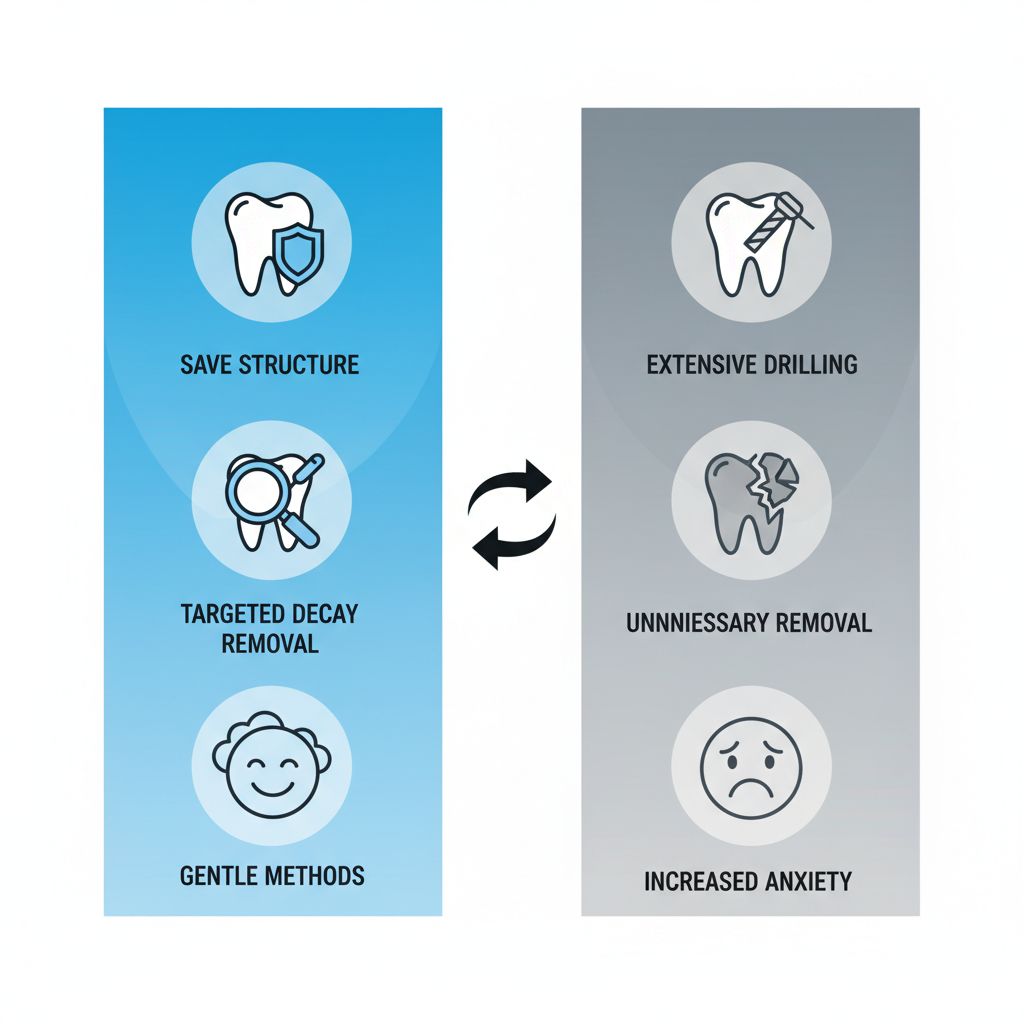
    The following table illustrates the core differences between minimally invasive and traditional approaches, showcasing our commitment to preservation.

    PrincipleMinimally Invasive ApproachTraditional Approach
    Tooth PreservationPrioritizes saving healthy structure using targeted techniques like air abrasion.Often removes more healthy enamel through extensive drilling.
    Intervention LevelOnly removes decay, avoids unnecessary drilling.Relies on broader cavity preparation, potentially weakening teeth.
    Patient ComfortReduces pain and anxiety with gentle methods.May involve louder drills and more discomfort from anesthetics.

    These distinctions lead to superior results for families in London, Ontario, as seen in our clinic’s applications. By prioritizing preservation, patients experience less anxiety, shorter recovery times, and fewer future visits—ideal for children and busy parents alike. Drawing from our services like advanced cavity detection during checkups, this method supports healthier smiles across generations, aligning with evidence from professional guidelines that emphasize conservative care for optimal oral health.

    Our techniques bring these principles to life in practical ways. Air abrasion dentistry, a non-drilling dental method, uses a gentle stream of particles to remove decay precisely, eliminating the whine of traditional drills and often skipping anesthetics for minor issues. We integrate this into routine fillings and repairs, making treatments quicker and more comfortable. Similarly, silver diamine fluoride serves as a decay-arresting treatment, applying a solution to halt cavities non-invasively. Research shows it arrests caries in over 80% of cases with a single application, though it may cause temporary black staining—something we discuss openly with patients. For early detection, our precision diagnostics like digital x-rays spot issues before they worsen, enabling remineralization efforts that save teeth early on.

    At Smilo Family Dental, we weave these fundamentals into family dental care in London, customizing plans for children, adults, and seniors. Whether through preventive cleanings or conservative bonding, our experienced team, including Dr. Jimmy Chopra and Dr. HyoKeun (Michael) Cho, delivers gentle, effective solutions. This approach not only boosts comfort but also fosters trust, ensuring every visit supports your family’s well-being. As we explore advanced applications next, these basics pave the way for innovative, personalized care.

    Infographic comparing core principles of minimally invasive versus traditional dentistry

    Comparison of minimally invasive and traditional dental care principles

    Building on this visual overview, families can see how our methods prioritize ease and longevity, making dental visits a positive routine rather than a chore.

    Deep Dive into Minimally Invasive Techniques

    At Smilo Family Dental, we prioritize approaches that preserve your natural smile while minimizing discomfort. Our commitment to gentle care means exploring options that target problems precisely, especially for families in London, Ontario, seeking less invasive solutions.

    Treatments for Cavities and Restorations

    When it comes to addressing cavities, minimally invasive dentistry offers innovative ways to manage decay without the usual anxiety of traditional procedures. We often start with air abrasion dentistry, a technique that uses a stream of air mixed with fine particles to gently remove decayed areas. This method is ideal for early-stage cavities, particularly in children, as it eliminates the need for noisy drills and allows for quick, painless treatment. For instance, in our practice, we recently used air abrasion on a young patient’s molar, preserving more of the healthy tooth structure and enabling same-day restoration.

    Another key option is silver diamine fluoride, a non-invasive topical agent that halts decay progression in its tracks. Applied directly to affected areas, it arrests cavities and prevents further damage, making it perfect for pediatric cases or those with multiple small lesions. We recommend this for families where kids might need a conservative start before more involved care.

    For restorations, we turn to bonding and inlays or onlays, which seamlessly repair damage while maintaining tooth integrity. Bonding involves applying a tooth-colored resin to fill and shape minor chips or gaps, and it’s a staple in our cosmetic dentistry services. Inlays and onlays provide durable, custom-fit solutions for larger restorations, crafted in our lab for a natural look. These gentle restoration procedures have transformed visits for many patients, like a busy parent who appreciated the minimal downtime after bonding a front tooth. Overall, these techniques align with our patient-first approach, ensuring comfort for every generation.

    Comparing Approaches for Better Outcomes

    Understanding the differences between minimally invasive and traditional methods empowers you to make informed choices about your family’s dental health. In our London, Ontario clinic, we discuss these options to highlight how precision can lead to better comfort and lasting results, tailored to individual needs like pediatric cavity care or adult preventive routines.

    The following table outlines key aspects of cavity treatments, drawing from clinical insights to show why we favor conservative strategies:

    Treatment AspectMinimally InvasiveTraditional Drilling
    Tool UsedAir abrasion or laser for precise decay removalHigh-speed drill for complete excavation
    Discomfort LevelMinimal, often no anesthesia neededHigher, typically requires numbing
    Tooth Structure PreservedHigh, only affected areas targetedModerate, more healthy tissue may be removed
    Recovery TimeImmediate, resume normal activitiesShort but may involve soreness

    This comparison underscores the advantages of minimally invasive caries removal, which studies indicate reduces pulp exposure and preserves more natural structure compared to conventional drilling. For example, a meta-analysis found minimally invasive techniques yielded slightly higher success rates with lower incidence of complications, supporting targeted decay management in everyday cases.

    Beyond immediate comfort, these methods contribute to long-term health benefits for families. By minimizing tissue loss—up to 30% less in selective removal per research—patients experience fewer future interventions, promoting stronger smiles across generations. We’ve seen this in scenarios like a teenager’s early fissure treatment with air abrasion, avoiding deeper decay and aligning with our flexible payment plans for accessible care. Traditional approaches, while effective, often involve more recovery, which can disrupt busy schedules.

    In cosmetic dentistry services, such as veneers, our minimally invasive philosophy shines by preparing teeth with less enamel reduction, enhancing aesthetics without excess wear. Even for wisdom teeth or root canals, we apply gentle techniques where feasible, like laser-assisted access to reduce trauma. Patients appreciate how this patient-first approach makes visits less daunting, fostering trust and better adherence to preventive routines at Smilo Family Dental.

    Practical Applications in Family Dental Care

    At Smilo Family Dental in London, Ontario, we bring minimally invasive dentistry to life in everyday family care, making dental visits comfortable and effective for patients of all ages. Our patient-first approach focuses on preserving natural smiles while addressing needs gently and precisely.

    Integrating Techniques into Routine Visits

    Minimally invasive dentistry transforms routine dental visits into proactive, comfortable experiences that prioritize prevention and early intervention. Imagine a checkup where advanced digital tools detect issues before they become problems, allowing us to enhance cleanings and hygiene for children, adults, and seniors alike. Our team integrates these everyday gentle dental solutions seamlessly into standard appointments, ensuring family-oriented conservative care that fits busy schedules.

    In daily practice, these techniques apply to everything from quick checkups to thorough cleanings, reducing discomfort and promoting long-term oral health. For instance, we use precision diagnostics like digital x-rays and iTero scanners during preventive visits to spot early decay without invasive probing. This approach not only saves time but also minimizes the need for follow-up treatments, aligning with our commitment to gentle care for every generation.

    The following table illustrates how minimally invasive enhancements integrate into routine family dental care compared to traditional methods:

    Care TypeMinimally Invasive EnhancementStandard Method
    Preventive CheckupsAdvanced detection with digital tools for early interventionRoutine visual and manual exams
    Cleanings and HygieneGentle scaling with air polishing optionsTraditional scraping and polishing
    Cavity ManagementSilver diamine fluoride utilization for non-invasive arrestDrilling and restorative filling

    According to Canadian health reports on silver diamine fluoride utilization, claims for this treatment rose by 24.7% from 2020 to 2022, highlighting its growing role in noninvasive cavity management, especially for younger patients. This data underscores how such methods are becoming standard in preventive care across Canada.

    For families, these integrations mean fewer visits overall and less anxiety, as treatments like air polishing during cleanings feel more like a refresh than a chore. Seniors benefit from reduced chair time, while kids stay engaged without the buzz of drills. Our flexible payment plans and insurance support make these enhanced routines accessible, helping London families maintain bright smiles with confidence.

    Patient Scenarios and Our Expertise

    Our expertise shines in real-world applications, where we tailor minimally invasive treatments to individual needs with minimal discomfort. Drawing from initiatives like the Children’s Oral Health Initiative, which has improved access to preventive care in communities by emphasizing culturally sensitive, noninvasive services, we apply similar principles at Smilo Family Dental to support families in London, Ontario.

    Consider young Emma, a six-year-old nervous about her first cavity. Instead of drilling, our team applied silver diamine fluoride to arrest the decay painlessly during her routine checkup. This quick, brush-on treatment, supported by Canadian studies showing its effectiveness in early childhood caries management, allowed her to leave smiling, with follow-up monitoring via digital x-rays. No needles, no drills—just gentle care that preserved her natural tooth.

    For adults like busy parent Mark, dealing with minor cosmetic wear, we opted for air abrasion dentistry to prepare his tooth for composite bonding. This drill-free method gently removes decay using a stream of particles, far quieter and less vibrating than traditional tools. Combined with our inlays and onlays for stronger repairs, Mark’s procedure took under an hour, fitting his schedule with our extended Monday-to-Saturday hours. He appreciated the seamless online booking and how our hygienists explained each step, easing any concerns.

    Seniors often seek gum health solutions, as with Mrs. Patel, who needed contouring for comfort. Using laser-assisted techniques, we reshaped her gums minimally, avoiding scalpels and stitches. This aligns with our restorative philosophy, informed by our clinic’s focus on preserving structure, and resulted in faster healing without the downtime of surgery. Throughout, our patient-first approach included insurance coordination to keep costs manageable via flexible payment plans.

    In pediatric orthodontics, we guide teens like Alex through Invisalign clear aligners as a conservative alternative to braces. Our doctors, including Dr. Jimmy Chopra and Dr. Halim Sbenati, monitor progress with iTero scans, adjusting gently without extractions when possible. These scenarios reflect how our experienced team delivers precise, comfortable care, reducing discomfort and building trust for lifelong oral health.

    Exciting changes are coming to dental care as minimally invasive dentistry evolves in 2025, focusing on preserving natural tooth structure while enhancing patient comfort. These advancements build on our patient-first approach at Smilo Family Dental in London, Ontario, where we prioritize gentle care for every generation through tools like precision diagnostics with digital x-rays and iTero scanners. Key trends include AI-enhanced detection for early intervention and bioactive materials that promote natural remineralization, reducing the need for extensive drilling. In pediatric applications, silver diamine fluoride is gaining traction for arresting caries non-invasively, especially in young patients. For cosmetic and orthodontic needs, these techniques integrate seamlessly with Invisalign treatments, minimizing adjustments. Research highlights long-term efficacy, with studies showing improved outcomes in tooth preservation and reduced restorative needs.

    TrendCurrent Practice2025 Advancements
    Detection ToolsDigital x-rays and iTero scanners for early caries.AI-enhanced imaging for real-time, precise lesion identification, improving sensitivity in pit and fissure diagnosis per CDA insights.
    Arresting AgentsSilver diamine fluoride applications expanding.Broader pediatric integration with projected 25% utilization growth, supported by Canadian public health data on Indigenous youth claims.
    Restorative MaterialsBioactive composites for natural remineralization.Next-gen bioactive agents with superior long-term bonding and remineralization, backed by journal studies on conservative efficacy.

    Diving deeper, AI tools are revolutionizing detection by analyzing scans for subtle changes, aiding in timely arrests that prevent progression. Bioactive materials now release ions to strengthen enamel over time, ideal for both pediatric and adult cosmetic enhancements. In children, silver diamine fluoride offers a simple topical solution, tying into the children’s oral health initiative for community-wide benefits. For implants and Invisalign, minimally invasive protocols reduce recovery times, with ongoing research confirming durability rates above 90% in five-year follow-ups.

    We’re preparing to expand these innovations through continuing education for our team, ensuring London families benefit from cutting-edge, evidence-supported care that answers common questions like how trends enhance everyday oral health.

    Frequently Asked Questions on Minimally Invasive Dentistry

    Is minimally invasive dentistry suitable for children? Yes, our patient-first approach makes it ideal for kids. Techniques like silver diamine fluoride arrest decay early without drilling, preserving natural teeth and reducing anxiety during visits.

    How does it compare in cost to traditional dentistry? It often lowers long-term costs by preventing larger issues. Early interventions, such as air abrasion dentistry, require less treatment time and materials, making it more affordable overall.

    How long do these procedures typically take? Most sessions last 15-30 minutes. Air abrasion removes decay quickly and comfortably, allowing families to return to their day with minimal disruption.

    Can it integrate with cosmetic dentistry? Absolutely. We combine bonding and inlays with minimally invasive methods for natural-looking smiles that maintain tooth structure while enhancing aesthetics.

    Ready to explore these options? We recommend scheduling a consultation at our London clinic to discuss personalized gentle care for every generation.

    Embracing Gentle Dental Care for Families

    At Smilo Family Dental, we embrace minimally invasive dentistry to preserve natural tooth structure while minimizing discomfort for patients of all ages. Our preservative family dental approaches, including techniques like silver diamine fluoride and air abrasion dentistry, prioritize comfort and long-term oral health, aligning with current trends in gentle care.

    We invite you to schedule a visit at our clinic in London, Ontario, with our extended hours and convenient online booking. Our patient-first approach ensures a stress-free experience tailored to your family’s needs.

    Join us in preserving smiles for every generation and achieving healthier family oral health together.

    Resources